
Write something
Pinned
Dec '25 •
It all begins with curiousity
Welcome. If you’re new, curious, or quietly wondering if your idea is naïve, you’re in the right place. This community exists to help people learn, ask questions, and think through ideas around climate and energy technology. You don’t need experience. You don’t need a startup. You don’t need answers yet. Here’s how to begin. 1. Share only what you’re comfortable sharing You’re never expected to disclose anything sensitive here. High-level ideas, questions, and curiosities are more than enough to start a discussion. If you want to go deeper, you can sign and share a Mutual NDA privately. That option exists, but it’s not required to participate. 2. Understand the real risk is not idea theft It’s natural to want to protect your idea. That said, most first-time builders overestimate how valuable the idea itself is and underestimate how brutal execution actually is. The tricky part isn’t the idea. It’s turning it into something that works, survives reality, and finds a market. Be thoughtful, but don’t lock yourself into silence. Exploration requires conversation. 3. Start with questions, not pitches You don’t need a polished concept. In fact, please don’t start there. Good starting points: - “I don’t understand how this part works…” - “Why doesn’t this already exist?” - “What am I missing about energy/cost/scale here?” Questions beat declarations every time. 4. Lurk first if you need to Reading is participating. Take time to explore past discussions, see how people frame problems, and get a feel for the tone. There’s no rush to speak. 5. Expect honesty, not hype This is a constructive space, but it’s grounded in reality. You’ll get thoughtful feedback, not cheerleading. The goal is learning, not validation. If something doesn’t make sense or won’t work, we’ll talk about why. That’s a feature, not a flaw. 6. Curiosity beats confidence here You don’t need to sound smart. You need to be curious. Most good builders start confused. The only real requirement is a willingness to learn and rethink assumptions.
Pinned
Dec '25 •
Who the heck is this guy?
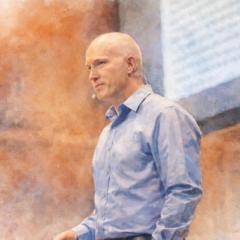
I started in my basement with a rough prototype in 2009 and a problem I couldn’t let go of. Over time, that turned into a company with a current value of $60M. I did the fundraising myself, raising over $7M to keep it moving forward, while surrounding myself with people who were smarter than me in all the right ways. It hasn’t been easy. It’s still incredibly challenging. Most days are about navigating uncertainty, tradeoffs, and learning things the hard way. But one thing has become clear along the way: the experience only matters if it gets used. I’m here to share what I’ve learned, speak broadly where it’s useful, and occasionally get more hands-on when that’s what someone actually needs. Not from a pedestal, but as someone still very much in it.
2
0
Dec '25 •
What I'm currently working on
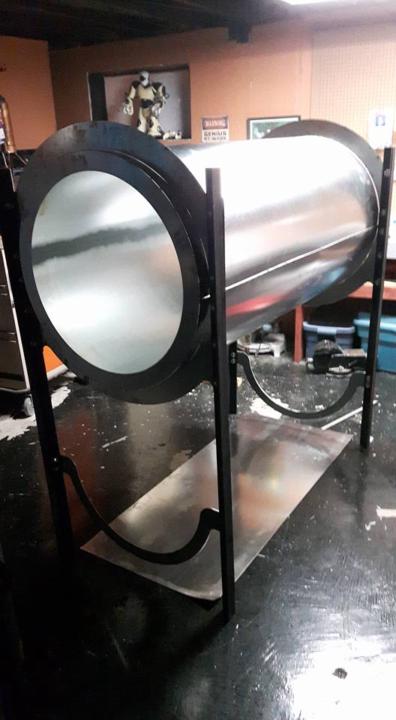
I've gone through multiple iterations of the technology I developed. I thought I'd post a pic of the place where it all began (my workspace) and where I typically help staff work today. I could never have imagined going from a prototype in my basement to the level and class of equipment my team makes today. I am truly blessed to be among such talented people. What are you working on? What's working and what's not working?
Jan 7 •
20 Things Every Clean Tech Founder Should Know
As with any startup, it starts with an idea. There you are, sitting on the couch, or in a local pub, or maybe at a job you don’t care for. Or it’s a job you love, but you see an opportunity for growth. Or an opportunity to change an industry. Maybe even the world. You start bouncing the idea off friends, family, coworkers, colleagues. Pretty quickly, you’ll notice that people tend to fall into two camps. The first camp is the naysayers. These are the people convinced the solution you came up with already exists, or that the solution is so obvious that someone must have already thought of it. Maybe they have. Maybe they haven’t. You decide the idea needs more research. You open your laptop or tablet and start searching for anything that resembles what you’re thinking. Something that proves you’re not unique. Something that confirms you’re completely unoriginal. After a day or two of searching, you realize there’s a good chance no one has come up with it. You might actually be standing alone with this idea. Congratulations. You’ve completed the easy part. Fun fact: Charles Duell, the Commissioner of the United States Patent Office, was long cited as saying he wanted to shut the Patent Office down because everything had already been invented. The truth is, he never said that. There’s no historical record, no speech, letter, or memo that supports the quote. In fact, Duell argued the opposite, publicly emphasizing that invention was accelerating and that future breakthroughs would surpass anything yet imagined. Patent filings were rising rapidly during his tenure, and officials were focused on expanding capacity, not closing shop. The line itself appears to be a later joke that hardened into “history” through repetition. It survived because it’s tidy, ironic, and flattering to modern sensibilities, not because it’s true. So now you have your idea. You’ve decided it’s unique enough to pursue. You’ve even Googled patents to see if you can protect it, and it looks like you’re in the clear. Now you’re asking, “What’s next?” Here are a few high-leverage, quick tips to follow if you decide you want to try to bring your invention or idea into reality.
1
0
Dec '25 •
Is carbon capture the end-all of climate change?
Probably not, but it can help while we transition to another energy source or energy infrastructure. https://youtu.be/dWJi8pRBW4E?si=Khy8wJQb9DqI1YLw
1-14 of 14
powered by
skool.com/climate-tech-builders-8506
Curious about climate technology?
We help people understand how ideas become real-world solutions, and when it makes sense to build something bigger.
Suggested communities
Powered by