
Write something

Dec '25 •
What I'm currently working on
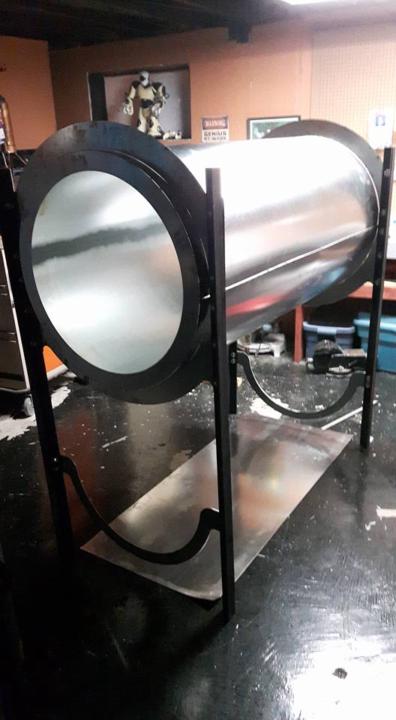
I've gone through multiple iterations of the technology I developed. I thought I'd post a pic of the place where it all began (my workspace) and where I typically help staff work today. I could never have imagined going from a prototype in my basement to the level and class of equipment my team makes today. I am truly blessed to be among such talented people. What are you working on? What's working and what's not working?
Jan 7 •
20 Things Every Clean Tech Founder Should Know
As with any startup, it starts with an idea. There you are, sitting on the couch, or in a local pub, or maybe at a job you don’t care for. Or it’s a job you love, but you see an opportunity for growth. Or an opportunity to change an industry. Maybe even the world. You start bouncing the idea off friends, family, coworkers, colleagues. Pretty quickly, you’ll notice that people tend to fall into two camps. The first camp is the naysayers. These are the people convinced the solution you came up with already exists, or that the solution is so obvious that someone must have already thought of it. Maybe they have. Maybe they haven’t. You decide the idea needs more research. You open your laptop or tablet and start searching for anything that resembles what you’re thinking. Something that proves you’re not unique. Something that confirms you’re completely unoriginal. After a day or two of searching, you realize there’s a good chance no one has come up with it. You might actually be standing alone with this idea. Congratulations. You’ve completed the easy part. Fun fact: Charles Duell, the Commissioner of the United States Patent Office, was long cited as saying he wanted to shut the Patent Office down because everything had already been invented. The truth is, he never said that. There’s no historical record, no speech, letter, or memo that supports the quote. In fact, Duell argued the opposite, publicly emphasizing that invention was accelerating and that future breakthroughs would surpass anything yet imagined. Patent filings were rising rapidly during his tenure, and officials were focused on expanding capacity, not closing shop. The line itself appears to be a later joke that hardened into “history” through repetition. It survived because it’s tidy, ironic, and flattering to modern sensibilities, not because it’s true. So now you have your idea. You’ve decided it’s unique enough to pursue. You’ve even Googled patents to see if you can protect it, and it looks like you’re in the clear. Now you’re asking, “What’s next?” Here are a few high-leverage, quick tips to follow if you decide you want to try to bring your invention or idea into reality.
1
0
Dec '25 •
Is carbon capture the end-all of climate change?
Probably not, but it can help while we transition to another energy source or energy infrastructure. https://youtu.be/dWJi8pRBW4E?si=Khy8wJQb9DqI1YLw
Dec '25 •
Sharc Energy
I've crossed paths with this organization a few times and met the founder a couple of years ago at a conference in Chicago. Great technology. Great people. https://youtu.be/vYwml_ou7oI?si=05s7CQsapyX_b_ZH
1-4 of 4
powered by
skool.com/climate-tech-builders-8506
Curious about climate technology?
We help people understand how ideas become real-world solutions, and when it makes sense to build something bigger.
Suggested communities
Powered by