
Write something
Pinned

Mar 15 •
Welcome to Clief Notes. Here's where to start.
1. Watch the intro video and introduce yourself in the intro post here 2. Start with The Foundation (free course). Concepts, folder architecture, prompting framework. Everything else builds on this. 3. Check in at the bottom of each lesson. Polls, discussion posts, other members working through the same stuff. Use them. 4. When you're ready to build real things, move to Implementation Playbooks (Level 2). When you're ready to build your own tools, Building Your Stack (Level 3). 5. Post your work. Ask questions. Help others when you can. What are you here to build?
Poll
6059 members have voted
Pinned

👑
⭐
1h •
🫖Afternoon Tea 5 is live on YouTube
Sixty minutes of real questions from real builders. Rich asked what skills to learn to stay competitive in AI roles. That answer became the frame the whole session ran on. From there we worked through finding clients, content strategy, the HTML versus markdown question, and what to build next when the obvious automations are already running. Natalie took the spotlight slot. The session closed on why liberal arts is the durable layer when most technical work gets absorbed by the next platform release. A few things you'll hear if you watch: - The L1 to L3 effort ladder, with the Pacific Life over-engineering story - The 200 to 48,000 YouTube subscriber path with zero ads and zero outreach - How the Feeld engagement came from a CTO finding the channel organically - Tokens as coordinates and what the Anthropic engineering team was actually saying about HTML - The four-year test for what stays durable in your stack The three questions at the end are the homework. The third one matters most. 📚 For Premium members The full artifact package for this session is in the Vault: 🫖 Afternoon Tea 3 - The Vault · Clief Notes🫖 - The twelve-slide Decision Map deck (PowerPoint) - Three strategy markdown files: Effort to Output Ladder, Show Your Work, Productionize Your Opinion - A Term Sheet covering every piece of jargon from the call - The Vault module page that ties it all together The strategy files are built to paste into Claude alongside the transcript so you can apply each frame to your own work. That is the part the video alone cannot do. If you are on the free tier and any of this sounds useful, Premium is where the artifacts and the live sessions live. Twenty-seven a month. Biweekly. No pressure either way. The YouTube content stays free and stays current. Build something this week.
Pinned
20h •
⚠️ HEADS UP: PHISHING ATTEMPTS IN THE COMMUNITY ⚠️
We've noticed people sending out phishing links in DMs and comments. Quick PSA to keep everyone safe. ---- 🛑 THE RULE If someone you don't recognize is sending you links, asking for money, asking for login info, or telling you to "claim a prize" outside of an official competition post, it's not us. Don't click. Don't reply. Just delete. ---- 💰 HOW WE ACTUALLY HANDLE MONEY We will never send you money out of the blue. The only time you'll hear from us about money is if you've won a competition. When that happens, Sonija is the only person on our team who will reach out to collect your payment info to send your prize. If anyone else DMs you asking for payment details, banking info, or "verification" to release a prize, it's not us. Report it!! ---- 🚨 IF YOU GET A SUSPICIOUS MESSAGE 1. Don't click any links 2. Don't reply 3. Screenshot it if you can 4. Send the screenshot to Jake, Matt, or a mod so we can deal with it We're going to keep this community a safe place to build and learn. Thanks for looking out for each other. 🙏

4d •
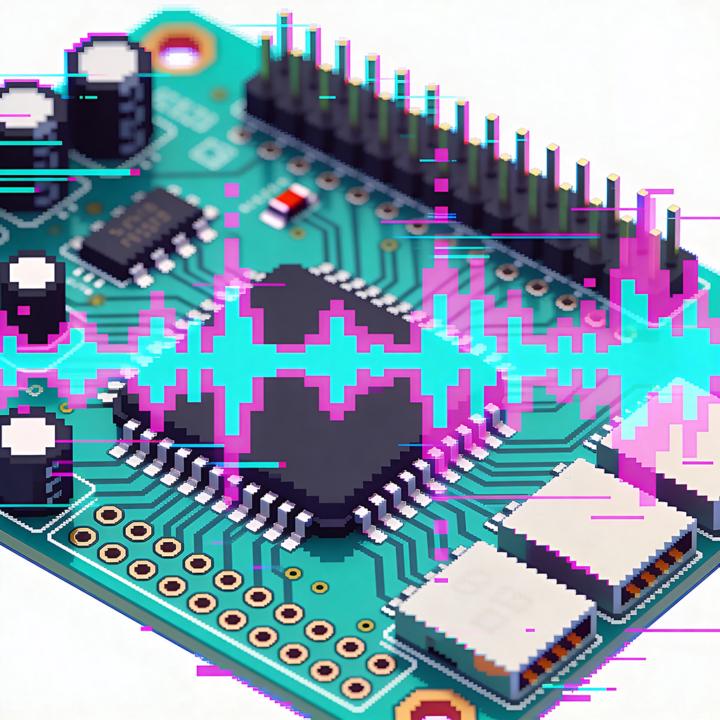
I gave my Claude a soundtrack
Last week I gave my LLM a memory layer I call Cortex. This week I started feeding it something stranger: what I was listening to while I worked. A work session is not just the files you touched and the decisions you made. It has a texture. The track that was playing when something finally clicked is part of that memory, even if you would never think to write it down. So instead of throwing that signal away, Claude and I built a small observer to catch it. ———————————————————————— What it does, in three layers: 1. Passive. A tiny watcher checks the local music app once a minute and logs track, artist, and timestamp to a plain markdown file. No browser audio, no streaming history scraped, just what is actually playing on the machine. 2. Bookmarks. When a session opens or closes it drops a marker, so the log has boundaries instead of one flat stream of songs. 3. Flags. When a track lands on a moment that matters, I star it with one line of context. "This was playing when the gallery finally rendered." That markdown file is just another source the brain reads. Same rule as everything else: > Files own the truth. The brain owns the connections. ———————————————————————— Here is the part I do not know yet, and why it is interesting. The episodic layer now carries an ambient track. Does that change retrieval? When I come back to a problem, will the brain surface the session by its soundtrack the way a smell drags back one specific afternoon? Or is it just noise in the index? I genuinely cannot tell you. It has been running for two days. That is the honest bit. This is an experiment, not a feature. I built the observer in an afternoon because the cost of being wrong is a markdown file I can delete. The cost of being right is a brain that remembers the way humans actually do, by association and atmosphere, not just by fact. The try-me is attached if you want to point one at your own memory layer. It is about forty lines. Watch what your brain does with it before you decide whether it earned its place.
Apr 9 •
🏁 60/30/10 Lesson 1.3 Check-In
VigilOre and NLP Logix aren't isolated wins. They're instances of a repeatable model. This lesson reveals the training funnel that sits behind all of it. 600+ employees trained across Fortune 500 companies. 95% adoption rate. Industry average is less than 10%. That gap exists because most AI training teaches tools. Tools decay. The 60/30/10 teaches patterns. Patterns survive tool changes. The course companion has five exercises you run with Claude using your own work. Your real processes. Your real bottlenecks. Same approach I use when I walk into a Fortune 500. If you've gone through it, which exercise are you running? 👇
Poll
6 members have voted
1-30 of 1,390
skool.com/cliefnotes
Jake Van Clief, giving you the Cliff notes on the new AI age.
Leaderboard (30-day)
1

+922
2

+855
3
+753
4

+722
5

+678
Powered by