
Pinned

👑
⭐
15d •
Welcome to Clief Notes. Here's where to start.
1. Go check out 📚Navigating The Course to see how to get around and what's here. 2. Start with The Foundation. Concepts, folder architecture, prompting framework. Everything else builds on this. 3. Check in at the bottom of each lesson. Polls, discussion posts, other members working through the same stuff. Use them. 4. When you're ready to build real things join in on our Biweekly competitions and win some real cash. ⭐ Competitions Mega Thread 5. If you are wanting to dive into the masterminds, grab all the past templates, artifacts and resources. Upgrade and head into the The Vault for Premium and The Drawing Room (VIP) for VIP 6. Post your work. Ask questions. Help others when you can. What are you here to build?
Pinned

6h •
🏆 WEEKLY COMP #9: THE EDITOR 🏆
🎟️ PRIZE: FREE SEAT IN THE LYCEUM 🎟️ Pick your cohort. Technical, Business, or Creator. Your call. 🎯 PICK YOUR DOMAIN The domain is yours. Pick something specific. Pick something you'd actually use. A few sparks to get you thinking: - 💻 Code review editor for a specific language and level (junior TypeScript, senior Python) - 📊 Pitch deck editor for pre-seed founders - 🎨 Grant application editor for arts nonprofits - 📄 Resume editor for career switchers into tech - 📰 Op-ed editor for policy publications - 🎙️ Podcast script editor for interview shows - ⚖️ Legal brief editor for civil litigation - 📋 Product spec editor for early-stage PMs - 🎓 Academic paper editor for one specific field The more specific, the better. "Writing editor" is too broad. "Op-ed editor for tech policy publications targeting a policy audience" is right. 🗂️ THE METHODOLOGY If this is your first comp, welcome. Here's what you need to know: This week (and every week) you're learning interpretable context methodology. Folders as architecture. Each file does one job well. Your editor is a folder with five things: - 📄 identity.md (who the editor is, what work they review) - 📐 rules.md (how they critique) - 💬 examples.md (what good critique looks like) - 📚 reference/ (style guides, checklists, frameworks the editor uses) - 📖 README.md (how to use it) Drop the folder into a Claude project. Claude becomes the editor. Reusable. Shareable. Portable. 🔥 THE ANGLE THIS WEEK An editor is NOT a rewriter. An editor doesn't do the work for you. An editor surfaces what's weak and pushes you to fix it. That distinction is the whole assignment this week. When someone hands the editor a draft, the editor shouldn't produce a "fixed" version. The editor should point at the three lines that don't work, explain why, and hand it back to the writer to solve. ✍️ Generic feedback like "consider strengthening your intro" is a fail. Specific feedback like "your intro assumes the reader already knows what a Series A is, but this pub is read by generalists, so lead with the stakes instead of the jargon" is what a real editor does.
Pinned
2d •
❗The Lyceum opens this Thursday: live webinar at 7 PM ET❗
Thursday, July 16 at 7:00 PM ET. Quick version for anyone who hasn't been following: The Lyceum is Eduba's 12-week AI certification program and the first credential we've ever issued. Over 3,000 people are on the waitlist and seats per cohort are limited. What we'll cover in the hour: 01 / The structure. 12 weeks, three sprints, nine live sessions, 18 hours of instruction, 12 instructors per cohort. 02 / The cohorts. Technical, Business, and Creator. Same core curriculum, weighted differently. We'll walk through how to pick yours. 03 / The competition. $250,000+ in prizes across the tiers and how your capstone feeds into it. 04 / The certification. What you have to do to earn it and what it actually certifies. 05 / The investment. What it costs, how payment works, and who should not enroll. Then live Q&A until the questions run out. One more thing. At the end of the session we're doing something for the people actually in the room. It's capped at a small number, it goes in the order people claim it, and we're not putting it in writing. Be there and stay to the end. The session is live only. No recording going out. Thursday · July 16 · 7:00 PM ET skool.com/live/XM7969jTG7L Come with the hard questions. Bring the skeptical ones too. That's what the hour is for.

8m •
Vercel Eve
I just watched a video about Vercel Eve and I'm struck by how similar their proposal is to Jake's ICM framework. I've included the link below if you're interested. https://vercel.com/eve https://github.com/vercel/eve
0
0
Mar 15 •
🏁 Foundations 4.1 Check-In
First session done. Vote below, then drop your OS and any issues you hit in the comments. If you got stuck, someone here has probably solved it already.
Poll
537 members have voted
1-30 of 2,534
skool.com/cliefnotes
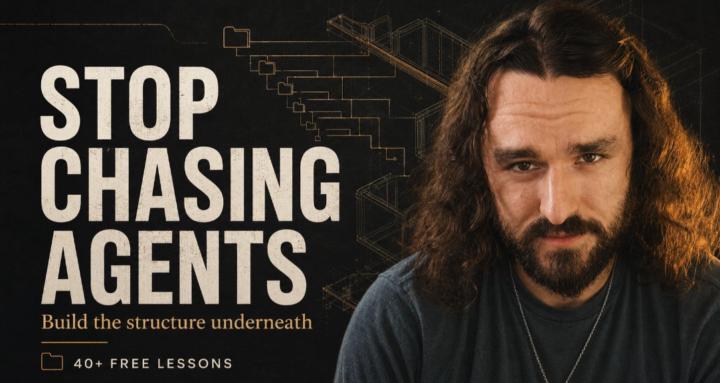
What we give away free beats most paid courses. Build durable AI systems with a Marine vet and Edinburgh researcher. 40+ lessons, growing.
Leaderboard (30-day)
1

🔥
+1749
2

+1211
3

+1036
4

+843
5

+767
Powered by