
Write something

6h •
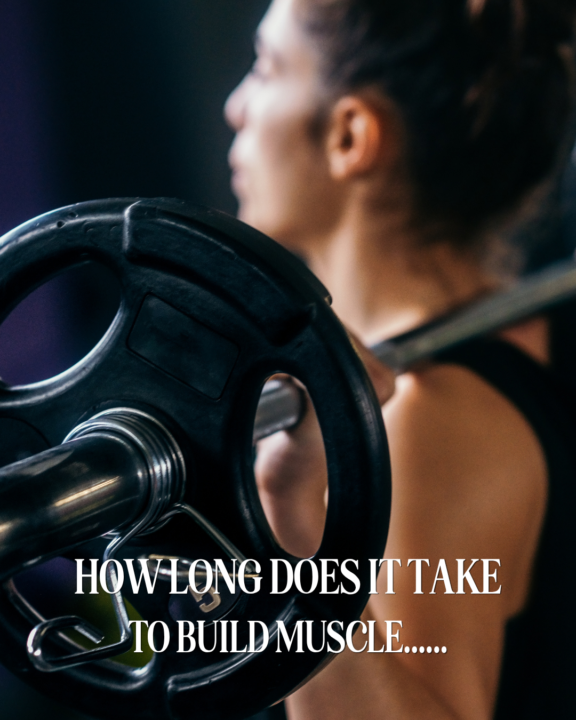
Muscle doesn't grow like people think it does. Here's the real timeline.
Let's talk numbers, because most women have no idea what they're actually working with — or how long this actually takes. What you're starting with: Women naturally carry less skeletal muscle mass than men — roughly 30-36% of total body weight, compared to 38-45% in men. That's biology, not a flaw. Lower testosterone means a smaller baseline muscle-building environment from the start. What "gaining muscle" really looks like: If you're new to lifting, you might gain about half a pound to a pound of actual muscle tissue per month — and that's in a good month, with consistent training and enough protein. Once your body adapts (usually 6-12 months in), that rate slows down even more. Advanced lifters are thrilled with a few pounds of real muscle gain in a year. That "I want to tone up in 6 weeks" goal? Biologically, that's not muscle. That's water shifts, inflammation changes, and beginner neural adaptations — your nervous system getting better at recruiting the muscle you already have. Real tissue growth takes months, not weeks. Now here's the part that should make you exhale: Muscle loss doesn't happen anywhere near as fast as muscle gain. Research on detraining shows that even after 2-4 weeks of zero training, most people retain the majority of their strength and muscle mass. It takes sustained inactivity — usually months — before you lose a meaningful amount of what you built. So what does that mean for you? The goal isn't a 30-day transformation. The goal is to become someone who lifts consistently for years, because that's the only way this math works in your favor. Muscle is slow to build and slow to lose — which means every rep you do now is banked. It doesn't disappear if you miss a week. It doesn't disappear if life gets in the way for a month. The expectation: patience, consistency, and protein. That's it. Trust the process even when the mirror isn't moving fast — the tissue is building slower than your motivation wants it to, but it IS building.
0
0
1d •
We have to chat about this--- if it is NOT perfect-
You know the pattern: you are out of your routine/out of town/traveling/have to make concessions and THEN decide since you're not in your perfect situation- you might as just order whatever and all your goals and intentions go out the window.... GANG- there is a middle ground here!!!! That's a black-and-white thinking problem — and your biology loves it, because deprivation always ends in overcorrection. Here's the fix: you don't need a perfect order. You need one or two modifications. - Grilled instead of fried - Baked potato instead of french fries - Protein first, always ask for extra - Sauce/dressing on the side - Swap the fries for a veggie side - Order what you actually want — just build it around protein and fiber - These aren't small, boring swaps. They add up. Grilled instead of fried can save you hundreds of calories and a ton of inflammation-triggering oil — without changing what's actually on your plate. You still get the burger. You still get the potato. You just stop handing the kitchen full permission to deep-fry your whole meal. This is the whole point: one modification doesn't feel like "being on a diet." It feels like a normal order. And normal orders don't send you spiraling into "well I already blew it" territory. You're not "ruining" anything by having the pasta. You're ruining it by treating one meal like a moral failure and eating like tomorrow doesn't exist — instead of just making one swap and moving on with your day.
1
0
2d •
5 Ways to Beat the Bloat
5 Ways to Beat the Bloat Skip raw broccoli, cabbage, and kale when you're bloated. Lightly cooked digests way easier, since cooking breaks down some of that fiber structure before it hits your gut. Check your labels for sorbitol or erythritol. These sugar alcohols show up in a lot of "sugar-free" bars and gum, and they're a sneaky, common bloat trigger most people never think to look for. Slow down your first few bites. Eating fast means swallowing more air along with your food, and that trapped air is a direct, immediate cause of bloating, separate from anything about the food itself. Take magnesium before bed. It supports smoother digestion and can help reduce water retention tied to hormone fluctuations, especially in the second half of your cycle or in perimenopause. Sip peppermint or ginger tea after meals. Both relax the digestive muscles and help speed up gastric emptying, which can ease that heavy, bloated feeling faster than just waiting it out. None of this is about eating less. And before you consider skipping a meal thinking that'll fix the bloat, know that going too long without eating often makes it worse, not better. This is about eating smarter for your gut, not eating less of it. Anyone else dealing with bloat regularly? Curious which of these you've already tried, and which one you're going to test out first. Drop it below.
0
0

2d •
Sit down to eat! Here is why!!
Can I tell you something that I see all the time? If you’re the woman who makes everyone else’s plate, stands at the counter taking bites while loading the dishwasher, refills everyone’s drink, cleans the kitchen, and then realizes you never actually sat down to eat… It’s time to change that. I’ve been there. Done that. When you never slow down for your own meal, your brain doesn’t fully register that you actually ate. You’re distracted, rushing, and focused on everyone else instead of yourself. That makes it much harder to recognize fullness, leaves you less satisfied, and can have you wandering back into the kitchen looking for a snack an hour later. Here’s your challenge: Sit down. Eat your dinner at the table. Take 15-20 minutes for yourself before you start cleaning up. The dishes can wait. Your family can wait a few extra minutes. Your health deserves at least as much attention as everyone else’s. Sometimes the healthiest thing you can do isn’t changing what’s on your plate—it’s changing how you eat it.
1
0

2d •
PLEASE read.....
To all my clients who are feeling a little "fluffy".......PLEASE remember all of this when you are just beginning a new routine!! Lately I've been hearing the same thing over from many clients who have increased their strength training and started fueling differently.. "I've been lifting." "I'm eating better." "I'm hitting my workouts." "But I still feel fluffy." First, I get it. When you're doing everything "right," it's frustrating when the scale doesn't immediately reward you. But here's what most people don't realize... Your body starts changing long before the scale does. When you begin strength training and fueling your body with enough protein, your body is making thousands of changes that you can't see in the mirror after just two or three weeks. Your muscles are becoming more insulin sensitive, meaning they're better at pulling glucose out of your bloodstream and storing it where it belongs. Your body is increasing mitochondrial activity. Think of mitochondria as the tiny power plants inside your cells that create energy. As they become healthier and more efficient, your body gets better at producing energy, recovering from workouts, and eventually using fat as fuel. You're building new neuromuscular connections, so your brain and muscles communicate more efficiently. That's why exercises start feeling easier and you get stronger before you necessarily look different. Your bones are becoming stronger. Your connective tissue is adapting. Your heart is becoming more efficient. Your body is laying the foundation for the physique you want. Here's the catch... If you don't have a lot of body fat to lose, these internal changes often happen before you see dramatic changes on the scale. And that's completely normal. In fact, if you're lifting consistently, you may gain a little lean muscle while losing a little body fat at the same time. Muscle is much denser than fat, so the scale may barely move while your body composition is improving. That's why I care so much more about:
0
0
1-30 of 68

Suggested communities
Powered by