
Write something
Pinned
20d •
How and Why to Subscribe to The Art of Birding
How and Why might you Subscribe for just $2 a month to The Art of Birding? Because you get to do more than just identify #birds! You'll get fun tools to help you appreciate birds in artful and compelling ways, like these coloring sheets* created from Christopher Cudworth's original artwork and photography. He'll illustrate "live" for you (sample included today!) And, we'll bring you photos and #birding insights from Friends of the Community, all amazing contributors too. Authors, photographers, artists, and naturalists. *Everything's Downloadable in your choice of detailed or simple guides for adults or kids. I'll also be offering courses on birding, drawing, and more. You'll also get "walk along" videos as expert #birder Chris guides you on field trips to fascinating birding locations to help you learnwhere to find and how to identify birds. We'll review the best birding apps, how to use them, and what kind of optics are best for you. The Art of Birding Great for all ages. It's like going to Fun Skool! There's not homework. Just the joy of doing cool stuff. And, Coming soon: The Art of Birding podcast features leading birders, wildlife artists, bird photographers, citizen scientists. PLUS, Christ will LIVE "learn along" drawing sessions. Questions? Write Cudworthfix@gmail.com or comment here for quick response! Invite your friends and SHARE to grow this Community.
1
0

Pinned
Mar 31 •
How my birding and art evolved together
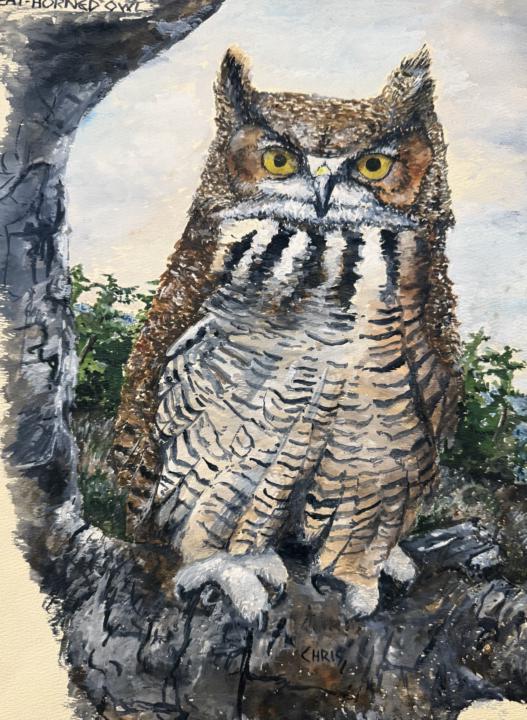
I began painting birds as a twelve-year-old. My initial paintings were copies of photos or attempts at capturing something I'd seen in the field, such as this first rather squat depiction (1) of an owl I'd seen in the Elburn Forest Preserve where they nested. Aching to refine my understanding of birds and art, at the age of about 16 I encountered the work of Louis Agassiz Fuertes, whose paint of a great horned owl mesmerized me in its economy with watercolor and its anatomical grasp of the bird. (2) In high school, I copied that painting by flipping it in reverse. (3) and put a blue jay under its talons. During my first year at Luther College, I had access to bird skins, and there were ruffed grouse in Decorah, Ia, so I did both a pen-and-ink drawing (4) and a watercolor in the same pose shown, and the watercolor was sold. That painting found its way out to California. Three years ago a woman snatched it up where she found it in an alleyway after the couple who bought it from me at Luther got divorced. She said that she had to fight people off to get the painting. Then, she looked me up on the Internet, and called to ask if I wanted it back. I told her, "No, you've earned it. Please enjoy it." A few years ago, I painted an acrylic of a great horned owl in the bluff country of Decorah. That painting (5) hangs in a friend's home along with several other works they collected from me over the years. It show a far more natural pose than my earlier efforts, as it's based off my own photography. But notice that it still echoes the Fuertes' economy I've always appreciated. The last image (6) represents my full growth as an wildlife artist combining years of experience with a touch of respect for another artist I admire, Robert Bateman. I made a point of depicting the patterns found in the owl's face and body with those found on the aging bur oak on which I saw it perched. You can see a hint of the moss growing on the north side of the tree, and the bird "in place" is what I most value about painting birds these days. This series illustrates one person's journey from novice birder to one who tries to appreciate and present nature in its beautiful complexity and relationships. How do you think I've done?
1
0
5d •
Something colorful this way comes
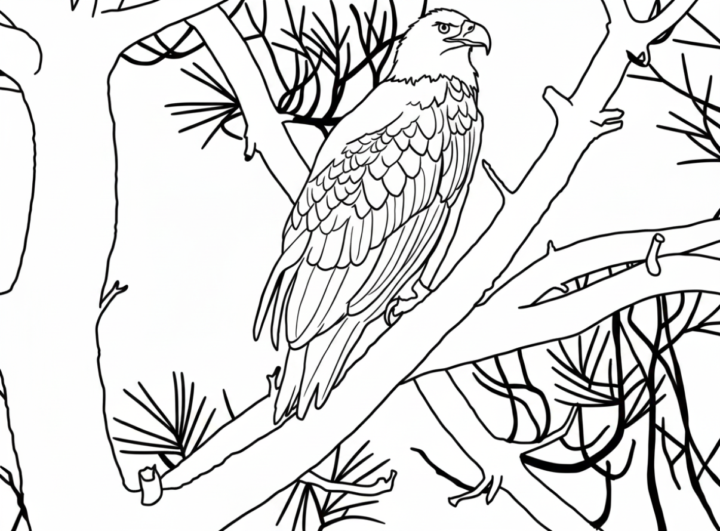
Here are two coloring sheets created from my bald eagle painting. You can print out the "simple" or the "detailed" coloring sheet version and use colored pencil or even regular pencils to shade in the eagle. I'd love to see your work! #eagle #artofbirding #birder #coloring
0
0
13d •
Bald Eagle Comeback is thanks to liberals and tree-huggers
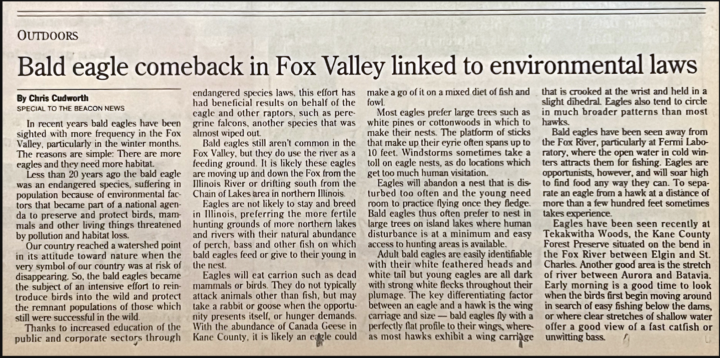
In 1971, when I began birding and specifically, painting birds, the bald eagle was a rare and endangered bird species in the United States. Audubon magazine published a photo set of eagles in Florida by a famous photographer, and looking at those images back then while reading about the devastating effects of DDT on raptor egg shells in peregrine falcons and ospreys, it felt like I'd never see any of those species in real life. Fortunately, the 70s became an era of environmental activism, and both political parties joined in. President Nixon signed the and Clean Air (1970) and Clean Water (1972) acts, and the Endangered Species act in 1973. These acts, along with the ban on DDT in 1972 represented America's commitment to protecting not just endangered species, but millions of other life forms. Wetlands conservation also provided important protection for eagle habitat. However, political conservatives in the Trump administration recently moved to degrade wetland protections by "redefining" what constitutes protected wetlands. This degradation is in response to the political activism of the US Supreme Court in the Sackett v. EPA, who ruled that a couple in Idaho backfilling on their property had the right to do what they want because the "The CWA’s (Clean Water Act) use of “waters” in §1362(7) refers only to “geographic[al] features that are described in ordinary parlance as ‘streams, oceans, rivers, and lakes’ ” and to adjacent wetlands that are “indistinguishable” from those bodies of water due to a continuous surface connection." This is an utterly ignorant description of what wetlands are, how they were formed, and what they do for clean water and conservation. For example, it specifically ignored wetlands formed by glaciers 10,000 years ago that are not specifically connected to any "stream, ocean, river, or lakes." The Supreme Court ruled in willful ignorance of this fact.
1
0
13d •
The Yellowthroat is witchity-witch
Yellowthroat warblers are small, extremely common denizens of grasslands and shrubby habitats. They sing from perches quite often, but just as likely sing from deep in the thickets. They are summer personified, as their voices coat the landscape from late May through August, when they molt and shed that dark mask and migrate south for the winter. They furtive and yet curious all at once. Wichity-wichity-which! is what they sing.
1
0

1-30 of 52
powered by
skool.com/art-of-birding-2447
Birding expert and wildlife artist Christopher Cudworth brings birding to life
Suggested communities
Powered by