

9d •
Your website isn't enough anymore
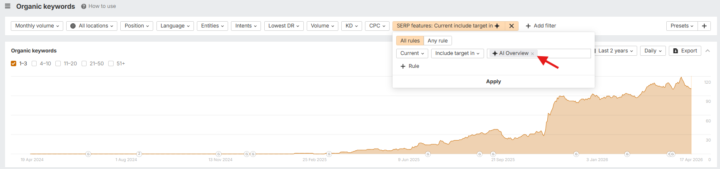
Most businesses and practitioners are focusing purely on growing their website's traffic via SEO. The problem with this is all your eggs are in one basket. Algorithm updates can make or break your performance. If you lose visibility on search, you also lose recommendations from LLMs. And once you lose website performance, you double down on your domain. Pouring fuel on the fire. If what you've been doing isn't working, doing more of it only breaks it faster. This leads to revenue drops you can't explain, marketing budgets getting cut, competitors showing up in ChatGPT and Gemini when your brand doesn't, and the slow realization that everything you built on Google is one update away from disappearing. After driving thousands of signups directly from LLMs, and taking one client from 0 to 100+ AI Overviews with 7x revenue from AI search, here's what I'd focus on instead: Omnipresence. This means showing up for your buyer's searches across every placement that matters: your site, social posts, guest posts, listicle mentions, podcast features, AI-indexed sources. Not one channel. All of them, working together. This is because when you build off-site signals alongside your domain, things start compounding in the right direction. LLMs recommend your brand. You show up in more AI Overviews. Search traffic stays healthy because Google sees the authority signals too. Which leads to your domain thriving, your web presence thriving, and buyers finding you on whichever surface they happen to be searching. You can think about it like this: Do you want to keep putting everything you've got on one domain, one update away from losing it? Or would you prefer to show up everywhere your customers are searching, so no single change can take you out?
7
0
10d •
Q&A Call Recording: SEO Strategy, Business Pivots, Automation, Openclaw, Claude
Great call with fellow members. We discussed: - SEO strategy from a 20 year veteran - Pivoting a SaaS to go for a broader market - Automating things with n8n, Claude, and Openclaw And more. Join next week's call to join in on the discussion!
16d •
More AI Content Is Destroying Your Website
Sites are publishing millions of AI generated pages and most of them are getting deindexed. I pulled data on a few well known sites to see where the losses are actually coming from and what's still working. Grokipedea published 6 million AI articles. They peaked at 740,000 indexed pages and they're now down to 422,000. Most of that content is dead weight. HubSpot's blog went from 8 million organic visitors to 391,000. They were covering everything from shrug emojis to resignation letters. Google caught on and started favoring sites that stay in their lane. HubSpot is already aware and trimming the pages that don't belong. SEMrush lost more than half their blog traffic too. But here's what's interesting, they're actually gaining AI Overview visibility. One structural change is getting their content pulled into AI Overviews at a much higher rate, even while their organic traffic declines. (7:48 in the video to find out what they did) When your site loses trust from going too broad, you'll also lose AI Overviews, LLM citations, and mentions in ChatGPT, Perplexity, and Gemini. AI models pull from topically focused, trusted sources that show up for long tail searches. Meanwhile sites like Reddit and Zillow keep growing on both organic and AI search. Reddit brings user generated content Google can't get anywhere else. Zillow brings proprietary real estate data. Every page they publish is actually unique and offers something AI can't just synthesize. Their pages are the product. Three things that still work at scale: 1. Unique data that's hard to find elsewhere (medium difficulty) 2. Something search engines genuinely need, like UGC (hard mode) 3. Staying in your lane and owning your topic deeply (easy mode) The simplest test is to search your potential topic and see what types of sites rank for it. If sites like yours show up, you're in your lane. If only unrelated sites show up, skip it. I go deeper on all of this in the video.
Sep '23 •
Introduce Yourself Here
Add a comment here to say hi and tell us a little about yourself! (If you're up for it)

1-30 of 92
skool.com/ai-seo
The largest AI search marketing community on Skool.
Free workflows, templates, and in-depth training.
Learn AI SEO, GEO, AEO, and agentic automation.
Leaderboard (30-day)
1

+7
2

+6
3

+5
4

+4
5

+4
Powered by