
Pinned

💎
⭐
15h •
🚀New Video: I Turned Claude Opus 4.8 Into My Entire AI Operating System
In this video I show you how I turned Claude Opus 4.8 into my full AI operating system that runs my businesses, holds all my context, and replaces the constant tab switching between apps. I walk through the Four C's I use to build it (context, connections, capabilities, cadence), the mindset shift of working out of Claude Code by default, how I organize files and skills, and the bike method for safely giving agents more autonomy. By the end you'll know exactly how to set up your own AI OS and the trap to avoid when you start handing it real keys. GITHUB REPO
Pinned
💎
⭐
2d •
If you've ever felt "AI Overwhelm", please read this.
Every single person following AI right now is overwhelmed. Including me. I make videos about this stuff for a living and I still feel the pressure. New model drops. New framework. New feature update. It feels like every single day. But after hearing a ton of you guys bring up "AI overwhelm" week after week, I realized this: → There's a HUGE difference between knowing the "what" and knowing the "how." Staying aware does not mean testing everything. Most new tools and features only need the "what." You see the title. You understand what it does. You move on. The "how" is reserved for the stuff that solves a problem you actually have right now. So when something new drops, I ask myself one question: Does this solve a specific pain point I'm currently dealing with? If yes, I test it in a real scenario. I test it against something that actually matters to me. If no, I save the link. I mentally file it away. And I keep walking. Because here's the thing. Your north star is probably very different from mine. Part of my job is to experiment, form opinions, and share what I think is useful. So naturally I test a lot of stuff. But if your north star is building a business or getting better at your craft, then every shiny new tool might just be a distraction. The number one mistake I see people make is they try to learn everything. They watch every video. They test every tool. They jump to the next thing before the last thing even had a chance to work. And if I've contributed to your overwhelm with my daily uploads, I apologize. hehe. But a lot of people think that this ties directly into how you measure your day. Productivity is not how many hours you worked. It's how many meaningful outputs you created that actually moved the needle towards your north star. Someone can work 12 hours one day and feel insanely productive, but they were just watching tutorials and playing around with new tools. Meanwhile someone else sits down for 5 hours, ships the one thing that actually matters, and makes more progress.
Pinned

🔥
10h •
🏆 Weekly Wins Recap | May 23 – May 29
From $64K+ in closed deals to first paid projects, first workflows, and first technical builds - this week inside AIS+ showed what happens when builders stop consuming and start moving. Some wins were big money. Some were first steps. Both matter. 🚀 Standout Wins of the Week inside AIS+ 👉 @Jacob West closed two deals in one week — a $22.5K custom software build for a local gym and a $42K AI OS rollout for a mid-market energy business. 👉 @Luca Giovinazzo delivered his first full client project live — 11 n8n workflows, CRM, Telegram bot, inventory alerts, booking system, KPI tracking, user guide, and Loom walkthrough. 👉 @Fadwa Naboulssi landed her first client three weeks into the community — a candidate sourcing workflow on a $150-per-successful-hire commission. 👉 @George Maitland completed his first technical build using Claude Code + n8n MCP — a local content engine with Telegram as the command center. 👉 @James O Neill built a free portfolio site for a friend-of-a-friend’s side hustle… and she insisted on paying anyway. First real money landed. ⸻ 🎥 Super Win Spotlight | @Josh Holladay Josh joined AIS+ because he wanted more than scattered learning. He wanted momentum. Focused content. Better access. And a room full of people actually moving. Since joining, he has: - Closed real client work - Built stronger confidence around pricing and value - Used the portfolio course to get clear on where he was and what needed to happen next - Learned how to turn client conversations into real business opportunities - Found a place to celebrate wins with people who actually understand the journey

💎
⭐
Oct '24 •
Welcome! Introduce yourself + share a career goal you have 🎉
Let's get to know each other! Comment below sharing where you are in the world, a career goal you have, and something you like to do for fun. 😊

1d •
How many client have you served so far?
Let’s see what is ground reality of building an AI business. I spent last 4 years on it and I won’t lie it is the most difficult thing to do. Share your experience in the comments .
Poll
25 members have voted
1-30 of 17,871
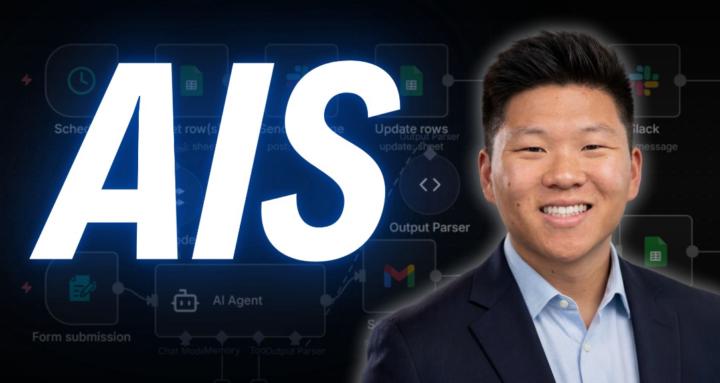
skool.com/ai-automation-society
Learn to get paid for AI solutions, regardless of your background.
Leaderboard (30-day)
1

🔥
+7089
2

🔥
+4740
3

+3786
4

🔥
+2765
5

+1278
Powered by