
Pinned

💎
⭐
8h •
🚀New Video: I Tried 100+ Claude Code Skills. These 6 Are The Best.
After 400 hours in Claude Code, I noticed that businesses keep paying for the same six types of skills. In this video, I break down each one, what it does, and why these simple, boring skills are the ones that actually sell. Whether you're brand new to AI automations or already building for clients, these are the skills worth learning first.
Pinned
💎
⭐
3d •
🚀New Video: Build & Sell Claude Code Operating Systems (2+ Hour Course)
This is the full walkthrough of how I build my AI Operating System inside Claude Code, from the frameworks I use to think about it (the Three Ms and the Four Cs) to the actual setup, connections, skills, and routines that run while I sleep. By the end you'll know exactly how to set up your own AIOS, even if you've never opened Claude Code before. The full template, docs, and resources are free in my school community linked below. GITHUB REPO
Pinned

🔥
2d •
🏆 Community Wins Recap | Apr 25 – May 1
From AI roles and first clients to live receptionist systems and enterprise training deals - this week inside AIS+ showed what happens when builders stop watching and start executing. 🚀 Standout Wins of the Week inside AIS+ 👉 @Griffin Maklansky went from being laid off to landing an AI Workflow Builder role in just 1 month. 👉 @Ahmed Bin Faisal landed another $2,000 USD client — an interior design firm — and broke down exactly what led to the close 👉 @Narsis Amin built a working AI restaurant receptionist handling bookings, availability, and CRM logging end-to-end. 👉 @Josh Holladay closed a $4.5K (+$1K) client with half up front today — and dropped his top 10 lessons from the close 👉 @Dion Wang received his first official testimonial, validating real client impact and around 40 hours/month saved. 🎥 Super Win Spotlight | @Duy Nguyen Duy started as an engineer who was curious about AI — but unsure how to turn that curiosity into something real. After joining AIS+, he went from learning passively to building his own AI-operated business, Sharper Automations. Since then, he has: • Built a 24-agent AI business operating system • Landed 2 local paying clients through word-of-mouth • Created a system that improves itself weekly through feedback loops • Started moving toward his goal of leaving his corporate job His biggest shift? From “Can I really do this?” → to building a real business around AI automation.


2d •
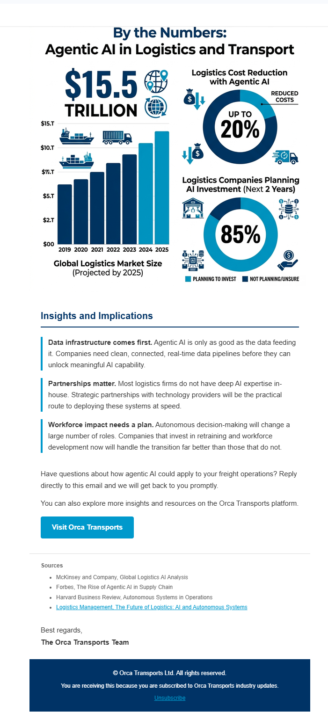
🚀 Day 1 Build — sharing my progress!
Built a newsletter for a friend's business using Claude Code, Nano Banana for free image generation and Groq for research. Honestly pretty happy with how it came together! 💡 What clicked for me today: Two things that genuinely changed how I work using a CLAUDE.md file to give Claude clear instructions upfront, and running plan mode before executing. Both saved a ton of time and tokens. Wish I'd known this earlier! 🔧 What I'd improve next time: Being more mindful of token usage from the start. I hit the daily limits mid-flow, which was a good reminder to plan around usage caps before diving in and not after! Would love to hear from the community, any tips or strategies you use to manage token usage efficiently? Whether it's structuring prompts better, breaking tasks into smaller chunks, or anything else --- all suggestions welcome! 🙏 Huge thanks to Nate for building this classroom and community, it's made jumping in so much easier. And to everyone taking time to encourage and support others here, that means a lot. Good luck to all the newcomers joining the challenge! 💪 #AISChallenge

16m •
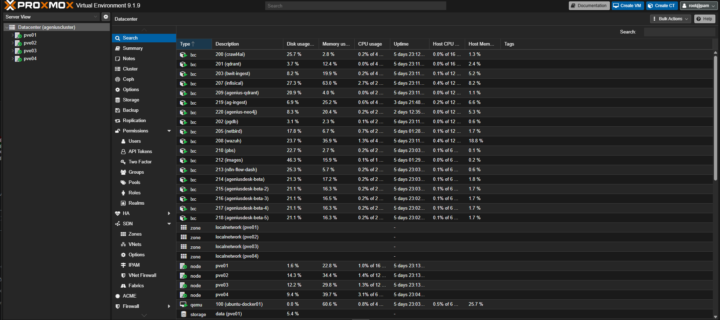
I Manage My Entire IT Infrastructure with AI and I will NEVER go back!
3 months ago I embarked on an experiment. As a 30 year network engineer I wanted to see how much infrastructure AI could actually manage. I built a Claude Code agent to run my entire stack. Gateway to workstations, everything in between. It's been working amazing! I don't think I can ever go back to managing it myself anymore, it saves me HOURS of manual configurations when deploying anything!. It's stood up containers and applications, configured my VLANs, configured my Netbird mesh, manages the dual Pi-hole pair, the SIEM, the secrets vault, the workflow runtime, the backup server. Anything I need to do in my stack, I just talk to it. Natural language conversation with Claude in terminal. Done. Plus a proactive layer on top: daily Slack alerts the agent acts on autonomously. New CVE drops on a package I'm running? Triage and a patch sequence land in Slack before I'm awake. Pi-hole drift across the resolver pair? Auto-corrected, journaled, summarized. I read the digest, not the dashboards. The cluster it manages: - 4 Proxmox nodes - 18 LXCs + 1 VM - 3 months continuous, weekly kernel updates on cron - Only manual step: I loaded Proxmox onto the host boxes. The agents did everything else. Today I documented it all. Public runbook on my website. Open-source GitHub repo for anyone who wants to run the same experiment. And today I'm also breaking that single agent into 11 specialists — mesh, vault, substrate, edge, LAN, telemetry, workflow, docs, plus three cyber peers (security, threat detection, vuln management). Each one 80–150 lines instead of one big 432-line spec. Each one runs on the smallest model that handles its work. Haiku on the read paths, Sonnet on change-prone domains, Opus reserved for incidents only. The split should drop my API cost to roughly 1/13 of what a typical agent call runs today. Faster responses, less wasted context, cleaner reasoning, same coverage. → Repo: https://github.com/Mfrostbutter/Infra-AI-IT-Team-Runbook
0
0
1-30 of 16,280
skool.com/ai-automation-society
Learn to get paid for AI solutions, regardless of your background.
Leaderboard (30-day)
1

+5680
2

🔥
+4441
3

+3946
4

+2289
5

+888
Powered by