
Pinned

💎
⭐
21h •
🚀New Video: Hermes Agent: Zero to Personal AI Assistant (1 Hour Course)
This is a complete walkthrough of getting Hermes Agent set up from scratch on a VPS. You'll see how to install it on Hostinger, connect it to Telegram, set up your first skill and cron job, and back everything up to GitHub. By the end you'll understand the five pillars of Hermes, when to use it instead of Claude Code, and how to scale to multiple agents without breaking anything.
Pinned
💎
⭐
2d •
Cape Town AI Mastermind: Behind the Scenes
In February, I spent a week in Cape Town, SA with some of the top AI entrepreneurs in the space for a mastermind. We had hundreds of community members join us. I met some amazing people and left feeling so energized and inspired. Which is why I've been uploading almost daily lately, haha! Anyways, just dropped a behind the scenes vlog if you're interested in checking it out. AIS is planning on doing big events and meetups regularly, so if this trip looked like fun, stay tuned for events in the future!
Pinned

🔥
2d •
🏆 Community Wins Recap | May 2 – May 8
Big closes. AI Lead roles. SaaS momentum. Retainers. Equity. Real systems getting shipped. This week inside AIS+ was packed with builders turning reps into real opportunities 👇 🚀 Standout Wins of the Week inside AIS+ 👉 @James Tagalog landed an AI/Automation Lead role and jumped from $87K → $130K while realizing the interviews cared more about real-world thinking than memorized prep. 👉 Riaz Ahamed crossed $60K+ in client work since joining AIS+ as a complete beginner last year — now building GDPR-compliant Claude Code systems for EU clients. 👉 @Michael Elliott closed a $31K website rebuild + AI chatbot + retainer deal and shared the exact communication moves that helped secure the project. 👉 @Chris Atsu closed a €16K AI automation system for a marketing agency after holding firm through negotiation pressure. 👉 @Fernando Gómez shipped a real estate WhatsApp lead-classification system for a Málaga agency with €3.2K upfront + €299 MRR attached immediately. 🎥 Super Win Spotlight | @Jan Goergen Makinson Jan joined AIS+ after completing the AFT Challenge because he wanted to go deeper into AI automation and surround himself with builders actually doing the work. Since joining, he and his team have: • Built their own property-management SaaS using Claude Code + Lovable • Expanded the software for additional residential complexes in Cyprus • Signed a long-term AI documentation project with a new client • Turned that client relationship into both a monthly retainer AND equity in the company One of the biggest lessons Jan shared: You can learn tools from YouTube…But you can’t replace having helpful people around you when things get difficult.


4d •
Automating Sales Proposals
I'm automating a sales proposal software that takes the transcript from appointments with sales reps, extracts structured data and matches tasks based on a pricing index of over 40 actions for accountants. This then goes into Airtable for review from a senior with quotes from the transcript as reasoning. My issue is I need to get my extraction process to be more accurate, and I have written a script that automates pulling the proposal from ignition and the script and pairs them together but in some examples because of discounts for loyalty or other reasons it means that the harness cannot be thorough enough. I am rather new to this, so how do people usually setup harnesses to verify accuracy and see where improvements are needed. Thanks.

12h •
A schoolbook example of how this community works.
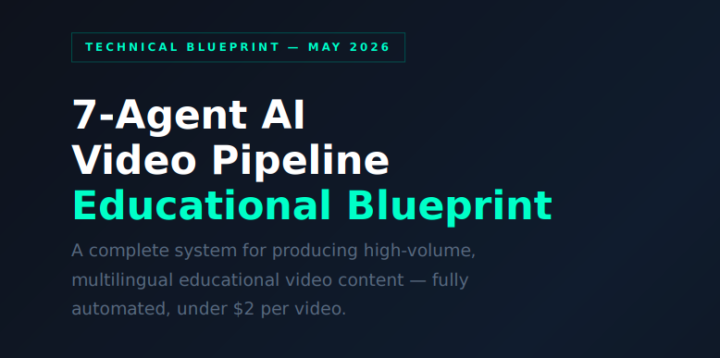
Seven days ago I posted a challenge in the AI Automation Society: 200 educational videos, multilingual, female teacher avatar, private learning platform, full pipeline from research to delivery. Tight timeline. Real budget constraints. Real students waiting on the other end, including our cohort in Plexaris Uganda where education is delivered free of charge. @Zain Baig responded. Within 24 hours he delivered a complete technical blueprint of his working production pipeline: -7 specialised AI agents in sequence, fully orchestrated through Claude Code -Cost transparency down to $1.66 per video in single language, $4.87 in five languages -Multilingual architecture with two implementation paths, trade-offs explained -Tech stack itemised with subscription versus pay-per-use breakdown -Honest limitations and lessons from 27+ videos already in production -Step-by-step setup guide and recommended next actions No upsell. No locked content. No watered-down preview version. A real working system, documented in detail, handed over with the offer to support implementation if useful. This is what peer-to-peer knowledge transfer looks like at its best. The kind of generosity that turns a community from a feed into a force multiplier. Zain, thank you. You moved this project forward by weeks and gave the Uganda team a clearer path to high-volume multilingual content than anything we could have assembled internally in the same window. If you are in the AI Automation Society and you have not connected with Zain yet, do.
1-30 of 16,645
skool.com/ai-automation-society
Learn to get paid for AI solutions, regardless of your background.
Leaderboard (30-day)
1

+5834
2

🔥
+5160
3

+4314
4
+2273
5

+847
Powered by