
Pinned

💎
⭐
2d •
🚀New Video: Claude Code + Blotato = Content Machine
In this video, you'll learn how to combine Claude Code and Blotato to automatically repurpose a single YouTube video into finished LinkedIn, Instagram, and X posts with custom visuals, all in a matter of minutes. Starting from a brand new setup, the full walkthrough covers installing Claude Code in VS Code, connecting to Blotato, and building a reusable skill that handles transcript extraction, platform-specific copy, and graphic creation. Every time you run it and give it feedback, it gets better, making this one of the highest-leverage content systems you can build right now.
Pinned
💎
⭐
7d •
🚀New Video: Build & Sell with Claude Code (10+ Hour Course)
This is the complete Claude Code course. I put a ton of time into this one. I start from zero and walk you through everything: setup, building workflows, deploying websites, creating agent teams, browser automation, finding clients, pricing your work, and way more. To make it even better, we don’t ever write a single line of code. By the end, you'll know how to use Claude Code at a professional level and how to actually turn those skills into income. Whether you've never opened a terminal or you're looking to go deeper, this course covers it all in one place. 📚ALL RESOURCES CAN BE FOUND IN THE CLASSROOM📚
Pinned

🔥
6d •
🏆 Community Wins Recap | Mar 7 – Mar 13
From first paid clients and consulting closes to AI video engines and Claude Code builds - this week inside AIS+ showed what happens when builders combine learning with real execution. 🚀 Standout Wins of the Week 👉 @Ahmed Bin Faisal landed a $2,000+ client using an automation he built for himself to score Upwork jobs and draft proposals in minutes. 👉 @Josh Holladay closed his first $7,800 AI consulting engagement using a sprint-based delivery model with long-term upside. 👉 @Solar Singh built an AI video engine inside Claude that generates scripts, voiceovers, stock footage, captions, and finished vertical videos at scale. 👉 @Nicholas Veronis signed his first paying client by creating listing videos and voiceovers for a real estate business. 👉 @Debbie DeMarco Bennett built an AI agent that migrated her entire email system from MailChimp to Brevo, saving hours of manual work and cutting monthly costs. 🎥 Super Win Spotlight | @Matthew Sutherland Matthew joined AIS+ looking for a room full of builders who were actively shipping real systems - not just talking about AI. Since joining, he has: • Built a five-dimension AI readiness audit system • Landed real client engagements • Dramatically increased his productivity using Claude Code workflows • Pressure-tested his systems with feedback from the community Matthew describes his experience as a “2000x return on investment.” His biggest insight: Surround yourself with people who are actually building, and your progress accelerates faster than you expect. 🎥 Watch Matthew's story 👇 ✨ Want to see wins like this every week? Step inside AI Automation Society Plus and start building assets that compound 🚀


8h •
🚀 Let’s Connect & Grow Together
Hey everyone! Drop a quick intro below — where you’re based, what you’re currently working on, and one goal you’re aiming to hit this year. Also, share something you enjoy outside of work 👇 Always great to meet driven people and see where I can help or collaborate!

39m •
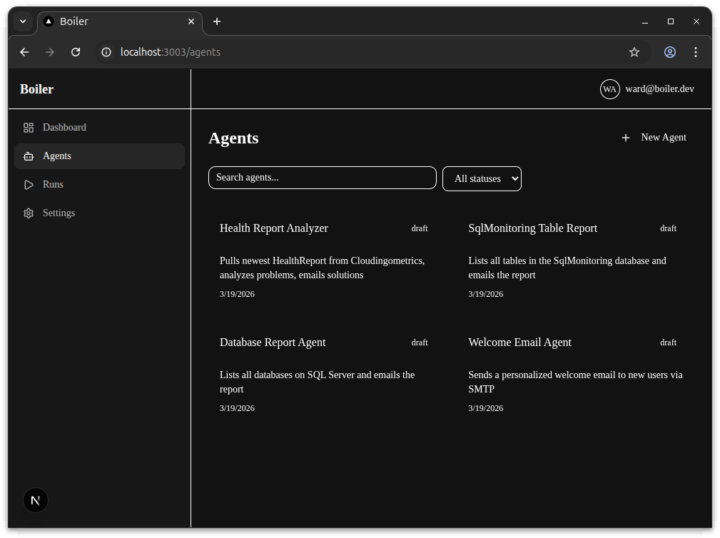
💥Boiler💥
I really wanted to try my hand at creating my own agent builder, 🤖 with my own Nodes. so here is what i got. it was a kick, i used my method found in my first class about prompting for the full build. on "AI for DBAs" so this is the second class. Remember it starts with a great PRD.md file so here is my file. the rest of the files can be found in the free class. Give it a try, it was fun for me! 🔥
1
0
1-30 of 14,509
skool.com/ai-automation-society
A community built to master no-code AI automations. Join to learn, discuss, and build the systems that will shape the future of work.
Leaderboard (30-day)
1

+5499
2

🔥
+2761
3

+1518
4

+1023
5
🔥
+941
Powered by