Activity
Mon
Wed
Fri
Sun
Aug
Sep
Oct
Nov
Dec
Jan
Feb
Mar
Apr
May
Jun
Jul
What is this?
Less
More
Memberships
40 contributions to AI Automation Society

Mar 19 •
Claude Code usage?
This morning at 9:00 am I started working on CC in my VScode (thanks Nate for the VScode setup). at 9:05 my usage was up. I am on the Pro plan, down from the max 5x plan. FYI: No agents, no multiple instances, no opencrap etc. Just using sonnet 4.6 to update my local n8n instance. I got to Redddit and find out I'm not alone. Anyone else getting massively and openly shortchanged in their allowed usage? FYI: my context is 32K (I keep it light) and I did have 2 MCPs active (they count the canva one although is not in the project folder). I wonder if this won't end up in a class action.... Anybody else having this issue with Anthropic?

1 like • Mar 23
@Alfred Alonso intresting....
1 like • May 17
@Ankita Goyal OpenCode's been great so far, really flexible in terms of model providers and really intuitive design. Claude opus may be slightly better than open-source ones, but you can always use those in here.
May 8 •
Running AI Agents in Parallel
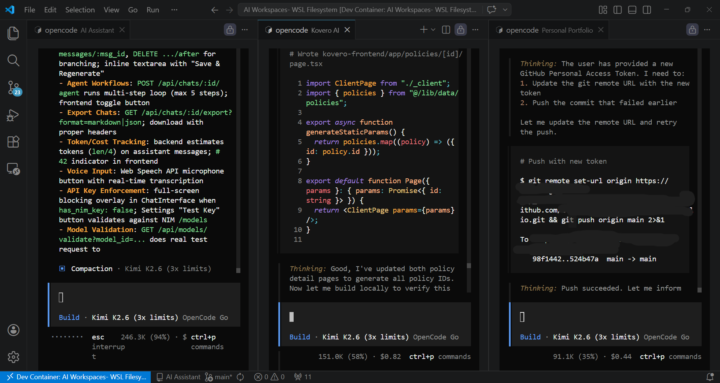
Running AI agents in parallel gives a different high altogether. Recently, I've been at the start of multi-tasking, working on multiple projects, all at once. Gotta manage my own attention span more than the context window of AI 😌 Who would've imagined times would change to such an extent? But I guess, I'm glad we're here!
0 likes • May 10
@Full stack developer Mazhar.devx 👍
0 likes • May 11
@Nigel Vargas 😂
Mar 18 •
Leads, Leads, Leads...
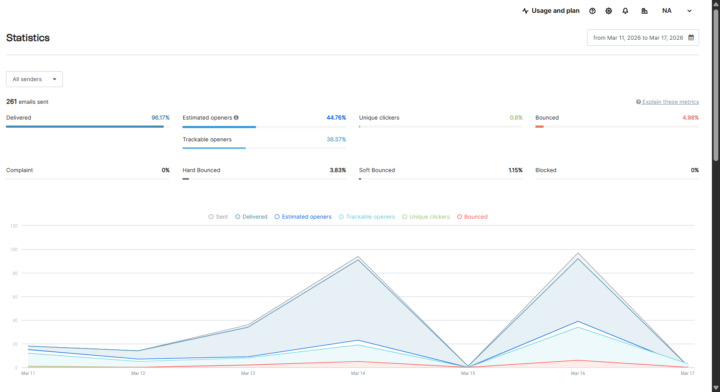
Revenue generation is one of the most important aspects of any business. Without it, you don't have a business, but a hobby. And I see many businesses struggling with having a consistent pipeline for finding new clients. And I believe I have created something that solves that problem once and for all. Recently, I created a full-fledged lead generation system. The basic idea was to source new leads in a given target niche, enrich them, generate some form of personalized message to approach them, and finally send outreach emails. And the best thing is all of this happens on autopilot, with minimal human time investment. And obviously, all of this is meaningless without any results, well... here are some of them: - 45,000+ leads sourced (niche specific) - Around 5% enrichment rate - ~87% delivery rate - ~38% open rate And that's already some great stats, but I will be iterating upon some other aspects like copywriting for the email, optimizing the offers, and achieving a much more natural flow for conversational outreach. The bottom line is that this has already automated what would take up a large amount of time in my day. Will keep you posted about this. Until next time.
1 like • Mar 24
a combination of n8n, google sheets, and some custom infrastructure
1 like • Apr 15
@Jody Murfit 👍
Apr 4 •
The true role of AI
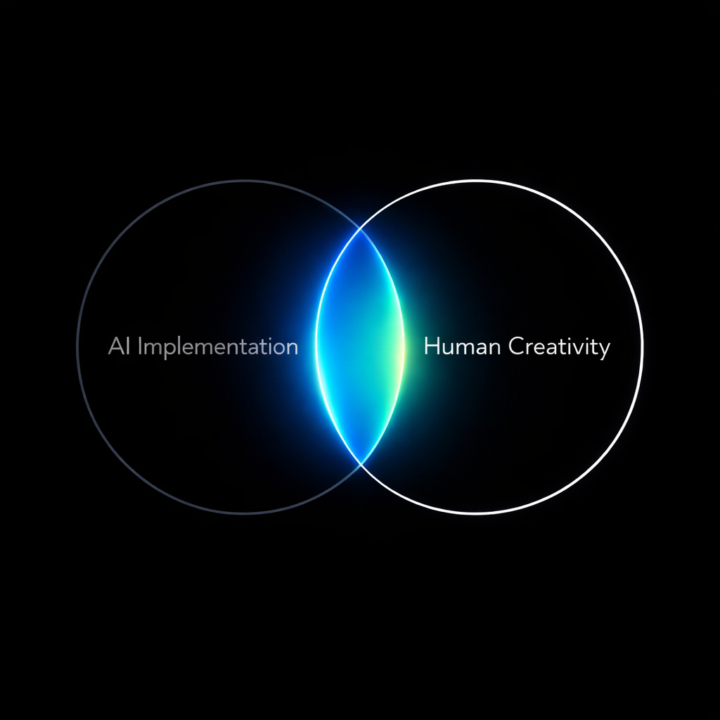
Many confuse AI to be this super intelligent thing that will solve all your problems. And it couldn't be further from the truth. AI is a powerful tool, provided you use it the right way. You see, AI is really good at implementation... writing code for that project, finding information, using tools, etc... but you still have to provide it with high-level guidance. Your value as an individual is not necessarily in the ability to implement, but in thinking creative ideas for solving problems and communicating them clearly to AI. And in order to do that, you must have a clear thought process.
0 likes • Apr 6
@Esayas Tesfaye 👍
0 likes • Apr 6
@Yasuke Horu 👍
Mar 30 •
AI Agents + Linux is insane!
If you are running AI coding assistants like Claude Code or OpenCode, your terminal choice is quietly dictating their success. While Windows PowerShell is decent for system administration, Linux and Bash are overwhelmingly superior for AI agents. 𝗪𝗵𝘆?... 𝘆𝗼𝘂 𝗮𝘀𝗸 ✦ Large language models are heavily trained on open-source repositories and documentation built around Unix standards. Because of this, AI agents naturally assume they are operating in Bash. ✦ Bash relies entirely on plain text streams, making it incredibly easy for an AI to read, parse, and chain command outputs together. Conversely, PowerShell processes complex .NET objects rather than raw strings. ✦ Major autonomous frameworks are explicitly built for Linux and often may fail natively on Windows. 𝗦𝗼❟ 𝗱𝗼 𝗜 𝗵𝗮𝘃𝗲 𝘁𝗼 𝘀𝘄𝗶𝘁𝗰𝗵 𝘁𝗼 𝗮 𝗟𝗶𝗻𝘂𝘅 𝗺𝗮𝗰𝗵𝗶𝗻𝗲? - 𝗡𝗢 Installing and using WSL2 on Windows is one of the simplest solutions. You can also run them inside dev containers (using a Linux distro) for better isolation and security. (Personally, I'd do this). What environment are you currently using to run your AI coding workflows?
1 like • Mar 30
@Atul Pathria 👍
0 likes • Mar 30
@Muskan Ahlawat nah, just type it into perplexity and you'll be fine
1-10 of 40

@21970522
Turning AI from hype into working systems.
Active 1d ago
Joined Dec 29, 2025
Powered by