Activity
Mon
Wed
Fri
Sun
Aug
Sep
Oct
Nov
Dec
Jan
Feb
Mar
Apr
May
Jun
Jul
What is this?
Less
More
Owned by Veronika
Join the Sustainable Fitness Space – a guided space for building sustainable fitness habits through simple actions, reflection, and accountability.
Memberships
AI Content Creator Skool
192 members • Free
Kommunity Kids
53 members • Free
Calm Behind the Wheel Academy®
469 members • Free
The Women's Coach Collective
549 members • Free
BL
Breathe Like An Olympian
35 members • Free
The Visibility Vault
216 members • Free
Movement for Real Life
122 members • Free
Cultivated Cooks
306 members • Free
Hormone Sensitivity & PMDD
497 members • Free
90 contributions to Inspired Life, Empowered Being

7d •
Perfectionism-Fear Masquerading as Growth
Often times, people who engage in perfectionistic type thinking and behaviors indicate that they have high standards, are aiming for excellence, and indicate that they are committed to growth. These seem like great things and they can be, but the undercurrent of what drives these statements matters. Clinically speaking, perfectionism is often less about excellence and more about fear. Fear related to failure, criticism, disappointing others, of not being enough... Perfectionism is often an attempt to manage uncertainty and protect ourselves from painful emotions. The problem is that the strategies we use to avoid those feelings can end up creating more stress, anxiety, and disconnection. Below are some common perfectionistic behaviors: 𝐎𝐯𝐞𝐫𝐜𝐨𝐦𝐩𝐞𝐧𝐬𝐚𝐭𝐢𝐧𝐠 Perfectionists often work harder than necessary to prevent mistakes or criticism. The underlying belief is often: "If I work hard enough, I can eliminate the possibility of failure." Unfortunately, no amount of effort can guarantee that. 𝐃𝐢𝐟𝐟𝐢𝐜𝐮𝐥𝐭𝐲 𝐃𝐞𝐥𝐞𝐠𝐚𝐭𝐢𝐧𝐠 Many perfectionists struggle to hand tasks over to others in fear that things won't be done "correctly". This can create burnout, resentment, and the feeling that everything depends on them. The hidden cost: carrying responsibilities that were never meant to be carried alone. 𝐒𝐞𝐞𝐤𝐢𝐧𝐠 𝐑𝐞𝐚𝐬𝐬𝐮𝐫𝐚𝐧𝐜𝐞 "Do you think that was okay?" "Are you sure you're not upset with me?" "Can you check this one more time?" Seeking reassurance can temporarily reduce anxiety, but it often strengthens the belief that confidence must come from outside ourselves. (safety behavior that reduces anxiety in the short term but creates problems in the long term) 𝐄𝐱𝐜𝐞𝐬𝐬𝐢𝐯𝐞 𝐎𝐫𝐠𝐚𝐧𝐢𝐳𝐢𝐧𝐠, 𝐏𝐥𝐚𝐧𝐧𝐢𝐧𝐠, 𝐚𝐧𝐝 𝐒𝐜𝐡𝐞𝐝𝐮𝐥𝐢𝐧𝐠 Planning is super helpful, but perfectionism can turn planning into a way of avoiding uncertainty. Hours are spent creating the perfect schedule, researching every option, or organizing every detail before taking action. This type of planning can become a substitute for living. It can give the impression that progress is being made but no actual action is being taken.
Poll
9 members have voted

3 likes • 7d
Ahhh yeah that's me for sure, been working on this a lot. I am much better and taking actions faster before thinking for too long, also trying to be ok with 'good enough' - it's a long term game though, especially as I was like that my whole life.
Jun 10 •
Peaceful moments
Nature is perhaps one of the more externally calming forces for me. The "pauses" that I take often involve nature in some way. I also have my daily 4a.m. quiet time that helps with grounding the day in gratitude and reflection but nature is usually where I feel the most present. Deep conversations with people that I connect with can also have some similar (but different)effects. These photos/video are all from this past week.. (While I'd recommend just sitting in nature and just taking it in and not thinking about documenting it as there are so many benefits to just being present in nature, this tedtalk talks about some of the cool things that have been discovered as a result of taking pictures) What are the things (internal or external) that are most peaceful for you?
8 likes • Jun 10
I love walking in nature too! especially as I am on a holiday right now, we spend a lot of time outside - hiking, walking etc. - and I feel like my mood has improved so much.
Jun 5 •
Pause.
Taking one for a few days. Truly thankful for each of you. If you want to drop some wisdom you've gathered in your life, would love to start a thread on that! That'd be cool but no pressure. Truly appreciate you all. 💗 See you soon.🤗
0 likes • Jun 8
also having a break as I am away! Enjoy!!
May 28 •
Benefits of Anger
Not all anger is the same. And certainly not all expressions of anger are the same. There's a type of anger that reacts before it reflects which often can leave a trail of destruction--hurting people and ourselves in the process. It's usually punitive, dominating, and shaming in nature. This type of anger typically comes from ego (wounded pride, insecurity, control, or unresolved pain). There's also the type of anger that is more 'righteous' and this is the type that recognizes when something is wrong/unjust/out of alignment. This type of anger exists to protect what is true, valuable, and good. This type of anger can help create boundaries, confront abusive behaviors, defend the vulnerrable, inspire necessary change and fuel courage. It can reveal what we deeply care about (often if I'm angry at myself or someone else, there's some kind of value at play) It's often not the anger (the feeling) itself that's the issue, but rather where it's coming from, how we interact with it and how we express it. Undisciplined/reactive anger becomes destructive. Suppressed anger becomes bitterness and resentment over time and it will seep out in other ways that will still be destructive. Understood and directed anger can become clarity, conviction, protection, and growth. :) The goal is to become someone whose anger is disciplined, honest, and guided by wisdom instead of impulse. Question: When was a time when anger has served you well? What's your relationship with anger? How do you react when you see someone expressing their anger? disclaimer: This resource is so that I have access later for my own use in my own practice (there are some good practices in there). It's an anger management workbook put on by samhsa. It's a resource but perhaps best used with a professional. https://library.samhsa.gov/sites/default/files/anger_management_workbook_508_compliant.pdf
3 likes • May 30
thank you for explaining this so well! I don't get angry often but yeah my whole journey moving from my home country to australia was fueled by the 'good anger' - because people were telling me that I can't do this and that I am not capable etc. etc. which made me angry and motivated. Honestly anger is one of my biggest motivators to change things and get out of my comfort one.
May 24 •
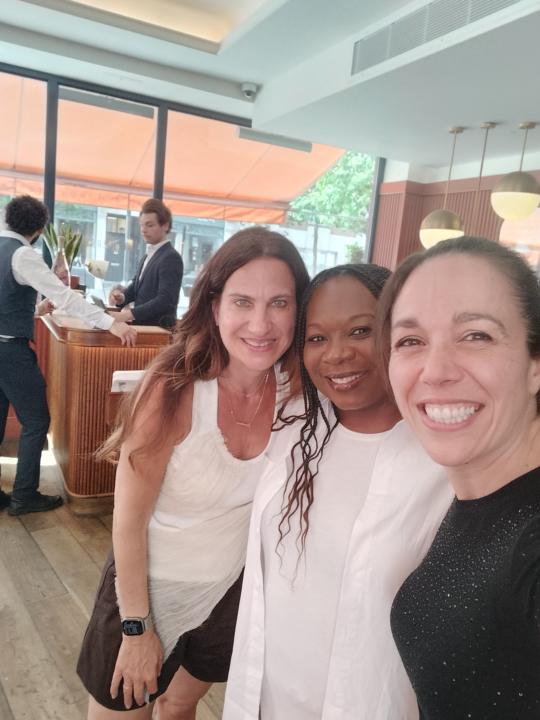
From online to IRL connections- the gift of friendships
I've said this before, but when starting this community and when joining other communities on skool, I never anticipated the actual 'community' piece of it. Didn't expect the very real connections that would be made through a medium that seemed so detached to me. But, here we are, connecting. And it feels real. Because maybe, just maybe, it is real after all? This past week @LaTanya Carter and I had an incredible journey making our way through a few countries (more on that in a different post). It's been a beautiful trip filled with realizations, beautiful scenery and gratitude. I'm so thankful for the ability to do this and so so blessed to do this with her! She's lovely 💗 The highlight on the very last day of our trip has been being able to meet @Serena DAfree in real life!!! 🇺🇲🌎🇬🇧 Her and I met early on and we just 'clicked'. Her heart for people and her ability to look beyond the surface really stood out and I just love her energy. The real life meet up just further highlighted her spirit and her love. (Thank you for a lovely lunch!) Spending time with her was the best part of the last day. It never ceases to amaze me that we live in a time where we can meet strangers (from all over the world) online and become friends and meet them in real life. Wild times... How have your online connecting experiences been for you? I personally know it doesn't always turn out positive but obviously I'm hoping for more good than bad!
Poll
18 members have voted
5 likes • May 25
This is amazing!!! so nice to see :) I love connecting here and it definitely opened me up so much even in a real life. I am trying to find the perfect balance between online and offline :)
1-10 of 90
@veronika-pyszkova-8117
I help people who are stuck in the on-and-off cycle build a sustainable fitness & nutrition habits that fit their life.
Active 8m ago
Joined Nov 7, 2025
INFJ