Activity
Mon
Wed
Fri
Sun
May
Jun
Jul
Aug
Sep
Oct
Nov
Dec
Jan
Feb
Mar
Apr
What is this?
Less
More
Memberships
The School of Thyme & Wisdom
118 members • $20/m
21 contributions to The School of Thyme & Wisdom

Feb 11 •
Guardians Brew- A warm tea with broth as the base
This is a tasty broth with medicinal herbs that will make you feel better- even if you aren't sick! What herbs do you like to include in warm broths?

1 like • Feb 24
I'm canning some beef bone broth right now! Lol
Feb 22 •
For muscle tears- what’s your go to?
My husband was injured by our LGD and the massage therapist thinks it’s a tear. What would be your herbal protocol to speed healing?
1 like • Feb 24
You could try castor oil mixed with ground cayenne pepper. Rub it on the sore area and wrap. That would be a castor oil pack with an extra kick for pain. A good one for healing is a salve with comfrey, plantain and St. John's Wort infused oil. 1 C infused oil 1/4 C beeswax 15 drops of lavender essential oil
Jan 29 •
What seeds are you growing?
At the moment, I have toothache plant, rudbeckia, lace flower, and summer savory. Tomorrow I may start eggplants and peppers- what about you?

1 like • Feb 2
Late start here too. Just planted tomato, pepper and eggplants. Grow baby, grow! 🌱🪴🌱
Oct '25 •
Basics of Blending Herbs
Since this category is dedicated to herb blends and pairings, I though it fitting to have a thorough post on blending herbs. Here you go- The Basics of Blending Herbs Herbal blending is both an art and a science. Whether you are creating a soothing tea, a culinary spice mix, or a healing salve, blending herbs thoughtfully ensures harmony of flavor, aroma, and effect. Beginners often find that a few guiding principles can transform their herbal creations from random mixtures into balanced, purposeful blends. 1. Understanding the Purpose of Your Blend The first step in blending is to define the goal. Are you seeking to support digestion, create a calming bedtime tea, or add complexity to a recipe? The purpose informs the types of herbs you select. For instance: - Medicinal blends may target specific systems (nervous, digestive, immune). - Culinary blends often balance flavor groups (savory, sweet, bitter, pungent). - Aromatic blends like incense or potpourri rely on fragrance harmony. 2. Choosing a Base Herb Every blend needs an anchor. In tea blending, this is often called the foundation herb, typically making up 40–60% of the formula. Base herbs are usually mild in flavor and action, supporting and carrying the other herbs. Examples include: - Lemon balm (Melissa officinalis) – calming, lightly citrusy. - Chamomile (Matricaria chamomilla) – soothing, floral. - Nettle (Urtica dioica) – nutritive, earthy. 3. Adding Supporting Herbs Supporting herbs reinforce the purpose of the base. They may contribute similar properties, add synergy, or bring in secondary benefits. For example, a calming blend of lemon balm might be paired with passionflower to enhance relaxation. In culinary blends, rosemary may be supported by thyme or oregano to build depth. 4. Accent Herbs: Flavor and Focus Accent herbs are added in small amounts (5–20%) to provide distinction. They bring brightness, spice, or a strong medicinal action. Examples include: - Peppermint for cooling freshness. - Ginger for warmth and improved circulation. - Lavender for aromatic, calming notes.
1 like • Oct '25
Thanks for the info. I have been playing with making my own teas and this will definitely help!
Aug '25 •
Using Roses as Herbs
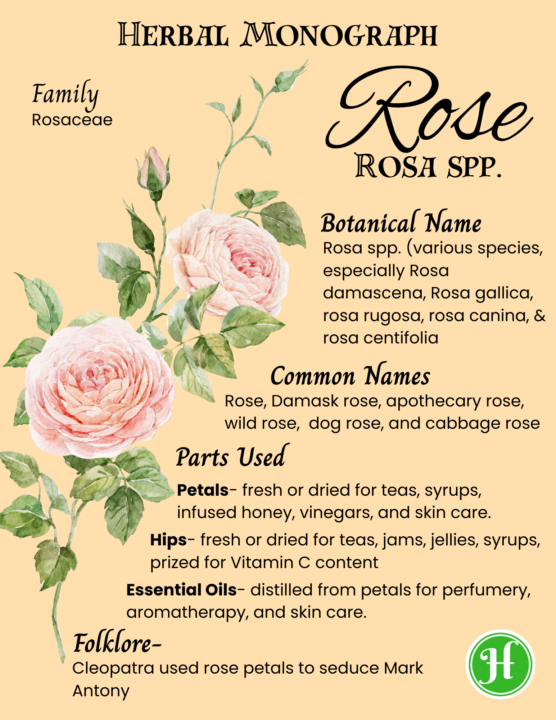
Many people don't know how beneficial roses can be. Even if you do not grow roses, rose petals, essential oil, and rose hips are all available at your favorite source- online or health food store. It's not every day that something beautiful and fragrant is so good for you! Let's take a closer look at the Rose as an herb: Botanical Name - Rosa spp. (various species, especially Rosa damascene, Rosa gallica, Rosa rugosa, Rosa canina, and Rosa centifolia) Common Names - Rose, Damask rose, Apothecary rose, Wild rose, Dog rose, Cabbage rose Family - Rosaceae Description Roses are perennial, woody shrubs with thorny stems, pinnate leaves, and showy, fragrant flowers ranging in color from white to deep crimson. The hips (seed pods) are small, usually red or orange, and develop after flowering. In herbalism, the petals and hips are the most valued parts. History & Folklore Ancient Civilizations: - Egypt: Cleopatra famously scattered rose petals in her chambers to seduce Mark Antony. - Persia: The birthplace of distilled rosewater (~10th century CE), used for medicine and cuisine. - Rome: Petals were strewn at feasts and steeped in wine; rose garlands symbolized secrecy ("sub rosa") Parts Used - Petals – fresh or dried for teas, syrups, glycerites, infused honey, vinegars, skin care. - Hips – fresh or dried for teas, jams, jellies, syrups; prized for vitamin C content. - Essential oil & hydrosol – distilled from petals for perfumery, aromatherapy, and skin care. Constituents - Petals: volatile oils (including geraniol, nerol, citronellol), flavonoids, tannins, phenolic compounds. - Hips: ascorbic acid (vitamin C), flavonoids, carotenoids (beta-carotene, lycopene), pectins, organic acids. Medicinal Actions - Petals: fresh or dried for teas, syrups, glycerites, infused honey, vinegars, skin care - Hips: fresh or dried for teas, jams, jellies, syrups; prized for vitamin C content. Modern Research - Rose extracts show antioxidant and anti-inflammatory effects. - Aromatherapy with rose essential oil has been linked to reduced anxiety, improved mood, and enhanced sexual function. - Rose hip powder has demonstrated benefit in reducing pain and improving mobility in osteoarthritis.
3 likes • Aug '25
I had no idea about all this goodness from roses.
1-10 of 21

@valerie-wilcox-6482
Starting my journey of learning about herbal remedies. Discovering how much vegetables, herbs & flowers are intertwined in successful gardening.
Active 9d ago
Joined Sep 11, 2024
Powered by