Activity
Mon
Wed
Fri
Sun
Apr
May
Jun
Jul
Aug
Sep
Oct
Nov
Dec
Jan
Feb
Mar
What is this?
Less
More
Memberships
Ruth Performance Lab
268 members • Free
2 contributions to Ruth Performance Lab

Dec '25 •
The Split Jerk is F@#ing hard
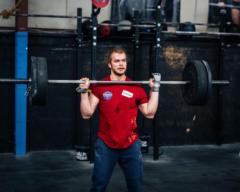
I’ve more or less spent about 12 years lifting…but I still suck at the split jerk at heavy loads. Lighter loads is okay, but once I go beyond 70%, my foot work and pressing turns to 💩 My best clean is 155kg, but my best jerk is only 125kg. And even that weight is a bit iffy. I know that my knees cave in on the dip and my shoulders don’t really lock out. I try to control it but once it gets to a certain load, it’s almost like my body can’t handle it in a way. Any feedback here? I’d love to hear everyone’s thoughts.

2 likes • Dec '25
On the first clip, it looks like the barbell doesn't elevate very high after your Drive, making it difficult for you to have enough space to go underneath. Thinking about pushing hard with legs , staying very vertical in the Dip and Drive phase ( slight lean back ) and actually trying to elevate the barbell higher on the Drive phase, I think should help you
1 like • Dec '25
@Jonathan Miller Yeah, I think as long as your knees are following your feet, I wouldn't think about pushing knees out too much, as this can indeed make you lose power in the Dip and Drive because you tend to lose foot connection with the ground if you push knees out too much. But , on the other hand, if they're caving in too much , that's also not great aha. Just making sure the knees are following the feet, not too out, not too in

Dec '25 •
12/18 Office Hours replay is now posted in the Vault.
This one took a great turn and ended up being a practical conversation on three big themes: 1. The real cost of pushing performance. If you’re training at a high level, there are inherent risks to living at the edge of your capacity, and part of competing well is accepting that reality without getting emotional about it. 2. HRV and recovery context. We broke down what HRV is actually measuring (autonomic nervous system state), why it tends to trend up during aerobic phases and down during heavy metcon phases, and why a high HRV is more about being “ready to adapt to stress” than “ready to perform.” We also talked about why subjective readiness still matters more than wearables. 3. Mental performance tools that translate. Dana shared major takeaways from working with a mental performance coach, including managing the inner critic, shifting focus to controllables, and removing outcome attachment so performance can show up even when you don’t feel 100%. 4. Mental performance only works if it’s trained consistently. Just like physical skills, things like managing emotion after a miss, resetting focus, and reframing self-talk require repetition and structure. Insight alone doesn’t change performance... practice does.
0 likes • Dec '25
Regarding HRV number, have you found there is a specific range that you want your athletes to be in, regardless of the type of training they're doing , or is it really more of an individual thing ? Thanks Kyle
1-2 of 2
Active 13h ago
Joined Dec 14, 2025
Powered by