Activity
Mon
Wed
Fri
Sun
Aug
Sep
Oct
Nov
Dec
Jan
Feb
Mar
Apr
May
Jun
What is this?
Less
More
Memberships
Franchise Marketing Systems
64 members • Free
5 contributions to Franchise Marketing Systems

Jan 20 •
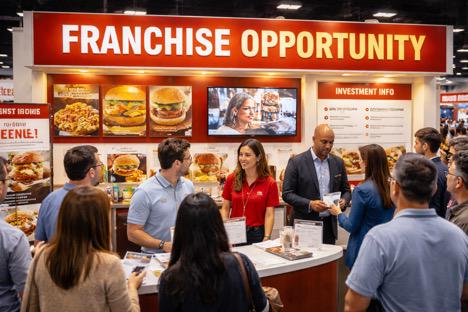
Franchising Your Business: How to Exhibit at a Franchise Tradeshow and Turn Booth Traffic Into Franchise Sales
For many emerging franchisors, franchise tradeshows feel like the most direct path to growth: put up a booth, talk to a lot of people, collect leads, and sell franchises. The reality is more nuanced. Franchise shows can absolutely become one of the strongest lead sources you’ll ever use—but only if you treat them like a structured sales channel, not a marketing outing. A franchise tradeshow gives you something digital marketing often can’t: a concentrated room of people who are actively exploring business ownership, comparing brands in real time, and open to scheduling a next step immediately. It’s a high-intent environment. But high intent doesn’t automatically produce high conversion. The franchisors that win at shows win because they show up with a clear offer, disciplined qualification, and a follow-up process that turns conversations into applications. This article breaks down the best ways to exhibit at a franchise tradeshow to sell your franchise—step-by-step—so you can build a repeatable tradeshow strategy as part of your franchise growth plan. 1) Start With the Right Mindset: A Tradeshow Is a Sales System, Not a Booth Many franchisors judge a show by how busy the booth felt. That’s not the right metric. A successful show produces: - qualified candidates - scheduled next steps - a clean and trackable pipeline - and an efficient cost per awarded franchise If your show plan doesn’t include measurable outcomes, you’ll fall into the most common trap: leaving with a stack of business cards and no consistent process to convert them. Your goal at the show is not “talk to everyone.”Your goal is: identify the right people and advance them to a defined next step. 2) Know Who You’re Targeting Before You Arrive The best booths feel magnetic, but they’re not generic. They are designed for a specific buyer profile. Before the show, define your ideal franchisee in clear terms: - owner-operator or semi-absentee? - single unit or multi-unit mindset? - target investment range - required liquidity and net worth - target markets (cities/states) - background (sales, management, construction, healthcare, home services, etc.) - daily involvement expectations

0 likes • Jan 21
Every Franchisor should attend a Franchise Expo - at least, as a visitor - so that they get a good perspective on the franchise marketplace overall, plus there might be free food samples.. 😎
0 likes • Mar 4
^^^^^ love that!!!! Nothing beats having feet on the ground where it’s all happening, ya got to if you want to keep up!
Feb 26 •
Business coaches…
A) Have one/many already B) I’m providing the service myself while we are small C) Business what…? Your growth as a franchisor (units and royalty) is completely dependent on the profitability and happiness of your franchise owners. I made the mistake of building a passive support culture and it was a mountain of work to turn it into a proactive environment. Because of it, we attracted zees that wanted a Zor that was hands off and they never asked for help. They grew slower… Passive support may feel nice, since we all have lots to do, but it’s really the wrong way to build a franchise and will cause more problems as you grow. Be proactive, put resources in place as soon as you can, advertise that you are highly active in their business and you will attract individuals that want to participate in your support mechanisms. More work up front means more money, more free time, and a smoother journey in building YOUR business long run!
0 likes • Mar 4
Very interesting - there is an allure to going “passive”, but it also means less interaction with those performers that are paying you your royalty. Perhaps the universe will grace a Zor with only ultra-motivated franchisees; I still would wager that they would do even BETTER with a proactive, engaged Zor
Feb 24 •
12 years as a Zor
I’m Kelsey, founder of Bloomin’ Blinds. 85 owners, 160 territories. Huge fan of FMS. Ask me anything! Always willing to help a Zor!
0 likes • Mar 4
Agree with Chris!!!
Dec '25 •
How to Approach a Trademark Conflict When Another Brand Owns the Mark
When you discover that a competing brand already owns trademark rights in your target market, you are dealing with a territorial trademark conflict. Because trademark rights are jurisdiction-specific, you must follow a structured approach to determine whether expansion is possible and on what terms. Below is a step-by-step framework used by franchisors, global brands, and IP attorneys. 1. Determine the Type and Strength of the Other Party’s Trademark Rights Trademark conflicts are not all equal. Start by determining: Is the mark federally registered? - In the U.S., a USPTO federal registration gives nationwide priority. - In other countries, national registration gives strong exclusivity. Is it registered only regionally/state-by-state? - In the U.S., state-level registrations exist, but are much weaker than federal registrations. - In some countries (Canada, India, EU), federal registration is required and regional registration is limited. Is the owner using the trademark in commerce? - Non-use can weaken or void rights. - Many trademarks are abandoned after a few years. Why this matters:You may be able to prove: - The other party has not used the mark, - Has abandoned the mark, or - Only has limited jurisdictional rights. This can open the door to filing your own application or negotiating a coexistence agreement. 2. Conduct a Full Clearance Search (Not Just a USPTO Search) A true clearance search checks: - Federal USPTO database - State trademark databases - Common law use (websites, social media, business filings, retail presence) - Domain names - WIPO/International registries (if expanding globally) This creates a complete picture of real risk. A competitor may own a registration but: - Not use it consistently - Use it in an unrelated category - Operate in a geographic area where confusion is unlikely These facts matter when you negotiate or litigate. 3. Assess Your Options Based on the Risk Level Once you know the full story, there are five main strategic options:
0 likes • Dec '25
this happens A LOT - good info here!
Nov '25 •
How to Run an Effective Franchise Discovery Day
A step-by-step guide for franchisors and franchise development teams A Discovery Day is one of the most important steps in the franchise sales process. It is typically the final stage before awarding a franchise and gives both the franchisor and the prospect a chance to evaluate cultural fit, operational alignment, and commitment. A great Discovery Day should do three things: 1. Educate the prospect on the business model and support systems. 2. Demonstrate the professionalism, culture, and leadership of the brand. 3. Build confidence so the prospect feels ready to move forward. Below is a full framework for executing a successful event. *Check out the Voda Restoration Franchise Video, Great franchise system doing a strong brand presentation. SECTION 1 — Pre-Discovery Day Preparation 1. Pre-qualify the prospect thoroughly You should confirm: - Financial qualifications - Geographic interest - Operational capacity - Timeline for investment - Understanding of the franchise model By the time they attend Discovery Day, they should already be 70–80% ready to buy. 2. Set expectations clearly Send a Discovery Day Packet that includes: - Agenda / timeline - Dress code - Location and parking info - Leadership bios - What to bring - Final steps after Discovery Day This eliminates uncertainty and increases professionalism. 3. Internal team preparation Your team should know: - Who’s attending - Their background - Their timeline and interests - Any objections previously raised Great franchisors enter the day prepared and aligned. SECTION 2 — Discovery Day Agenda Structure A strong agenda flows like a story. Here’s the ideal sequence: 1. Warm Welcome & Brand Introduction - Greet prospect personally - Offer coffee, branded materials, tour badges - Provide a relaxed onboarding conversation Goal: Establish rapport and comfort. 2. Leadership Introductions Each leader gives a short background: - Founder story - Mission and vision - Why franchising? - Commitment to franchise success
0 likes • Nov '25
Nothing better than a Discovery Day!!
1-5 of 5
@tim-conner-5848
Click the following to learn more about what I do: www.fmsfranchise.com
Active 18d ago
Joined Nov 20, 2025