Activity
Mon
Wed
Fri
Sun
Jul
Aug
Sep
Oct
Nov
Dec
Jan
Feb
Mar
Apr
May
Jun
What is this?
Less
More
Owned by Chris
Learn about franchising your Business and How to Franchise your Business Model into new markets through franchise growth.
Memberships
Mobile Mechanic Coach
163 members • Free
Skoolers
174.8k members • Free
47 contributions to Franchise Marketing Systems

2d •
Creating and Presenting an Effective Franchise Item 19 Financial Performance Representation
One of the most important sections of a Franchise Disclosure Document (FDD) is Item 19, commonly referred to as the Financial Performance Representation (FPR). For prospective franchisees, Item 19 is often the most anticipated section of the FDD because it provides financial information that can help them evaluate the potential economic performance of the franchise opportunity. For franchisors, however, Item 19 represents one of the most heavily scrutinized and legally sensitive sections of the franchise offering. The Federal Trade Commission (FTC) and state franchise regulators require that any financial representations made to prospective franchisees be truthful, substantiated, and presented in a manner that is not misleading. When prepared correctly, Item 19 becomes a powerful sales and development tool. It helps prospective franchisees understand the economics of the business, builds credibility for the franchise system, and provides transparency regarding expected performance. When prepared improperly, however, Item 19 can expose a franchisor to regulatory issues, legal liability, franchise disputes, and reputational damage. The key is finding the balance between presenting compelling financial information and ensuring full legal compliance. Understanding the Purpose of Item 19 Item 19 exists to provide prospective franchisees with objective financial information regarding the franchise system. Contrary to what many new franchisors believe, Item 19 is not required. A franchisor may choose not to include any financial performance representation. In that case, the franchisor and its representatives are prohibited from making any earnings claims, revenue estimates, profit projections, or financial performance statements outside of the FDD. However, most modern franchise systems choose to include Item 19 because prospective franchisees increasingly expect financial transparency during the evaluation process. A professionally prepared Item 19 helps answer critical questions such as:
2
0
14d •
What is a learning management system for a franchise and how do you build one for franchise training?
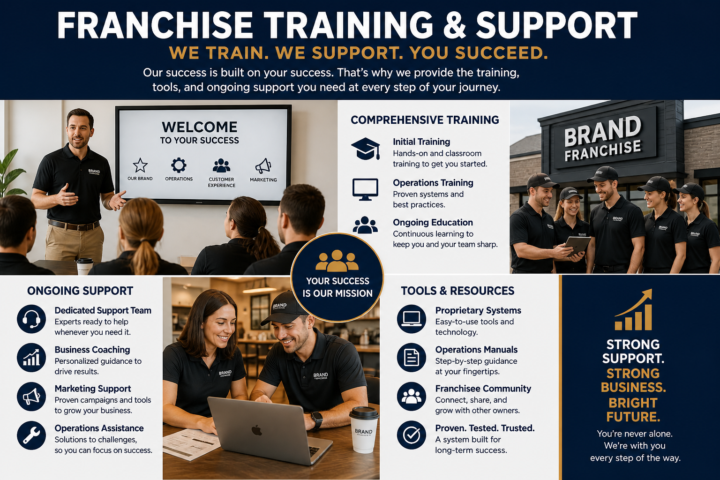
A Learning Management System (LMS) is the central training platform that a franchise system uses to educate, certify, track, and support franchisees and their employees. Think of it as the digital version of your franchise operations manual, training department, onboarding process, and continuing education program combined into one system. For a franchise organization, an LMS becomes one of the most important tools for maintaining consistency across locations and ensuring that every franchisee operates according to brand standards. Read more on learning management systems in Franchising. Why a Franchise System Needs an LMS As a franchise grows beyond a handful of locations, in-person training alone becomes difficult and expensive to manage. An LMS helps franchise systems: - Train franchise owners consistently - Onboard new employees quickly - Maintain compliance standards - Track certifications and completion rates - Deliver updates to operating procedures - Reduce training costs - Improve operational consistency - Scale franchise growth efficiently Without a structured LMS, training often becomes fragmented, inconsistent, and difficult to monitor. What Should Be Included in a Franchise LMS? 1. Franchisee Onboarding Training This is typically the first learning path. Topics include: - Introduction to the brand - Franchise system overview - Company history - Mission and values - Franchise agreement requirements - Business setup procedures - Opening timeline The objective is to help a new franchisee understand the entire franchise system before opening. 2. Operations Training This section mirrors the Operations Manual. Examples: - Opening procedures - Closing procedures - Customer service standards - Product preparation - Equipment operation - Quality control - Inventory management This is often the largest section of a franchise LMS.
2
0
May 11 •
When Should you Consider Filing a Patent for Your Business?
Filing a patent while franchising a business model is a strategic decision—not every franchise concept needs a patent, but in certain cases, it can create significant long-term value and competitive protection. The key is understanding what can actually be patented, when it makes sense, and how the process works. Below is a clear, practical breakdown. 1. First: Can You Patent a Franchise Business Model? You cannot patent a general business model or franchise system. However, you can patent: - A unique process or method (if it meets patent criteria) - A technology platform or software - A piece of equipment or machinery - A manufacturing or service process - A formula or system with technical novelty Most franchise systems are protected through: - Trademarks (brand) - Trade secrets (processes, recipes, systems) - Copyrights (manuals, materials) - Patents are only relevant if there is true innovation. 2. When You Should Consider Filing a Patent You should consider filing a patent when your business includes something that is: 1. Truly Unique and Non-Obvious - Not already used in the market - Not easily replicated - Not obvious to someone in the industry 2. Core to Your Competitive Advantage If your system depends on: - A proprietary technology - A unique operational method - A specialized piece of equipment That’s where a patent matters. 3. Difficult to Protect as a Trade Secret If your innovation: - Is visible to customers or competitors - Can be reverse engineered Patent protection may be necessary. 4. Scalable Across Franchise Locations If you are rolling out a system nationally: - More exposure = more risk of copying - Patent adds long-term protection 5. You Plan to Raise Capital or Exit Patents increase: - Valuation - having a unique, protected patent process adds to your business valuation. - Investor interest - Strategic acquisition appeal 3. When NOT to File a Patent You likely do NOT need a patent if:
2
0
May 4 •
Guide to Protecting the Brand and Repairing the Relationship When Managing Franchisee Relationships
Franchising is built on alignment—shared goals, shared systems, and shared success. But even in the strongest franchise systems, disputes between franchisors and franchisees are inevitable. Whether driven by financial stress, unmet expectations, operational breakdowns, or personality conflicts, a struggling franchise relationship can quickly escalate if not handled properly. The difference between a temporary challenge and a long-term problem often comes down to how the franchisor manages the situation. A thoughtful, structured approach can resolve issues, preserve relationships, and protect the brand. A reactive or overly aggressive approach, on the other hand, can lead to litigation, reputational damage, and network instability. This article outlines a practical, step-by-step framework for managing franchisee disputes and stabilizing relationships that are going poorly. Understanding the Root Causes of Franchise Disputes Before addressing a dispute, it’s critical to understand why it exists. Most franchise conflicts fall into a few common categories: - Financial Issues – Late royalty payments, underperformance, or cash flow problems - Operational Non-Compliance – Failure to follow brand standards or systems - Expectation Gaps – Franchisee believes the business should perform differently - Communication Breakdowns – Misalignment due to lack of consistent dialogue - Personality Conflicts – Differences in leadership style or decision-making In many cases, the dispute is not about one issue—it’s a combination of several factors that have compounded over time. Step 1: Identify and Document the Issue Clearly The first step in managing a franchise dispute is clarity. Franchisors should: - Document the specific issue(s) - Identify which sections of the Franchise Agreement are being violated (if applicable) - Gather supporting data (financials, communications, performance metrics) This step is critical because it removes ambiguity. Instead of addressing the situation emotionally or generally, you are working from facts.
3
0
Apr 28 •
What are the Steps in the Franchise Sales Process?
Selling a franchise is a structured, multi-step process that blends marketing, education, compliance, and relationship-building. Unlike selling a typical product or service, franchise sales involve guiding a prospective buyer through a significant investment decision while ensuring legal compliance and brand alignment. A well-defined franchise sales process not only improves conversion rates but also helps identify qualified candidates who will successfully represent the brand long-term. Here are the key steps of the franchise sales process, from initial lead generation through signing and onboarding. 1. Franchise Development Strategy & Preparation Before any franchise sales activity begins, the franchisor must have a solid foundation in place. This includes: - A legally compliant Franchise Disclosure Document (FDD) - Clearly defined franchise offering and territory structure - Financial performance expectations and investment ranges - A compelling value proposition - Defined ideal franchisee profile (READ MORE ON CREATING A FRANCHISE BUYER PROFILE) At this stage, the franchisor also builds out internal sales systems, including: - CRM (Customer Relationship Management) tools - Lead tracking and qualification processes - Sales scripts and communication templates Preparation is critical. A disorganized sales process can lead to poor franchisee selection, compliance risks, and brand inconsistency. 2. Lead Generation The franchise sales process begins with generating interest from prospective franchisees. This is typically done through a combination of marketing channels: - Franchise portals (e.g., Franchise Gator, Franchise Direct) - Paid digital advertising (Google Ads, social media) - Organic content marketing (blogs, SEO, video) - Broker networks and franchise consultants - Public relations and brand exposure The goal is to create a steady pipeline of inbound leads who are interested in learning more about the franchise opportunity.
5
0
1-10 of 47

@chris-conner-7990
Chris Conner is the President and Founder of Franchise Marketing Systems a firm with almost 50 consultants who helps you franchise your business
Active 8h ago
Joined Nov 3, 2025