Activity
Mon
Wed
Fri
Sun
Jul
Aug
Sep
Oct
Nov
Dec
Jan
Feb
Mar
Apr
May
What is this?
Less
More
Memberships
Founders Accelerator (Free)™
19.7k members • Free
AI Automation Society
383.1k members • Free
13 contributions to AI Automation Society

8h •
The 10-Hour Test
Most of you have spent 200+ hours "learning AI." Almost none of you have spent 10 hours selling it. Not because you can't sell. Not because there are no buyers. Because building feels safe. Selling feels exposing. One group has tabs full of tutorials. The other has a Stripe notification. Which sound do you wake up to — and what's stopping you from switching?

💎
⭐
19h •
If you've ever felt "AI Overwhelm", please read this.
Every single person following AI right now is overwhelmed. Including me. I make videos about this stuff for a living and I still feel the pressure. New model drops. New framework. New feature update. It feels like every single day. But after hearing a ton of you guys bring up "AI overwhelm" week after week, I realized this: → There's a HUGE difference between knowing the "what" and knowing the "how." Staying aware does not mean testing everything. Most new tools and features only need the "what." You see the title. You understand what it does. You move on. The "how" is reserved for the stuff that solves a problem you actually have right now. So when something new drops, I ask myself one question: Does this solve a specific pain point I'm currently dealing with? If yes, I test it in a real scenario. I test it against something that actually matters to me. If no, I save the link. I mentally file it away. And I keep walking. Because here's the thing. Your north star is probably very different from mine. Part of my job is to experiment, form opinions, and share what I think is useful. So naturally I test a lot of stuff. But if your north star is building a business or getting better at your craft, then every shiny new tool might just be a distraction. The number one mistake I see people make is they try to learn everything. They watch every video. They test every tool. They jump to the next thing before the last thing even had a chance to work. And if I've contributed to your overwhelm with my daily uploads, I apologize. hehe. But a lot of people think that this ties directly into how you measure your day. Productivity is not how many hours you worked. It's how many meaningful outputs you created that actually moved the needle towards your north star. Someone can work 12 hours one day and feel insanely productive, but they were just watching tutorials and playing around with new tools. Meanwhile someone else sits down for 5 hours, ships the one thing that actually matters, and makes more progress.
4 likes • 17h
@Paul Nurser This is such a healthy approach — back your horses, run them, and only re-open the search when there's an actual pain point to solve. Beats chasing every shiny new thing.
4 likes • 17h
@Robert Fowler 'Stay in your lane and solve what needs to be solved' — that's the whole game right there. The noise will always be there; the work won't do itself 💪

Apr 4 •
What's the coolest Multi Agent Setup You have Done?
Hey all, would love to know what multi-agent systems you have setup and how they are doing? Loving Paperclip thanks @Nate Herk for the awesome video!
1 like • 2d
One setup I'm trying to think through is a multi-agent workflow for Mora Capital. Something like: Agent 1 reviews the client intake and documents. Agent 2 identifies missing items and funding risks. Agent 3 drafts a credit memo or lender summary. Then a human reviews before anything goes out. The key thing I'm learning is that each agent needs a very clear role and success criteria. Otherwise, the system just becomes a group chat of agents making the same mistake in different words. Curious what's working best for you — one main orchestrator managing specialist agents, or agents challenging each other like a review panel?

5d •
Law firms are drowning in manual follow-ups. I built a system that handles all of it before the attorney even opens their laptop.
Every morning at 8AM, this workflow runs silently in the background. Here's what it does: It pulls every active case from Google Sheets. If a client was already contacted today — it skips them. No double emails. Then it checks three things: Filing deadline in 7 days? The attorney gets a Slack alert. Filing deadline in 3 days? Critical Slack alert. Escalate now. No contact in 14+ days? An AI writes and sends a check-in email on behalf of the attorney. Client ghosting on documents for 7+ days? A separate AI-written reminder goes out — polite, firm, urgent. Every email is generated by Llama 3.3 via Groq. Warm tone. Professional. Sounds like the attorney actually wrote it. After each send, the sheet logs "Contacted" + the exact timestamp. The firm stops chasing. The system chases for them. Tools: n8n · Groq (LLaMA 3.3) · Gmail · Slack · Google Sheets

1 like • 2d
This is the kind of automation I think businesses actually pay for. It's not flashy, but it solves a real operational problem — missed follow-ups, missed deadlines, and things quietly falling through the cracks. I'm seeing a similar pattern with Mora Capital. A lot of the value is not in some crazy AI agent. It's in making sure documents are followed up, client packs are complete, lender updates are tracked, and nothing important disappears in WhatsApp or email. That "silent background" workflow is where real operational leverage sits. One thing I'd test is a confidence check before the AI sends anything sensitive. If the tone is off or the matter is high-risk, it should probably flag a human first.

🔥
3d •
Cooperation between two countries on educational AI
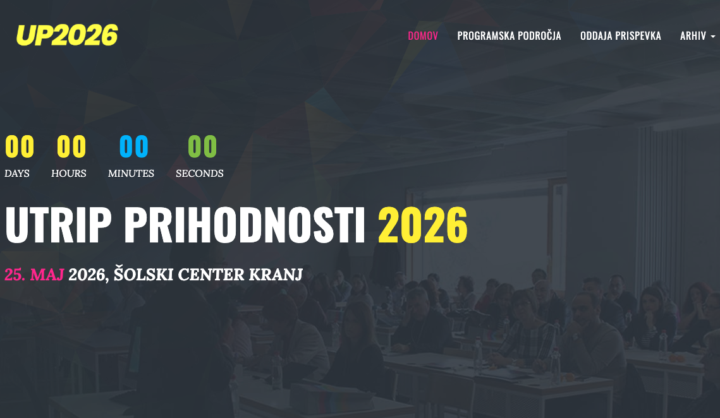
Monday 25th of May , my co-founder Romana FINŽGAR stood in front of a room full of fellow educators and presented DOQENT the AI-powered teacher productivity platform we've been building together at Utrip prihodnosti 2026 (UP2026), the international education conference hosted by Šolski center Kranj. Her talk, "Doqent: AI-podprt učiteljski pomočnik za sodobno pedagoško prakso" (Doqent: an AI-supported teacher assistant for contemporary pedagogical practice), was part of Track 3 on Active Learning and Contemporary Pedagogical Approaches. There is something quite different about watching a product you co-built being explained by the person who actually teaches in a classroom every day. Romana didn't pitch features. She walked teachers through the five-step onboarding register, photograph your timetable, adjust settings, add the curriculum, and let the platform take over the rest in the language and rhythm of someone who knows exactly which minutes of a teacher's week are worth saving. A few reflections from today: → The strongest validation for an edtech product is when a teacher presents it to other teachers, not when a founder presents it to investors. → Slovenia continues to punch above its weight in serious pedagogical innovation. The UP conference has been running since 2015 and the level of contribution this year was genuinely impressive. → Building a company across borders (Netherlands ↔ Slovenia) only works when your co-founder owns the part of the problem you genuinely cannot own yourself. Romana owns the classroom. I do not. That is exactly why this partnership works. DOQENT is in late beta and we launch with Slovenian teachers first, with the Netherlands, DACH and the wider European market on the roadmap.
2 likes • 2d
This is huge — congrats to you and Romana. The education angle really interests me because one of the things we're working on with AptTick is the idea of turning learning into income pathways. So for me, AI in education is not only about making teachers faster. It's also about helping learners move from content, to skills, to real-world application. Teacher productivity is underrated because when teachers get time back, that time can go back into learners. The cross-border angle is also powerful. Education systems need trust before they adopt anything new, so seeing another country validate the workflow can make adoption much easier. Excited to see how DOQENT scales.
1-10 of 13

Active 2h ago
Joined Mar 17, 2026
Powered by