Activity
Mon
Wed
Fri
Sun
Nov
Dec
Jan
Feb
Mar
Apr
May
Jun
Jul
Aug
Sep
Oct
What is this?
Less
More
36 contributions to Maverick Aromatherapy

Apr 17 •
Focused Study Synergy staring Rosemary Essential Oil
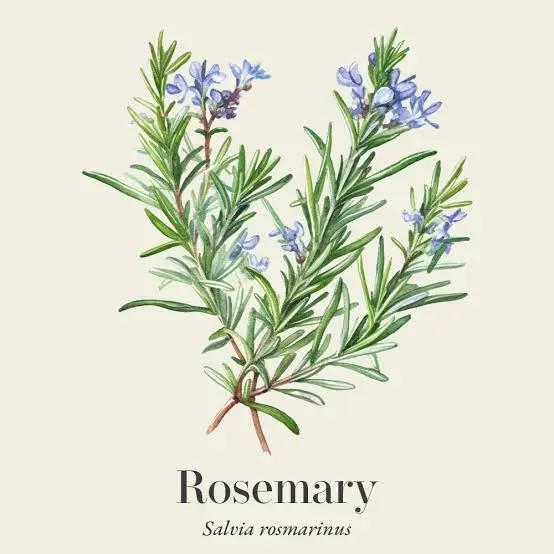
Focused Study Synergy Intention: A bright, herbaceous, invigorating synergy for 12 years of age+ to awaken the senses, support focus and concentration for studying whilst lifting mood. Formulation: · 1.50g (30%) Rosemary, ct camphor (Rosmarinus officinalis) · 1.25g (25%) Spike Lavender (Lavandula latifolia) · 1.00g (20%) Peppermint (Mentha x piperita) · 1.25g (25%) Lemon (Citrus limon) Place all the essential oils into a sterilized 5ml amber glass orifice reducer bottle and mix well. Allow the essential oils to synergize with each other for at least 24 hours. To make an Inhaler Stick: · 0.7g (10 drops) of Synergy · 1 Blank Inhaler stick. Pour the designated synergy amount into a small glass or ceramic sterilized bowl. Place a blank organic cotton wick into the bowl to soak up the essential oils for a minute. Using tweezers, pick up and place the cotton wick into the inhaler stick and secure with the closure cap. To use the inhaler aroma in each nostril when needed. To make a 2.11% Roller Ball: · 0.2g (4 drops) Synergy · 10ml Jojoba oil Mix and pour into the roller ball. Allow to synergize for 24 hours before using. Apply to the pulse points of the wrists. Inhaler. Diffuser: Add no more than 5 drops into a water-based diffuser and set the timer for 15-30 minutes max, then off for 1-2 hours before turning back on if needed for the same diffusion time. Why these Oils were chosen: Rosemary ct. camphor: · Traditionally used to support mental clarity, memory retention, recall, and concentration. · How it works is that rosemary essential oil is a cholinergic agent that prevents the breakdown of key neurotransmitters and increases brain-boosting activity via inhalation. It interacts with and inhibits acetylcholine breakdown due to rosemary's high 1,8-cineole content (23.38%), a known acetylcholinesterase inhibitor. Acetylcholine is essential for processing, memory, and concentration, so by inhibiting the enzymes that break it down, rosemary keeps high levels of this neurotransmitter active in the brain, a similar mechanism to how some pharmaceutical drugs are given to dementia patients.

3 likes • Apr 17
@Matthew Sulpizi the toxicity is in relation to to us preparing a significant number of sniffies at once, not the consumer. If you have been supplied with the correct size cotton wick, it fills the chamber of the inhaler in its dry form, and the drops are being added to the centre bottom of the wick in the tube, not the top or down the sides, so have time to form a capillary reaction and track its way through the cotton wick. All my inhalers get shrink wrapped once they are sealed and labelled preventing evaporation. The essential oil isn't evaporating into the atmosphere at the same rate as being in a bowl or cup, and our exposure is not as high. Over exposure to essential oils can trigger liver damage, as I learnt as a youngster 40 years ago.
1 like • Apr 19
@Jane Lawson just to clarify, due to my congenital liver condition, exposure to essential oils in high quantities are harmful for me, which means they are toxic. I'm riddled with cysts in my liver, pancreas and kidneys. I also have many chemical and food allergies, some which I have had since I was a baby, so have always had to be careful what I use on me and what I work with. Interestingly, I cannot tolerate Rosemary eo at all, the smell makes me instantly dizzy, and if it is applied to my skin I have nausea and liver pain. It's the only essential oil that I have this reaction to, which is the same reaction I get with paracetamol, antibiotics and mineral oil.

Apr 2 •
It's not just for therapists! It's for EVERYONE who has an interest in having a healthier lifestyle!
Have you upgraded to Premium yet? If not, why not? 😊What are you waiting for? One of the benefits of Premium membership is our monthly Sunday Evening Relax. We chat about all things complementary therapy and obviously essential oils, the crux of our tribe! We might do a wee meditation, I'm thinking a wee taster of Queen Hatshepsut this month. Discuss some simple self help techniques you can use on yourself or your clients if you are a therapist. A Q&A part, there are a plethora of different therapists in our tribe. Our monthly meets are very much "go-with-the-flow" and led by yourselves. Here's the link for more details: https://www.skool.com/maverick-aromatherapy-3200/monthly-sunday-evening-relax-2

2 likes • Apr 17
@Kathryn Lynnette Bales so I just did a conversion as we're litres down here and I never learnt imperial measurements ... There's 3.785 litres to a US Gallon.. We're currently at $3.80/litre for 98 which my car runs on = $14. 383/gallon.
1 like • Apr 18
@Jane Lawson really sux aye!

Apr 11 •
Lymphedema
I have to share!! I let a knee issue go too long before i had it replaced. In the meantime my ankle started swelling. I also had had a recent hip replacement and was sleeping in a recliner because my new memory foam bed was too soft and i could nit get out of it in the morning. My ankle was swollen every day, all day long!! That is where i was two months ago. In the meantime i purchased a new bed that goes up and down to help me get out of it and it has a lovely relaxing vibrator in the top half of the bed. I also found a cream which had gingko bilboa in it which was for the lymphedema. My ankle was swelling every day and I had literally given up hope that it would be normal again. I noticed after finally getting used to the new firm bed that my ankle was less swollen. When it did swell I used the gingko cream on it. Now i am no longer using the cream. I am sleeping iin the bed all night long and my ankle is no longer swollen every day. Yesterday, i was on my feet all day long helping a friend stock her booths in antique stores. No swelling. I am so pleased. I just had to share.
1 like • Apr 15
That's brilliant Lynette. Was the cream just Gingko, or did it have other ingredients too?
2 likes • Apr 17
@Kathryn Lynnette Bales interesting... I'm going to do some research on that combination 😁
Apr 10 •
Tour of Your Clinic/Dispensary
For those who are Clinical Aromatherapists, I would love to see some pictures or even a video tour of your Clinic/Dispensary. Many Aromatherapy Students in this day and age get their certifications via distance or online education platforms, especially those whose education is an IFPA, IFA, or NAHA-recognized one, as massage and Face-to-face learning and in-person Student Clinic (with Overseeing Mentors) are not mandatory with these associations requirements for certification As a result, when students begin to do their case studies or even when they have graduated and received their certification, they don't know how to set up a professional-looking Clinic/Dispensary, what the minimum requirements are that they should have, etc. More often than not, they learn this through trial, error, and lots of wasted $$$$$ Unfortunately, at this stage, I am not working within a Clinic/Dispensary (still a Student), though I do plan to show where I store my ingredients (essential oils, beeswax, pumice powder, etc) in the coming week or two. Until then, here is a video by well-known UK Certified Clinical Aromatherapist, Massage Therapist, and Reflexology (along with many other qualifications) Victoria Spriggs, giving a tour of her Clinic.
3 likes • Apr 16
My clinic space
3 likes • Apr 17
@Matthew Sulpizi thank you. We're moving soon and I will be retiring from clinic and focusing on my contract manufacturing and teaching, as well as formulating for companies., and my allergy friendly diy cosmetic kits.
Apr 16 •
Shout out and thank you to.....
@Connie Durnin who during yesterdays First Aid Kit for the Home class told us she uses Plai to get relief from Hay Fever symptoms. The more regularly used EO is Ravensara, but I had completely forgotten that Plai also has Antihystamine properties as well.... yes, even a teacher can forget things sometimes! 😊 Connie had dowsed herself for an EO and Plai popped up for her and she says it does afford her relief from the usual runny nose etc. Further though, today I had a client who is trying for a baby. Before she left she asked me if there was an oil she could use for it. Obviously the Ravensara was out of the question as it shouldn't be used in pregnancy, but I didn't want to take any chances. Funnily enough she much prefered the scent pf the Plai to the Ravensara. So, thank you Connie, for the reminder yesterday!!! ❤️

3 likes • Apr 16
Oh that's interesting as I've always used Spearmint to stop a drippy nose. Our tutor dabbed it on one of my classmate's collar when we were training as she was constantly sniffing whilst trying to massage and her nose stopped practically instantly. I also like to add it to a bowl of water under the table for any clients who come in a bit congested.
1-10 of 36

@tania-cottew-3622
I'm a medical aromatherapist (Dip=820hrs) & holistic health practitioner in New Zealand born and grown up with allergies (food, drug & chemical).
Active 80d ago
Joined Jan 20, 2026
INFP
Red Beach, New Zealand