Activity
Mon
Wed
Fri
Sun
Mar
Apr
May
Jun
Jul
Aug
Sep
Oct
Nov
Dec
Jan
Feb
What is this?
Less
More
Memberships
AI Ready Roundtable
412 members • Free
7 contributions to AI Ready Roundtable

3d •
Article: Something Big is Happening
You may have seen this one making the rounds this week. It's a well-done analysis from the perspective of one man, who's knee-deep in AI. Even if he's only half right, the implications on your business, your career, and your team are as dramatic as you may think. Worth 10 minutes of your time: https://shumer.dev/something-big-is-happening

0 likes • 3d
I mean, he could have used a GPT to make it shorter. Just saying...
0 likes • 3d
But REALLY good.
8d •
Question
This group is a little more in tune with AI than the average manager so I thought I'd ask the question. What do you think most business managers actually struggle with when it comes to the notion of this generation of AI (meaning generative AI, not reasoning and planning models). Is there a fundamental misunderstanding of what it is? Maybe they don't fully understand the implications, or what? Not thinking of the CEO and executive team when I'm asking this, I'm thinking more the middle managers in non-tech companies (you know, the ones that drive the US or NA economies that aren't sexy).
0 likes • 5d
@Luciano Oviedo exactly. that's a lot of people that need to understand this new AI. But to answer your questions, I'm referring to businesses that aren't in silicon valley at the cutting edge of AI but are instead, by their nature, "non-tech" companies. Doesn't matter what industry.
0 likes • 4d
@Luciano Oviedo I appreciate your feedback. Thank you. I wonder if you're missing my point. I am very simply trying to segregate out workers who inherently understand AI deeply because of the work they do who would have a much better understanding of how to employ the tools Antrhopic or Gemini afford them. To exaggerate my point, I'm not interested in a middle manager in the back office at OpenAI's point of view. They get it. They live it. I'm interest in understanding what someone at a medium sized business in Des Moines, or just outside Calgary, running payroll or marketing, who likely doesn't live in the world of multi-model language models thinks. What do they struggle with as they look to perform their day to day regardless of their pain points (repetitive work flows, writing briefs, summarizing accounts, etc...)
10d •
Jeff's Daily Dose: Purge at Pinterest
Pinterest just laid off 15% of its workforce to "redirect resources toward AI." Then some of its engineers built a tool to figure out exactly who got cut. Pinterest fired them too. The CEO called it "obstructionist behavior." The engineers say they just used the company's own staff directory. Either way ... the message was clear. We're restructuring. Don't ask questions. Here's the thing. Pinterest's stock is down 20% this year. They're scrambling to compete with Meta & Google on AI-powered ads. And now they're burning trust with the people who survived the cuts. That's the cost of doing AI transformation the wrong way. (Remember: The tech will sort itself out; the "people part" of AI will prove to be the most challenging) So here's the strategic question most leaders aren't asking: When AI automates a process & frees up headcount ... do you cut those roles or redeploy them? Both paths are 100% legit. Path 1: Reduce headcount. You pocket the savings. Margins improve. Wall Street loves it. That's the Pinterest play. Path 2: Redeploy headcount. You move those people into growth roles ... sales, innovation, customer experience. Profits take longer but compound harder. High-class problem either way. But here's what's true regardless of which path you choose ... You can't make that decision until you've proven AI actually works in your operation. You need Pilots that deliver real, measurable results. That's what gives you the credibility (and the data) to go to your Board and say "here's what we're doing with the people this frees up." No results? No leverage. No leverage? No strategic choice. You're just guessing. That's exactly what today's *live* session is about. I'm walking through the "AI Pilot to Profit" framework ... the step-by-step system for going from AI idea to measurable ROI in 6 weeks. Today (2/5) at 1pm ET / 12pm CT / 11am MT / 10am PT Join us live. Here's the Zoom link.

0 likes • 9d
@Jeff Hyman It's #1 for sure, but I don't think Pintrest had a choice. I don't think this is about "AI can do more work so we dont need poeple". Pintrest isn't performing. the stock is 1/2 what it was in Aug. Turns out “AI took our jobs” is the new “dog ate my homework.” Sure, Pinterest is suddenly “pivoting to AI,” but if their models were really so powerful they could replace 15 % of the staff overnight, they would probably also have figured out how to ship features faster than once a quarter. To me, what is actually happening is a lot less science fiction and a lot more CFO, because wall street want margin, leadership wants a shiny story, and “we are reallocating resources to AI” sounds better on television than “we hired too fast and now the bill is due.” I think it was a tough leadership call postioned as softly to wall street as they could. It is not that AI is not changing the work, it is that it is a convenient umbrella for a bunch of old fashioned problems such as overexpansion, duplicate roles, messy org charts, and bets that did not pan out. Some people are getting replaced by automation, that is true, but even more are getting replaced by “strategic priorities” and “restructuring initiatives,” which are still entirely human inventions. Unlike Meta who is crushing earning with fewer people, Pintrest is likely using the "AI" card to window dress the financials and free up capital to restructure for different skillsets (yes AI builder skillsets)
13d •
Jeff's Daily Dose: Resisters unwelcome at the Olympics
When the opening ceremonies for the 2026 Winter Olympics take place this Friday in Milan-Cortina, the flame will burn bright for athletes who earned their spot. 🔥 But here's the harder truth the cameras won't show: the tryouts that ended in heartbreak. The skaters who practiced for years but couldn't land the triple axel when it mattered. The hockey players who gave everything but still got cut. 💔 They weren't bad people. They just weren't Olympic-ready. Sadly, you have the same people on your team right now. I call them "The Resisters" ... and they're threatening to freeze your AI transformation before it even begins. These aren't necessarily your longest-tenured employees. Tenure has nothing to do with it. I've seen 20-year veterans embrace AI like it's the best thing since direct deposit. And I've watched people hired 20 months ago dig in their heels like they're defending a castle. The Resisters share something deeper than a start-date. Here's what they have in common: 1️⃣ They've built their identity around how they do the work, not what they accomplish. The process is the point. Challenge the process, and you've challenged their very worth. 2️⃣ They see AI as a referendum on their career. If a machine can do it, what does that say about the last decade? 3️⃣ They're skilled at sounding reasonable. "I just want to make sure we're being thoughtful" is Resister code for "I'll slow-walk this until everyone forgets." Here's how to spot The Resisters in the wild: 👀 They ask for "more research" on tools that millions are already using successfully. They volunteer for the AI committee ... then miss every meeting. They find 1 edge case where AI got something wrong & treat it like they've discovered plutonium. 👀 Watch for the person who says "I'm not against AI" and then follows with "but" and 17 reasons to wait. Their favorite season? An eternal winter of delay. Now, here's the part no one wants to talk about: You have to manage them out. Soon. 🚪 Not because they're bad people. Not because they haven't contributed. But because your transformation will die if you don't. And that's no longer an option.
1 like • 12d
Kevin in Accounting. Just saying...
17d •
Jeff's Daily Dose: It's just human nature
One of our Roundtable members, CEO of a 150-person company, got blindsided. He'd rolled out AI tools companywide. Same training. Same resources. Same deadline. 3 months later? 20% of his team was crushing it. 60% was fumbling along. And 20% hadn't logged in even once. He thought he had a training problem. He didn't. He had a "human" problem. Clayton Christensen's infamous "Adoption Curve" (5 types of people: innovators, early adopters, early majority, late majority, laggards) doesn't just apply to customers buying products. It applies to your employees adopting AI, too. See the bellcurve pix below. Not because they're tech people or non-tech people. Because they're people. This is how humans adopt anything new... from the printing press to cars to smartphones to AI to that weird standing desk trend from 2015. So stop treating your AI rollout like everyone will magically get on board at the same pace. They won't. 👍🏼 Find Your Early Adopters These folks are gold. They're the ones already experimenting with Claude & Gemini on their own time. They're sending you articles about AI. They're asking "what if we tried..." in meetings. Don't wait for them to raise their hands. How to find these 16% of your people? > Ask your managers: "Who on your team is already tinkering with AI tools?" > Look for the people who get excited when things break... because it means they get to figure something out. Then harness their energy. Appoint them your AI Champions. Give them permission to experiment. Have them train their peers. Nothing spreads adoption faster than a trusted colleague saying "let me show you something cool." 👎🏼 Face The Uncomfortable Truth About Laggards Some of your people will be late. That's fine... the late majority just needs more proof & hand-holding. Budget extra time for them. But some people will never get there: "The Resisters" I'm not being harsh. I'm being realistic. A percentage of your team will resist AI no matter what you do. They'll find reasons. They'll create workarounds. They'll slow everyone else down.
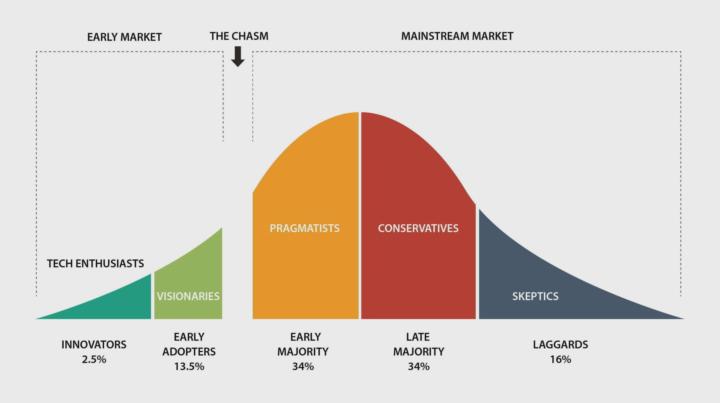
1 like • 16d
So Jeff, what I really like about the point you're making is that you are reminding leaders about what leadership is about. It is multi-faceted and things like "inspiring the vision", "encouraging the heart", "modeling the way" are still as important today as they were before the desk top computer was even a concept. It is interesting to me how the speed and hype of technologies has made us lose sight of these truths, good leaders have to have a method and plan for bringing people along in the journey, not just implementing tools. We all know or have even been the person resistant to tools and tech (still won't download Tik-Tok thanks very much), but it is your organization, you have to figure out ways to get the right half of that curve to be effective with the tools that drive the business.
1-7 of 7

@steve-carlin-7588
Former AI CEO and proven operator who builds, scales, and transforms complex technology businesses from strategy through execution.
Active 1d ago
Joined Jan 27, 2026
ENTJ
Powered by