Activity
Mon
Wed
Fri
Sun
Sep
Oct
Nov
Dec
Jan
Feb
Mar
Apr
May
Jun
Jul
Aug
What is this?
Less
More
Owned by Sonja
Overthinking isn't just Uncomfortable. It’s quietly costing You Time, Money, and Momentum ⏳
Memberships
Dialling Dirtbags
185 members • Free
23 contributions to Royalty Guild. Amazon KDP

Dec '25 •
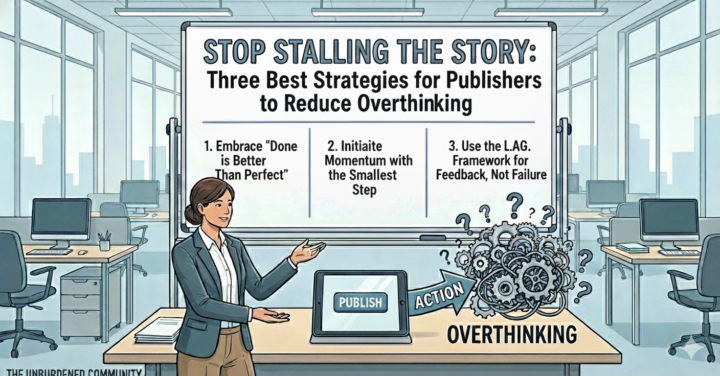
📚 Stop Stalling the Story: Three Best Strategies to Reduce Overthinking
Publishing demands critical decisions: choosing your topic, organizing your content, designing your cover, and crafting a compelling title. When publishing, you might be dealing with The Thought Trap (rumination over risk), which often leads to Analysis Paralysis, resulting in stalled book releases and missed market opportunities. Here are 3 core strategies to help you stop overthinking and start acting 1. Embrace "Done is Better Than Perfect" Perfectionism is a sneaky form of overthinking fueled by the fear of criticism or poor sales. The key is to let this burden go. Recognize that "Done is better than perfect, every single time." Your goal is to move the product (the book) forward to gather real-world market feedback, not to achieve an unattainable ideal. Embracing The Concept of 'Good Enough' (for a specific milestone) unlocks immediate action and escape from the overthinking loop. 2. Initiate Momentum with the Smallest Step When faced with an overwhelming decision To break this cycle, identify the Very First Tiny Action (VFTA). This action should be so simple that it reduces the perceived effort to almost zero (example: writing one sentence, proofreading one page). - Benefit: Taking this action creates psychological momentum, shifting your team from thinking about doing to actually doing. Crucially, action acts as the Spark for Clarity, rather than waiting for certainty before taking action. 3. Use the L.A.G. Framework for Feedback, Not Failure The fear of failure Adopt a Growth Mindset and redefine "Failure" as Feedback. When facing setbacks, immediately apply the L.A.G. Framework: - L: Learn from the experience: "What did you learn from this experience?" - A: Adjust your approach - G: Grow from the challenge This approach protects you from emotional spirals and ensures every outcome, positive or negative, contributes to powerful breakthroughs in your list strategy. And remember you've got this 💪🏼
1 like • Jan 13
@Melissa Leech glad was helpful 😁
1 like • Jan 13
@Igor O good had learned it from you 😉

Dec '25 •
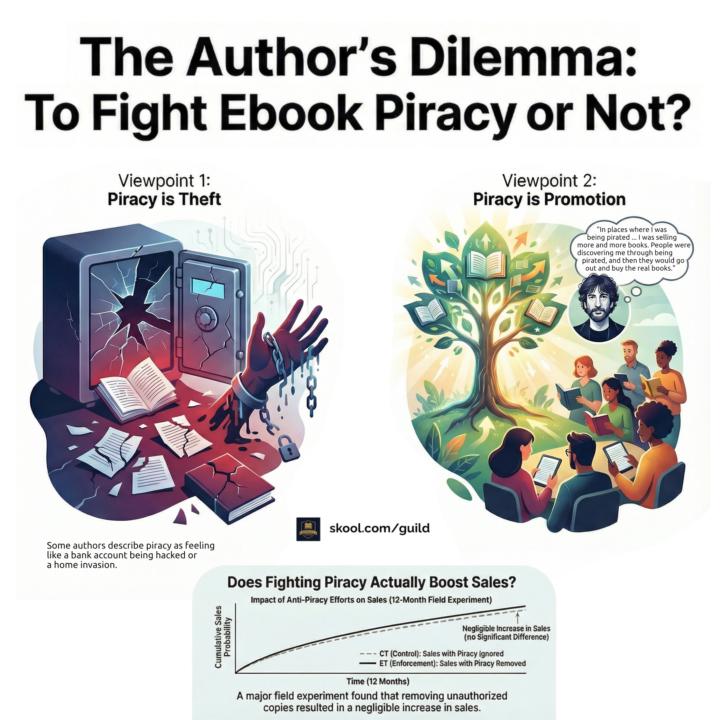
To Fight Book Piracy or Not?
Publishing piracy visits increasing by more than 20% year-over-year, and publishing actually overtaking film as the second most pirated media sector, the debate on whether to fight piracy or ignore it is more relevant than ever. Here is a breakdown of the two prevailing schools of thought to help you decide which strategy fits your current author career. The Argument for "Letting It Go" (Visibility) For many authors, the biggest threat isn't piracy; it is obscurity. - Discovery Tool: Some authors have argued that piracy acts like a library or lending system, where people discover an author for free and then buy the rest of the catalog. - Pirates are Customers: Surprisingly, data suggests 41% of book pirates also buy books, often purchasing the same book in multiple formats. - The "Whack-a-Mole" Problem: Spending hours sending takedown notices can be a "Sisyphean task" that takes time away from writing. The Argument for Fighting Back (Revenue & Safety) However, for authors relying on book sales for a living, piracy can be devastating. - Proven Sales Loss: Author Maggie Stiefvater famously proved that piracy hurt her sales. When she uploaded "decoy" PDFs (broken files) to pirate sites, her legitimate ebook sales recovered immediately, saving her book series from cancellation. - Reputation Damage: Pirated copies are often imperfect scans or bad conversions. Readers may leave negative reviews on Amazon based on the poor formatting of a file they stole. - KDP Account Risk: This is critical for KDP Select authors. If Amazon's bots find your book available for free on a pirate site, they may interpret this as a breach of exclusivity, potentially risking your KDP account or leading to your book being price-matched to free. Where do you stand? Is it free marketing or theft of your livelihood?
Poll
6 members have voted
2 likes • Dec '25
@Igor O honestly not familiar with …
Dec '25 •
❓Interesting Observation About Reviews
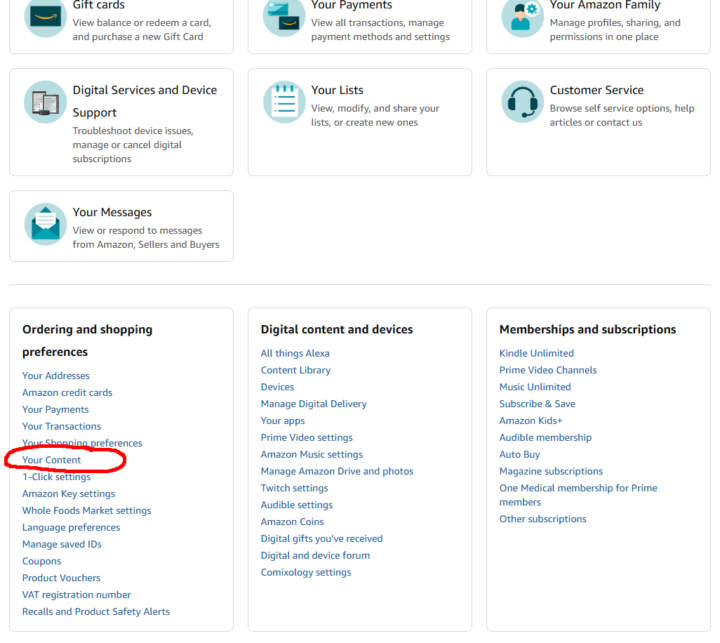
I checked my U.S. Amazon account and found that only the last 19 reviews are still visible. On Amazon.de, all my reviews are still intact. If you are archiving Amazon review messages in the States, I would be interested to know your situation. Do you still have reviews published before September 2025 visible in your account?
4 likes • Dec '25
@Igor O i will take a look
Dec '25 •
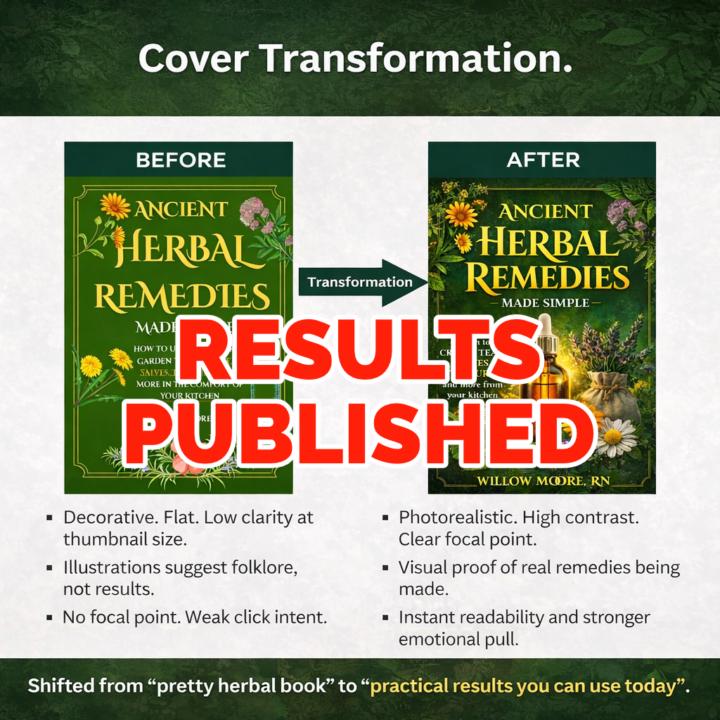
Cover Transformation Experiment (Results in the Comments)
@Pamela Henkels kindly offered her book to be used as a case study. The book ranks well for the major search term on the first page. To boost sales, Pamela decided to redesign the cover. I decided to participate in the experiment and ordered my version of the cover. You can see the result. I'd like to ask you to provide feedback and, most importantly, estimate the cost of such a transformation. Based on your experience, how much would it cost to produce a cover like this? At the end of the week, I will reveal how much I paid, and we can compare your estimates with the actual price. 💲Also, since we are discussing costs, the Premium tier pricing update takes effect today. It will be a 64% discount till the end of the month. Next month, the price will increase by $1. Over time, it will reflect the increased value of the tools for Premium tier members. Once you subscribe, the price will remain the same for the duration of your subscription (until you cancel). And now, please, your feedback on the cover experiment.
3 likes • Dec '25
Wow remarkable
Dec '25 •
Meeting 19 December, 2025. Takeaways
The meeting was mind-blowing. @Latte Motte is absolutely the legend. @Ana-Rita Piirainen in the real conversation is amazing. @Thomas Juuls , as usual, was full of insights. Let me summarize out one and half hour conversation. 1. Publishing Strategies: Short vs. Long Form One of the themes of the meeting was the strategic use of "short-form" content to dominate niches and test the market. - Dominating Niches with Shorts: Thomas Juuls shared his strategy of breaking down books collections into single, short-form books (some as short as 8 pages) to dominate specific niches on Amazon. - Kindle Shorts (US Only): It was noted that while Europe lacks these categories, the US platform features "Kindle Shorts," which Amazon automatically categorizes based on reading time and page count. - Short-to-Long Growth Model: Igor O proposed a "reverse" publishing model where authors release individual stories or chapters as separate books first to identify which resonates most with the audience before compiling them into a "major" branded book. - The "Keiretsu" (系列) Concept: Latte Motte introduced the Japanese concept of Karetsu—mutually reinforcing connections—applying it to a book portfolio where various parts work together to strengthen the overall brand. 2. AI as a Creative and Analytical Tool The participants discussed AI not as a text generator, but as a sophisticated tool for analysis and workflow optimization. - Audience Avatar Analysis: Thomas used ChatGPT to conduct a detailed audience analysis for bedtime stories, identifying mothers in their late 20s to early 30s as the primary buyers. This resulted in a vastly different and more effective book description. - Workflow Efficiency: Latte Motte reported completing a report in half a day that previously would have taken a week by using human-assisted AI. - Style Conversion for Imagery: Igor suggested using AI to describe the style of an existing image and then converting personal photos into that specific style (e.g., pencil strokes or lithography) to maintain consistency without creating "AI-looking" art. - Voice Cloning: Ana-Rita Piirainen shared that she created a professional clone of her own voice to continue generating income from voiceover work.

2 likes • Dec '25
@Igor O Thank you for the summary : I almost felt like they ( lol )
1-10 of 23

@sonja-ray-8461
You Ready to Stop Overthinking 🤔 ⚡️stopoverthinkingskool.com
Active 9h ago
Joined Nov 25, 2025
Phoenix, AZ
Powered by