Activity
Mon
Wed
Fri
Sun
Jun
Jul
Aug
Sep
Oct
Nov
Dec
Jan
Feb
Mar
Apr
What is this?
Less
More
Memberships
Liberty Politics Discussion
4.4k members • Free
5 contributions to Liberty Politics Discussion
2h •
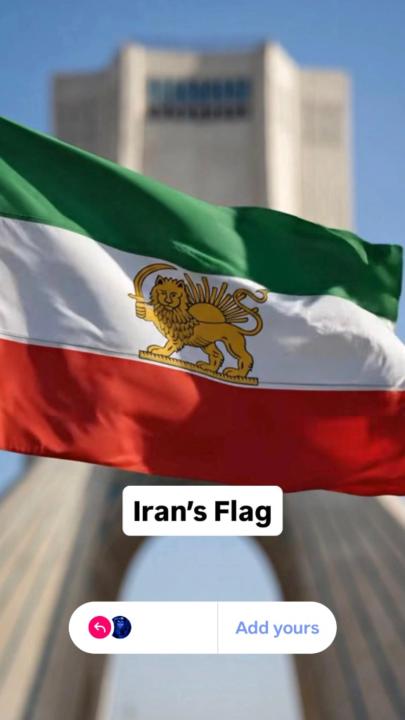
A Global Killing Machine — And the World Still Looks Away
Today, the Islamic regime has once again executed a young Iranian. Another life taken. And still, the world hesitates. How much more needs to happen before we connect the dots? This is not just about what is happening inside Iran anymore —though the executions alone should be enough to shock the conscience of the world. This is about a pattern. A system. A reality that extends far beyond its borders. From a conference hall in the United States, to the streets of London, to the incidentin in Australia— targeting Jewish individuals thereis a growing pattern of violence that cannot be ignored. These are not isolated incidents. They point to a wider network of hostility, intimidation, and ideological influence. Inside Iran, repression is constant. Executions continue. Armed forces are sent into the streets. People are detained, silenced, and cut off from the world through repeated internet shutdowns. This is not accidental. It is systematic. So what do “human rights,” “democracy,” and “international law” mean if there is no united action to stop this? Instead, the West remains distracted—caught up in internal political battles and supporting the antisemitic and pro IRGC crowd in their streets;. They tangled in not stop accusations of president Trump and the systematic intrigatings of Reza Pahlavi. Meanwhile, who stand against the Islamic regime —and the ordinary Iranians they represent—are left feeling alone. It is no surprise that Iranians, both inside the country and in the diaspora, feel abandoned. It is no surprise that Jewish communities, facing increasing antisemitic threats and violence, feel let down by governments that fail to act decisively. To Muslims who repeatedly say Islam does not permit killing: if there is truth in that, then speak now. Condemn clearly and publicly the violence carried out in its name. Silence only allows it to continue. To journalists who claim independence: do not look away. Do not let your vision be blurred by political bias or propaganda. Keep your focus where it matters.
0
0
20d •
Why have the Islamic regime’s media suddenly become so interested in showing the streets after the ceasefire in Iran?
Until recently, the regime avoided showing any signs of division among the Iranian people. Now, in a sudden shift, its propaganda machine is broadcasting staged confrontations between two groups—and turning them into a tool. This is not accidental. It serves clear purposes. First, it tries to rewrite reality. The regime wants its audience—especially outside Iran—to believe that freedom of expression exists. The message is simple: “Look, people are debating. Different views are being expressed. No one is arrested, no one is killed, and everything is under control.” Second, it tries to manufacture the illusion of mass support. These scenes are meant to suggest that the only disagreement is about minor decisions—like how a ceasefire was handled—not about the legitimacy of the regime itself. Another objective is protecting Velayat-e Faqih. These so-called debates have invisible red lines. As long as those lines are respected, disagreement is allowed to appear. But the moment figures like Mojtaba Khamenei are mentioned, the tone shifts, and sudden agreement emerges. That is not coincidence—it shows exactly where real power lies and what cannot be questioned. There is also a deliberate effort to sideline reformists and less radical voices. Those who appear in these staged street debates are not random citizens. They are, in most cases, aligned with the Revolutionary Guard and operating within its boundaries. The IRGC has no tolerance for reformists because, in its view, they are not ideological or aggressive enough. But the most important reality is this: The streets you are seeing are not real public spaces. They have been deliberately emptied. The people who truly represent public anger and opposition are not there—not because they don’t exist, but because they have been systematically removed. They have been pushed out of the streets, many have been arrested and are now in prison the rest intimidated and silenced. Generaly speaking, ordinary Iranian people effectively confined to their homes. What you are watching is not public discourse—it is a controlled performance in a space where the real public has been erased.
1
0

Mar 23 •
March 23rd is International Atheist Day!
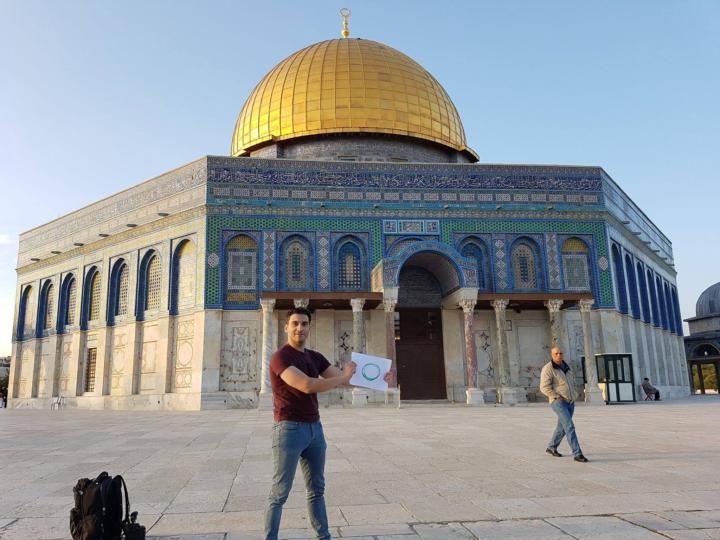
Whether you’re an atheist or not, if it’s safe for you to do so, I encourage you to wish an atheist a happy Atheist Day today. A simple gesture like that can go a long way in making atheists feel accepted, especially in places where atheism is still taboo or dangerous. And if you’d like, you can use a green circle as a symbol to celebrate the day. Let atheists know they are not alone, not hated, and not invisible. I wish you a very happy Atheist Day 💚 #atheistday
0 likes • Mar 24
@Soap Box I see your point— Developmental psychology, especially the work of Jean Piaget, Lawrence Kohlberg, and James W. Fowler, influenced my choice to become atheist when I was young. @Yuval Cohen I don't know if you had a chance to read their ideas. I really liked the chain of their thoughts.
0 likes • Mar 24
@Dvirah Talbi nop! we don't force people to do things for us. We don't ask for donations and definitely don't sell heaven. We won't tell you by murdering the other human being you will be immortal and forever in heaven. We don't ask you to pray and worship something that you can't see or hear. Instead we give humans value to choose their own destiny which I understand is a big responsibility and scary for some.
Mar 21 •
Why calling Iranians who oppose the Islamic regime “Islamophobic” is wrong
As an Iranian who was born and raised in Iran under the Islamic regime, I find this label deeply unfair. My doubts about Islam began when I was a teenager, as I was not only a witness to the harsh treatment of women and girls under Islamic laws, but also a subject of it myself. Later, while studying sociology at university in Iran, those doubts deepened, and I eventually became an atheist. Labelling Iranians who are fed up with Islam and Muslims as “Islamophobic” is not only hurtful, but deeply simplistic and uneducated. It reduces a serious and complex issue to a shallow label and ignores the reality we have lived through. For 47 years, Iranians have suffered under Islamic rule. We have not only lost our basic human rights, but also our lives. Countless people have been imprisoned, executed, or killed. Our futures have been stolen, and our country has been pushed into war, poverty, and instability—all under Islamic Sharia. These are not distant or abstract issues; they are the lived reality of millions of Iranians. Our opposition does not come from irrational fear. A “phobia” suggests fear of something unknown. But for Iranians, the source of much of our suffering is not unknown—we have experienced it directly. We believe that Islam itself, as it has been implemented in Iran, is the root of these problems, and that is why we oppose it. We are not afraid—we are resisting. Calling us “Islamophobic” is therefore not only inaccurate, but also dismissive of what we have lived through. I would love to hear your thoughts.
0 likes • Mar 22
@Tans Tafl I believe @Armin Navabi once used a very good phrase whichI can't remember. I would suggest Islam's victims.... any suggestions are welcome.

Mar 21 •
Freedom to act, liberty to think
Do you think that freedom of speech has gone too far, and that people are exploiting it for hate speech? Do you think it's possible that our societal obsession with this 'freedom' is actually robbing us of the liberty to think independently and logically? "Freedom is only part of the story and half of the truth. Freedom is but the negative aspect of the whole phenomenon whose positive aspect is responsibleness. In fact, freedom is in danger of degenerating into mere arbitrariness unless it is lived in terms of responsibleness" Victor frankel
2 likes • Mar 21
@Hila Lala freedom of speech is a priceless foundation of a civil society. Nevertheless, it should have some charities. Spreading garbage in the name of speech is a main anemy of freedom of speech. In addition, there are many sub questions has been raised in the modern society and the era of so called social media. Such as: who has responsibility for checking the validity of the "speech" ? Does power have something to do with it? Can knowledge and intelligent of the public be trusted to not get negatively impact by so called fake news and information? Sorry if I accidentally made more questions rather an straight answer.
1-5 of 5