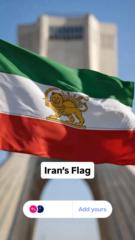
Apr 10 • General Discussion
Why have the Islamic regime’s media suddenly become so interested in showing the streets after the ceasefire in Iran?
Until recently, the regime avoided showing any signs of division among the Iranian people. Now, in a sudden shift, its propaganda machine is broadcasting staged confrontations between two groups—and turning them into a tool.
This is not accidental. It serves clear purposes.
First, it tries to rewrite reality. The regime wants its audience—especially outside Iran—to believe that freedom of expression exists. The message is simple: “Look, people are debating. Different views are being expressed. No one is arrested, no one is killed, and everything is under control.”
Second, it tries to manufacture the illusion of mass support. These scenes are meant to suggest that the only disagreement is about minor decisions—like how a ceasefire was handled—not about the legitimacy of the regime itself.
Another objective is protecting Velayat-e Faqih. These so-called debates have invisible red lines. As long as those lines are respected, disagreement is allowed to appear. But the moment figures like Mojtaba Khamenei are mentioned, the tone shifts, and sudden agreement emerges. That is not coincidence—it shows exactly where real power lies and what cannot be questioned.
There is also a deliberate effort to sideline reformists and less radical voices. Those who appear in these staged street debates are not random citizens. They are, in most cases, aligned with the Revolutionary Guard and operating within its boundaries. The IRGC has no tolerance for reformists because, in its view, they are not ideological or aggressive enough.
But the most important reality is this:
The streets you are seeing are not real public spaces.
They have been deliberately emptied.
The people who truly represent public anger and opposition are not there—not because they don’t exist, but because they have been systematically removed. They have been pushed out of the streets, many have been arrested and are now in prison the rest intimidated and silenced. Generaly speaking, ordinary Iranian people effectively confined to their homes. What you are watching is not public discourse—it is a controlled performance in a space where the real public has been erased.
This is why it is deeply misleading when some non-Persian opposition media reshapes these images as signs of division within the regime’s supporters. Yes, internal tensions exist. But presenting Iran as a place where open, democratic dialogue is genuinely happening is not just inaccurate—it is dangerous.
If the streets were truly open, if people were not suppressed, if the internet were fully restored, what you would see is not this staged performance. You would see a nation ready to reclaim its streets—and to take back a country that has been occupied by an Islamic fascist regime.
1
0 comments
Why have the Islamic regime’s media suddenly become so interested in showing the streets after the ceasefire in Iran?
skool.com/libertypolitics
Talk politics with others who care, in live calls and community posts. Share your views, ask questions, or just listen in.
Leaderboard (30-day)
1
+738
2
+646
3
+344
4

+299
5
+187
Powered by