Activity
Mon
Wed
Fri
Sun
Aug
Sep
Oct
Nov
Dec
Jan
Feb
Mar
Apr
May
Jun
What is this?
Less
More
Memberships
Automation University
5.9k members • Free
Automation Academy
255 members • Free
AI Automation Mastery
30k members • Free
AutomationForDays
300 members • Free
AI Freedom Agency
10.8k members • $26/month
The AI Advantage
126.2k members • Free
4D Copywriting Community
64.4k members • Free
22 contributions to Automation Academy

Nov '25 •
David Johnson, Chicago, IL
"Way more effective than our traditional marketing efforts and generate a profit from pure automation."

0 likes • Apr 20
Strong testimonial highlighting how automation can outperform traditional marketing by improving efficiency and delivering measurable profit-driven results
Apr 14 •
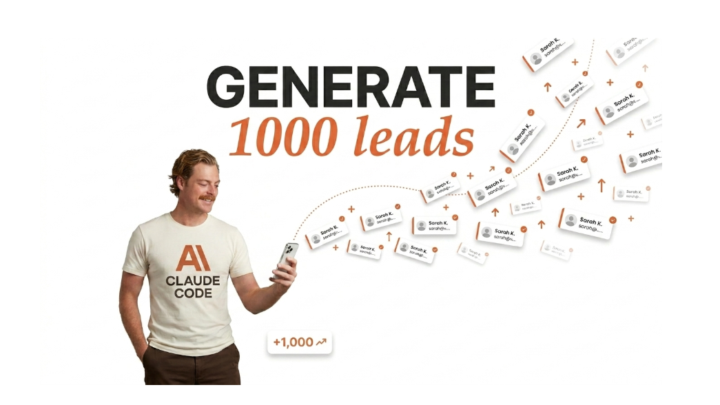
I generated 1,000 qualified leads in a single day using Claude Code.
No SDR team. No scraping tools. No CSV exports. No spreadsheet hell. Just Claude Code + Apollo.io. Here's how. In February 2026, Apollo.io launched a native MCP integration for Claude Code. That means Claude can now directly search Apollo's 275M+ contact database, enrich leads, dedupe them, and push them into sequences, all from a single prompt. No API keys. OAuth in, done. Most people are still manually filtering Apollo, exporting CSVs, and hand-loading contacts into outreach tools. That's a full-time job. Claude Code kills it in an afternoon. Here's the exact process: Step 1. Install the Apollo MCP plugin. Open Claude Code, go to plugins, install the Apollo MCP. Authenticate with OAuth in about 15 seconds. Claude Code now has full access to Apollo's search, enrichment, and sequence APIs. Step 2. Describe your ideal customer in plain English. No filters. No dropdowns. Just tell Claude what you want: "Find me 1,000 VPs of Marketing at US-based SaaS companies with 50-500 employees who raised funding in the last 12 months." Claude runs /apollo:prospect and translates that into the exact Apollo filters, then executes the search. Step 3. Enrich the data. Claude runs /apollo:enrich-lead on every contact returned. You get verified emails, LinkedIn URLs, phone numbers, company data, tech stack, funding history, and employee counts, automatically. No manual lookups. Step 4. Deduplicate against your CRM. Claude checks every lead against your existing contacts to avoid re-contacting people you already reached out to. This alone saves hours per week and protects your sender reputation. Step 5. Load them into a sequence. One command, /apollo:sequence-load, and all 1,000 enriched, deduped leads are pushed into an Apollo outreach sequence with personalized first lines Claude wrote for each one. Ready to send. Total time: 30 to 45 minutes. Total cost: your Apollo subscription plus Claude Code usage (a few dollars). The old way cost $3,000 to $10,000/month for an SDR to do the same thing. And they'd do it slower.
0 likes • Apr 16
Interesting breakdown of how AI-native outbound workflows are evolving. The real shift is moving from manual SDR work to fully automated, API-driven prospecting systems
Apr 5 •
AI just learned to use your computer.
GPT-5.4 doesn't just write text anymore. It navigates your screen. It reads your software. It clicks buttons, fills forms, and moves between tabs, like a second employee sitting at your desk. It scored 83% on real-world job task benchmarks. Not trivia. Not multiple choice. Actual professional workflows, spreadsheets, legal docs, presentations, and multi-step projects. For context, GPT-5.2 scored 70.9% on the same test three months ago. Here's what most people are missing: It's not just smarter. It's cheaper. GPT-5.4 burns significantly fewer tokens than 5.2 for the same output. Faster responses, lower API costs, same quality or better. OpenAI also quietly shipped a ChatGPT-for-Excel plugin. That means your finance team, your analysts, your ops people, they now have an AI co-pilot inside the tool they already live in 8 hours a day. Think about what this means for a 5-person team. One AI agent that can navigate your CRM, pull reports from your dashboard, update your spreadsheets, and draft your documents without you alt-tabbing between 6 tools. We're not talking about "AI will change work someday." We're watching it happen in real time, update by update. The founders who are building systems around this right now will be untouchable in 12 months. The ones waiting for it to "mature" will be playing catch-up for years.

1 like • Apr 7
An AI that navigates your screen, fills forms, and moves between tools like a second employee is not a future concept anymore. The founders building systems around this capability right now are creating serious untouchable advantages. 🚀
Mar 5 •
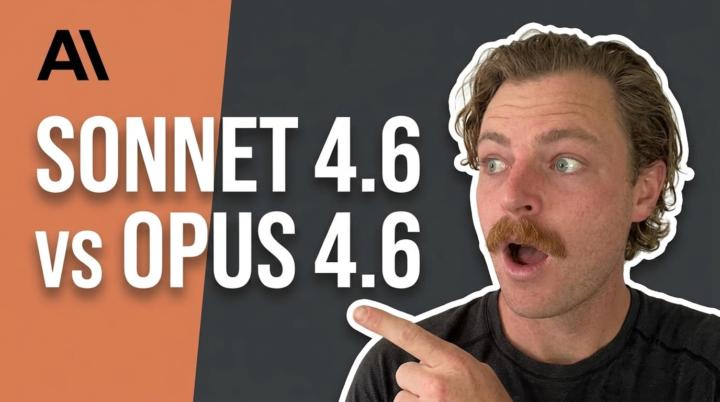
Sonnet 4.6 vs Opus 4.6, Which one should you actually use?
Both dropped in February 2026. Here's the real breakdown. --- SONNET 4.6 SPECS Price: $3 / $15 per million tokens Speed: 40–60 tokens/second Max output: 64K tokens Context window: 1M tokens (beta) SWE-bench (coding): 79.6% OSWorld (computer use): 72.5% Office tasks: 1633 Elo Finance Agent: 63.3% --- OPUS 4.6 SPECS Price: $15 / $75 per million tokens Speed: 20–30 tokens/second Max output: 128K tokens Context window: 1M tokens SWE-bench (coding): 80.8% OSWorld (computer use): 72.7% Office tasks: 1606 Elo Finance Agent: 60.1% --- WHEN TO USE SONNET 4.6 Daily coding and iteration Content generation at scale Office productivity tasks Financial analysis High-volume API calls Speed-sensitive workflows Tool integrations and agents Sonnet actually beats Opus on office tasks and finance. 70% of developers preferred it over Sonnet 4.5. 59% preferred it over the previous flagship Opus 4.5. --- WHEN TO USE OPUS 4.6 Deep multi-step reasoning Large codebase refactoring Multi-agent coordination (Agent Teams) Ultra-long context retrieval (800K+ tokens) High-stakes analysis where failure is expensive Tasks requiring 128K output in one shot Opus still leads on Terminal-Bench and complex reasoning chains. --- SONNET DISADVANTAGES Smaller max output (64K vs 128K) Less reliable on ultra-long context retrieval Can drift on deeply chained reasoning tasks Not ideal when you need maximum accuracy on first attempt --- OPUS DISADVANTAGES 5x more expensive 2x slower Overkill for 80–90% of daily tasks Cost adds up fast at scale --- THE REAL ANSWER Start with Sonnet as your default. Escalate to Opus only when Sonnet isn't enough. Most teams find that escalation rarely happens. The 1.2% gap on coding benchmarks doesn't justify 5x the cost for most use cases. What are you using? Drop a comment with your use case and which model works better for you.
0 likes • Apr 6
Clear breakdown—Sonnet 4.6 is ideal for high-volume, speed-sensitive tasks, while Opus 4.6 shines on complex reasoning and ultra-long outputs
Apr 1 •
I just built a Claude prompt that replaces a $15,000 brand strategist.
It runs Seth Godin's entire Minimum Viable Audience framework the same system that helped a 12-person niche brand outsell a venture-backed competitor 4x in under 60 seconds. Most founders and creators fail at marketing for one reason: they try to reach everyone and resonate with no one. Godin spent 30 years proving that mass marketing is dead. The brands that win find the smallest group of people who would genuinely miss them if they disappeared, and build everything around serving that group so well they become the marketing. Now AI can do that thinking for you. Here's what the prompt walks you through: → MVA Discovery finds your smallest viable audience based on psychographics, not demographics. The test: would they actually notice if you disappeared tomorrow? → Worldview and Status Mapping uncovers what your audience already believes before you show up, what status they're chasing, and the gap between how they see themselves vs. how they want to be seen. That gap is where your opportunity lives. → Tribal Positioning defines who your brand is for, who it's deliberately NOT for, and builds a "people like us do things like this" positioning statement that makes the right people feel seen and the wrong people self-select out. → Content and Offer Architecture uses Godin's 5-step framework (Invent, Design for the Few, Tell the Story, Spread the Word, Show Up) to map out exactly what to create, how to frame it, and where to distribute it. → Permission Engine designs a growth flywheel that moves strangers to subscribers to advocates to evangelists, without a single cold pitch. Every piece of content earns the next conversation. → Full Strategy Brief delivers an MVA profile, tribal positioning, tension map, content plan, permission ladder, and growth flywheel. All built around specificity, not scale. The old way: hire a strategist, spend weeks in workshops, hope the positioning deck actually gets used. The new way: paste this prompt into Claude, answer 4 questions, and get a sharper strategy than most agencies deliver in a month.

0 likes • Apr 1
Incredible application! Automating Seth Godin’s MVA framework with AI is a game-changer for founders wanting precise, high-impact positioning without hiring expensive strategists
1-10 of 22

@sadie-harmon-5281
AI ImpleMENTOR: Tell me what you want to do and I find the AI solution for you
Active 38d ago
Joined Jan 29, 2026