
Pinned
Nov '25 •
(START HERE) Welcome to Automation Academy! 🎉
Hey everyone - glad to have you here! Whether you joined for the classes, the community, or both, this will be the most valuable investment you've made if you actually use it. Most people join things like this and never do anything with them. Don't be that person. I created this community to help you grow in your business, career, your personal life, and connect with like-minded people who are actually doing the work. It's about you and I hope you enjoy everything my team and I have put into it. First thing - book your onboarding call with me: BOOK FREE ONBOARDING CALL This is a one-time call where we'll go over what you're trying to build and give you a custom roadmap. Most people skip this and wonder why they're not getting results. Don't skip it. New here and on the free plan? You still get access to the first 4 modules of every mastery course — check the "Free Preview" versions in the Classroom. Second thing - introduce yourself below: - What's your name? - Where are you based? - What made you join and what are you trying to build? I want to see where everyone's coming from and what you're working on. The courses cover AI video mastery, automation, sales frameworks, prompt engineering, GHL, and more. The AI space is evolving fast and I'm adding new stuff constantly so you have the most current training. Before you touch any course, watch the mindset videos. I know it sounds like something you'd skip. Don't. People who actually build stuff and get results watch these first. People who just collect courses and never execute skip them. The community part matters more than you think. Ask questions. Answer questions. Share what you're building. The people who engage here get way more out of it than the ones who lurk. That's just how it works. If you're looking to hire, get hired, or partner with someone, check the Partnerships section. Weekly Live Class (Code Brew): Every Thursday 8am - 9am PST. Bring your questions and anything you're stuck on. We go through it together live.

Pinned
Jul 19 •
What do you get when you upgrade to Premium? 💎
A lot of you have been asking what's included in Premium and how it's different from the free community you are already enrolled in. In the free tier - you get free resources pulled from my YouTube content and a massive open community of other AI builders that anyone can join. It's a great place to get started and see what's possible with AI in 2026 But it's open to everyone, so it can get noisy and I can't give everyone hands-on help. In Premium - I give you the leads and I hold your hand to landing your first client, or your next one. I coach you on live calls every other week, and I hand you the exact path, templates, and support to turn all of this into paying work. While the free side shows you what's possible. Premium is where I actually get you there. Inside Premium you will get: - A clear path from zero to building and selling AI agents, so you're never guessing what to do next - Direct access to me, including a 1:1 onboarding call and a live group Q&A every other week - The leads, the templates, and the support to actually land and deliver client work The whole roadmap takes you from zero to building and selling real AI agents, and it's built on the tech serious builders are actually using right now, like Claude Code, Hermes, and OpenClaw. When the tools change, the courses change with them. Nothing in here goes stale. You get all 8 full mastery courses: 1. Claude Code. Build faster and turn plain ideas into working automations. This is the tool serious builders are running right now. 2. Prompts. Get AI to actually do what you want every time, instead of fighting with it. 3. Make. Build automations visually and connect your tools without writing code. 4. N8N. Go deeper with more powerful, flexible automation workflows. 5. GHL (GoHighLevel). The platform we use to deliver CRM, booking, and follow-up systems to clients. 6. AI Voice. Build and sell AI voice agents, including the brand new masterclass I just dropped. 7. AI Video. Create AI video content and avatars to market yourself and your offers.

Pinned
Jul 8 •
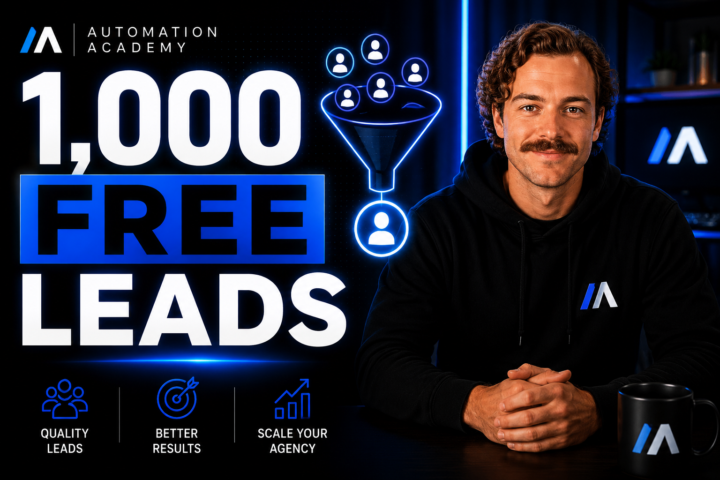
🚨 1,000 Free Leads a Month - LIVE 🚨
Super stoked to bring a major update to the community! We just dropped a brand new module inside the classroom called "1,000 Free Leads," and it's live right now for every Premium member. Here's the deal. Every single month, Premium members get 1,000 fresh leads handed to them inside the module. Real names, real phone numbers, real emails ready to drop straight into your power dialer or your cold email tool. No scraping, no buying lists, no paying a VA to hunt them down. And these aren't random names off some junk list. These are the exact same leads our sales team dials and emails every single day to book appointments for $5,000+ deals. I've personally paid tens of thousands of dollars for these leads. So here's what you do with them. Load them into your cold calling system and start dialing. Fire off cold emails and start booking meetings. It doesn't matter if you sell automation, home services, coaching, or anything in between. Fresh leads plus a phone plus a script is how you fill a calendar. The hardest part is handled for you. This module is Premium only. If you're on the free plan, this is your reason to upgrade. One $5,000 deal pays for Premium many times over, and you're getting the exact leads we use to book them. Upgrade, open the module, and start dialing this month. Lets get it!

9h •
15 qualified meetings booked and $50k+ in new sales. No burning cash on ads just to get ghosted.
I was trapped in the unpredictable lead gen cycle. I thought I needed to spend thousands on expensive marketing agencies or pray for referrals just to keep my sales team busy. It was a nightmare. Then I got a wake-up call from my mentor, Alex Tim. He explained that I don't need to spend a dime on ads or have a massive network—I just need a custom outbound system that hunts down dream leads on autopilot. The result? 15 ready-to-buy prospects booked and over $50k in fresh pipeline. Alex completely took over, setting up a system so meetings just magically appeared on my calendar. I literally didn't lift a finger. He has 3 spots available this week for a risk-free test run. He will source your dream leads and run the campaign for free to prove it works. If you get meetings, you do a deal. If not, walk away with the free lead list. You can text Alex directly on his WhatsApp to claim your free test run right here +13022935624 (Just tell him my VA Name gave you the backdoor link!)
3d •
🚨 Anthropic just shipped an agent that messages you first.
Claude Duet went live yesterday in research preview. Every AI tool you've used waits for you to open it. Duet doesn't. It watches your connected apps, sends you a briefing in the morning, and pings you during the day when something actually needs a decision from you. It runs on its own cloud computer with its own browser, so it keeps working after you close the app. Built on Opus 5.5, connects to over 6,000 apps including Gmail and Slack, and it carries over your existing memory, skills and connectors. It can also buy things through Stripe Link and Shop Pay. Here's what caught my attention though. 🛑 Look at what Anthropic says it won't do. No trading securities. No moving money between accounts. Payments need your approval. It never sees your passwords. There's a separate classifier checking every message for data leaks. Compare that to Grok Bot, which shipped with no spend cap at all and routes every customer's traffic through shared IPs. Same category, same week-ish, completely different posture. You can tell a lot about an agent product by reading the list of things it refuses to do. One detail nobody's mentioning. 💸 Duet uses your existing plan limits, and its background checks count toward them. So an agent that's monitoring your apps all day is quietly drawing from the same pool as your actual work. Watch that in week one before you let it run on everything. Anthropic's own caveats, which I appreciate them stating: it might misread a thread or get urgency wrong, and it's weaker on personal stuff like booking tickets than on work. Research preview, waitlist, US only, Pro and Max for now. The real shift here isn't that it's smarter. It's that the thing now starts the conversation. Which means the stuff worth handing it isn't the tasks you remember to delegate. It's the ones you keep forgetting.
Poll
1 member has voted

1-30 of 135
powered by
skool.com/automation-academy-7703
The Best Systems Behind The Best Brands. Join FREE — learn AI automation, sales systems, and scaling strategies used by top agencies and consultants.
Suggested communities
Powered by