Activity
Mon
Wed
Fri
Sun
Jun
Jul
Aug
Sep
Oct
Nov
Dec
Jan
Feb
Mar
Apr
May
What is this?
Less
More
Memberships
Crust & Crumb Academy
989 members • Free
5 contributions to Crust & Crumb Academy
6h •
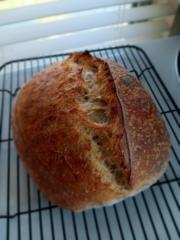
Pre shape Help!!
Good evening, I have a pre shaping question. What do you do when the skin of the dough tears during pre shape? I think I got carried away and did a little too much. I did let it rest for 20 mins, however, when I flipped it for shaping it was a bit sticky. I shaped it anyways, which was a bit challenging. What suggestions do you have in case it happens again?😏 Thanks
2 likes • 4h
At least half the dough. Maybe I said it wrong.. it was more like the skin separated, if that makes sense. I noticed it and stopped but as the dough relaxed it area just got bigger.

⭐
🔥
18d •
WORD OF THE DAY: WINDOWPANE
Windowpane. This is one of those small things that makes a big difference. You take a small piece of dough and gently stretch it. If it stretches thin enough to let light through without tearing, you’ve got strength. That’s your signal. Your dough has developed enough gluten to hold gas, keep its shape, and actually turn into bread instead of spreading out on you. If it tears right away, you’re not there yet. More time. More folds. Let the dough catch up. Here’s the shift. Stop asking “how long has it been?”Start asking “what is the dough showing me?” That’s how you get consistent. Drop a comment if you’ve ever had dough tear on you during shaping. That’s usually where this shows up.
2 likes • 18d
The amount of folds I do is always based on what the recipe says. However, 90 percent of the time my dough spreads after pre shaping and retard. I figured out that the dough was not strong enough. Still, I didn't think to do additional folds to strengthen the dough, as I did whatever the recipe said. Now, I will be checking the windowpane to make sure my dough is strong enough.
⭐
🔥
20d •
The single biggest tip I've ever given bakers? Fermentolyse.
Over the years, people ask me all the time: what's the one thing that changes the most for new bakers? No hesitation. Fermentolyse. Back in the early days I was doing autolyse like everybody else. Flour and water, rest, then add the starter and salt. One day I stumbled into what I thought was a mistake. I added my starter to the water first and whisked it until it was fully dispersed, then added the flour. I was supposed to wait and add the starter later. I didn't. Turns out, that "mistake" was the best thing I could have done for my bread. For a long time I thought I'd invented something. Turns out professional bakers had been doing it for years. There's nothing new under the sun in bread baking. Just reimagined. But here's what I know. When I introduce home bakers to this one shift, it changes more for their extensibility, their elasticity, and their hydration than any other single thing they can do. How is it different from autolyse? Autolyse is flour and water only. You rest, then add the starter and salt later. Fermentolyse puts the starter in from the very beginning. The second you introduce flour, water, and starter together, fermentation begins. Bulk fermentation begins. That's where the clock stops being useful. You're not waiting for bulk to start. You're already in it. This also answers a question I get all the time. Why don't you leave your dough on the counter after shaping and let it rise for an hour before putting it in the fridge for an overnight cold proof? Because my bulk began when I mixed the dough. I've got a 45-minute head start on most bakers who are still doing a simple autolyse. If you've been relying on the clock instead of watching what your dough is actually showing you, this is the shift. Watch the video. Start paying attention to when fermentation actually begins. Perfection's not required. Progress is. ~ Henry ⭐🔥
2 likes • 20d
@Sandy Chong thank you
1 like • 18d
@Henry Hunter Thank you!
⭐
🔥
27d •
Proofing is where a lot of bakes are won or lost.
Same dough. Same recipe. Two completely different results depending on what happens right here. This is your final rise after shaping. It’s where your loaf builds its last bit of strength before it hits the oven. Too soon, it’s dense. Too late, it collapses. Stop watching the clock. Start reading your dough. Light poke. Slow spring back. Slight indent left behind. That’s your green light. If you're finding value in what we're building here, consider leaving us a review. It takes about 3 minutes and helps more than you know. It allows other bakers to find us and keeps us in the number one position among certified communities on Skool. Thank you. https://proveworth.com/communityprofile?slug=crust-crumb-academy

2 likes • 26d
@Marilee Berry Hi, I'm new here and trying to learn as much as I can. Do you perform the poke test while still in bulk fermentation? Cause I have done that only to have it flatten out when I take out of the fridge.
2 likes • 28d
@Priscilla Fuesting Thank you! I love baking also. I just need to learn the proper techniques to baking.😊
1 like • 27d
@Henry Hunter The decent loaves that I have baked never got the domed shape. I do see bubbles and dough jiggles. At that point it's about 50 to 80 percent increased. That's when I preshape. When I take it out of the fridge it always spreads. Trying to score it results in it spreading even more.
1-5 of 5
@roxanne-doyle-5045
Feeding my starter like it's family.
Active 4h ago
Joined Apr 10, 2026