Activity
Mon
Wed
Fri
Sun
Jun
Jul
Aug
Sep
Oct
Nov
Dec
Jan
Feb
Mar
Apr
May
What is this?
Less
More
Memberships
Powerhouse Fitness for Women
12.4k members • Free
Food Freedom GLP-1 Lab
221 members • Free
7 contributions to Food Freedom GLP-1 Lab
16d •
New Member Q&A: Ask Me Anything
How many of you would find it helpful to have a New Member call to answer all your questions about peptides, protocols, how to use them. I am available this Friday, May 1st during the day. If you are free & would find this helpful, let me know what you prefer below.
Poll
10 members have voted

1 like • 16d
I could make any of the times work.
1 like • 16d
Oh, sorry! I forgot physically therapy was moved to this day. I can do 11 or 1.
Mar 14 •
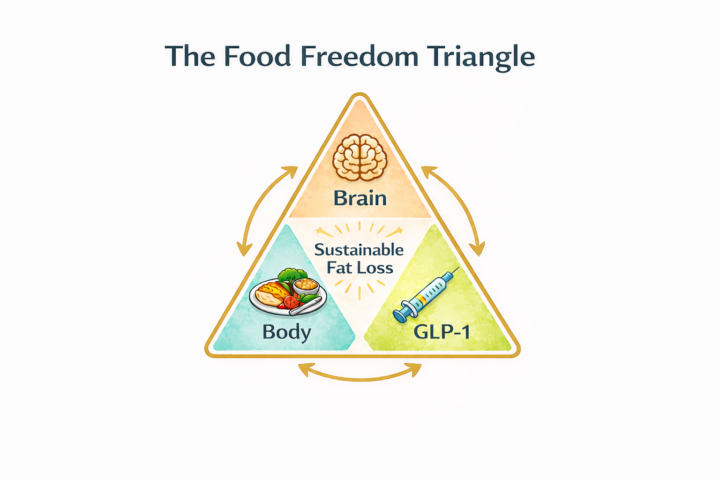
The Food Freedom Triangle™ Story
For years I thought my struggle with food was just about willpower. I believed if I could just eat less, try harder, and stay disciplined, everything would finally work. And sometimes it did… for a while. But eventually the same thing always happened. The food noise would come back.Life would get stressful.And the habits that felt easy suddenly felt impossible. For a long time I thought something was wrong with me. But eventually I realized something important. Most weight loss programs are only teaching one corner of the triangle. Some programs only teach food Eat this.Don’t eat that.Track this.Count that. But if your brain is constantly thinking about food, that plan becomes incredibly hard to follow. Other programs focus on medication GLP-1 medications can be incredibly helpful. They quiet the food noise and make appetite easier to manage. But medication alone doesn’t always change the pattern that led to emotional eating in the first place. And some programs focus only on mindset Which can be helpful… But if your body is constantly hungry and your appetite signals are chaotic, mindset alone can feel like swimming upstream. That’s when I realized something Sustainable fat loss happens when three things work together. I call it the Food Freedom Triangle™. First corner: Nutrition Structure Simple things like: • protein• fiber• hydration When your body is fueled properly, appetite stabilizes and energy improves. GLP-1 medications can also help quiet the food noise, which makes following a structure like 30/30/3 much easier. Second corner: Nervous System Regulation For many people, food became the fastest way their brain learned to calm stress. Not because they were weak. Because their nervous system learned food was a reliable coping tool. When people learn how to regulate their nervous system, something powerful happens. Food stops being the only solution. That’s how the pattern begins to change. Third corner: Consistency Real change isn’t built through perfection.
1 like • 19d
This makes so much sense! The brain portion has been missing for me.
22d •
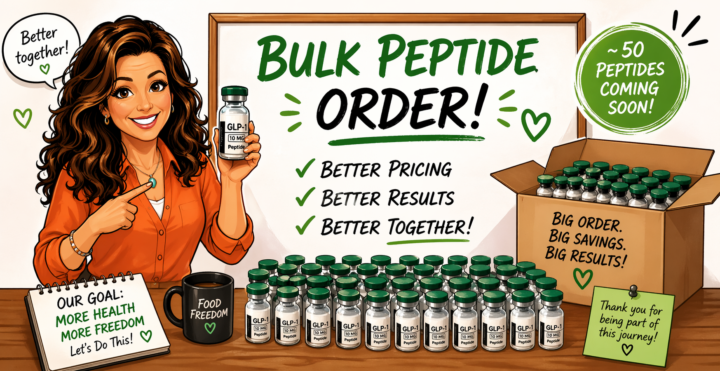
🔴 Order Placed - PEPTIDE ORDER GOING IN! 💉
Head to the Classroom and place your bulk peptide order! I'll keep this open until Midnight on Saturday, April 25th. Link to place Bulk orders: GROUP ORDERS Yes, you can place order for friends. Yes, you can add them to this group. 😁
0 likes • 19d
@Diane Shephard does snap 8 come as a liquid or powder? Does the whole amount fit in a new bottle of serum?
0 likes • 19d
@Diane Shephard thanks! I’m keeping a list of all the things I want to try😊
26d •
Need more Protein?
Why Collagen is a Great Protein Source 👇 Collagen is an easy way to boost your protein without overthinking it. It’s gentle on your stomach, mixes into almost anything, and supports your hair, skin, joints, and gut—so you’re not just getting protein, you’re getting extra benefits too. It may not be a “complete protein,” but it’s a simple, consistent add-on that helps you get closer to your daily protein goals (which is where most people struggle 😉). 3 Easy Ways to Use Collagen: ☕ 1. Add it to your drinks. Stir it into coffee, tea, or crio bru (roasted cocoa beans. MY FAVORITE!)—it dissolves easily and you won’t even notice it’s there. 🥣 2. Mix into yogurt or oatmeal. It's perfect for breakfast. Just stir it in for a protein boost without changing the taste. 🥤 3. Blend into smoothies. Add a scoop to your smoothie for extra protein that supports fullness and energy. 💡 Keep it simple. You don’t need to overhaul everything—just start adding, not restricting.
0 likes • 19d
Does adding it around a meal that has protein then turn it into a complete protein? I’ve not counted collagen towards my protein goal but it looks like I can?
1 like • 19d
@Diane Shephard That’s great news!!
Mar 14 •
The 6 Types of Emotional Eating (Which One Sounds Most Like You?)
Most people think emotional eating means eating when you’re sad. But emotional eating can show up in many different ways. Often it’s not even obvious at first — it just feels like normal habits. Here are six common patterns people notice. 1️⃣ Stress Eating This happens when life feels overwhelming. A busy day, work pressure, family responsibilities — your brain is trying to calm down. Food can feel like a quick way to relieve that tension. It’s less about hunger and more about taking the edge off stress. 2️⃣ Boredom Eating Sometimes food simply fills empty space. You’re not really hungry, but you find yourself wandering into the kitchen. Eating becomes something to do when there’s nothing else grabbing your attention. 3️⃣ Reward Eating You had a long day.You worked hard.You made it through something difficult. Food becomes the reward. “I deserve this.” Over time, the brain starts expecting food as the payoff for effort. 4️⃣ Comfort Eating This is the one most people recognize. Food becomes a way to soothe difficult emotions. Sadness, loneliness, frustration, or disappointment can all trigger the urge to eat. Not because you're hungry — but because you want to feel better. 5️⃣ Habit Eating Sometimes eating has nothing to do with emotion or hunger. It’s simply routine. Popcorn during a movie.Snacks while watching TV.Something sweet after dinner every night. The brain has learned to pair food with certain activities. 6️⃣ Exhaustion Eating When you’re tired, your brain looks for quick energy. Sugar and carbs provide fast fuel, so they can feel incredibly appealing when you’re exhausted. Many people notice their cravings increase when sleep and stress are out of balance. The important thing to remember Emotional eating isn’t a character flaw. For many people it’s simply the way their brain learned to cope with stress, emotions, or daily life. Understanding your patterns is often the first step toward changing them. 💡 When you recognize the pattern, you can start choosing new ways to respond.
2 likes • 19d
Stress eating for sure but have applied them all at different times.
1-7 of 7