Activity
Mon
Wed
Fri
Sun
Aug
Sep
Oct
Nov
Dec
Jan
Feb
Mar
Apr
May
Jun
Jul
What is this?
Less
More
Owned by Richard
If you want fresh food from your own yard, but you do not want guesswork, you've come to the right place!
Memberships
the skool CLASSIFIEDS
2k members • Free
Supra-Conscious University
235 members • Free
The Entrepreneur Hub 🐐 (Free)
14.4k members • Free
ALCHEMY: Soul Sanctuary
473 members • Free
The Rock Shop Jewelry Academy
2.2k members • Free
Sacred Legacy Builders
230 members • Free
Skool Gameplan
2.2k members • Free
Purple Light Lounge
183 members • $8
LoM Co Ed
88 members • $7/month
6 contributions to DIY Gardening
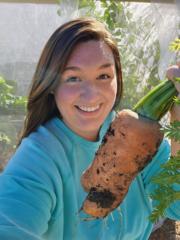
🔥
24d •
What have you harvested lately? 👀
What's been coming out of your garden? Veggies? Herbs? Flowers? Mostly weeds?? 🫣 Let's see some harvest photos!


🔥
8 likes • 24d
[attachment]
🔥
2 likes • 24d
@Lisa Miller thank you!
🔥
May 12 •
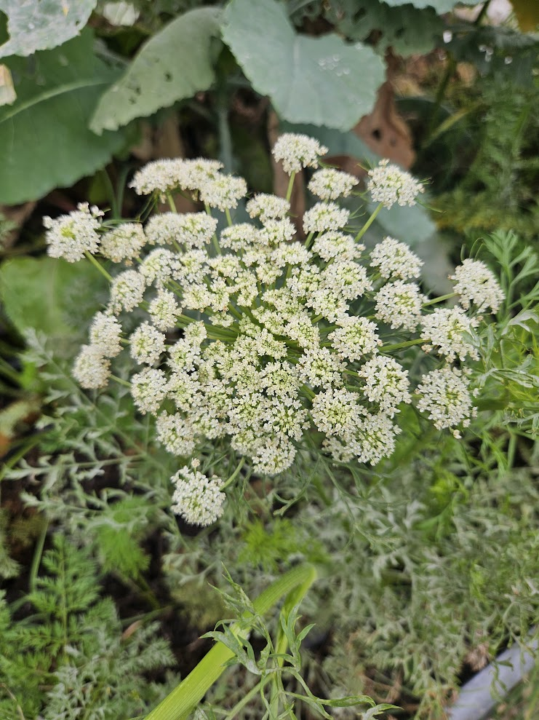
Why Carrots Bolt 🥕
Some of my carrots have started to bolt! So, it felt like the perfect time to share with you why that happens & what it means. 𝐖𝐡𝐚𝐭 𝐝𝐨𝐞𝐬 "𝐛𝐨𝐥𝐭𝐢𝐧𝐠" 𝐦𝐞𝐚𝐧? - Bolting is when a plant sends up a flower stalk and starts producing seeds. - When carrots bolt, they create clusters of tiny white flowers that look a lot like Queen Anne's Lace, which is actually a wild relative of the carrot! 𝐖𝐡𝐲 𝐝𝐨 𝐜𝐚𝐫𝐫𝐨𝐭𝐬 𝐛𝐨𝐥𝐭? - Carrots bolt in response to stress, typically associated with heat. - Since carrots are a cool-season crop, they do best in cooler temps (think 60–70°F/15-21℃). - When the weather turns warm and stays warm, they interpret that as a signal that their window to reproduce is closing. 𝐎𝐭𝐡𝐞𝐫 𝐬𝐭𝐫𝐞𝐬𝐬 𝐭𝐫𝐢𝐠𝐠𝐞𝐫𝐬 𝐜𝐚𝐧 𝐢𝐧𝐜𝐥𝐮𝐝𝐞: - Temperature swings — a period of cold quickly followed by heat - Inconsistent watering — drought stress puts plants into survival mode - Being left in the ground too long — the longer they sit past maturity, the more likely they'll bolt 𝐂𝐚𝐧 𝐲𝐨𝐮 𝐬𝐭𝐢𝐥𝐥 𝐞𝐚𝐭 𝐛𝐨𝐥𝐭𝐞𝐝 𝐜𝐚𝐫𝐫𝐨𝐭𝐬? - Unfortunately, no. Once a carrot bolts, the root becomes woody and fibrous. It's a bummer, but not all is lost! ✨ 𝐓𝐡𝐞 𝐒𝐢𝐥𝐯𝐞𝐫 𝐥𝐢𝐧𝐢𝐧𝐠 - The flowers are incredible for pollinators, especially beneficial insects like parasitic wasps and hoverflies. - If you're growing an heirloom variety, let the flowers go to seed, collect them, and you've got free seeds for next year! 𝐇𝐨𝐰 𝐭𝐨 𝐚𝐯𝐨𝐢𝐝 𝐛𝐨𝐥𝐭𝐢𝐧𝐠 𝐧𝐞𝐱𝐭 𝐭𝐢𝐦𝐞 𝐒𝐨𝐰 𝐢𝐧 𝐟𝐚𝐥𝐥 𝐨𝐫 𝐞𝐚𝐫𝐥𝐲 𝐬𝐩𝐫𝐢𝐧𝐠: - If you have mild winters & hot summers, sowing them in the fall is my preferred time of year. They’ll germinate in the mild fall weather, overwinter in the ground, and are ready to harvest in late winter/early spring before it gets too hot. - If you have cold winters, sow in early spring, once your ground can be worked. 𝐊𝐧𝐨𝐰 𝐲𝐨𝐮𝐫 𝐝𝐚𝐲𝐬 𝐭𝐨 𝐦𝐚𝐭𝐮𝐫𝐢𝐭𝐲: - If you live in a short growing season or are sowing them later, choose a carrot variety with a shorter days to maturity. - Longer season growers have more flexibility here.
🔥
5 likes • May 12
I always allow some of my carrots to bolt to draw in more pollinators.
🔥
May 7 •
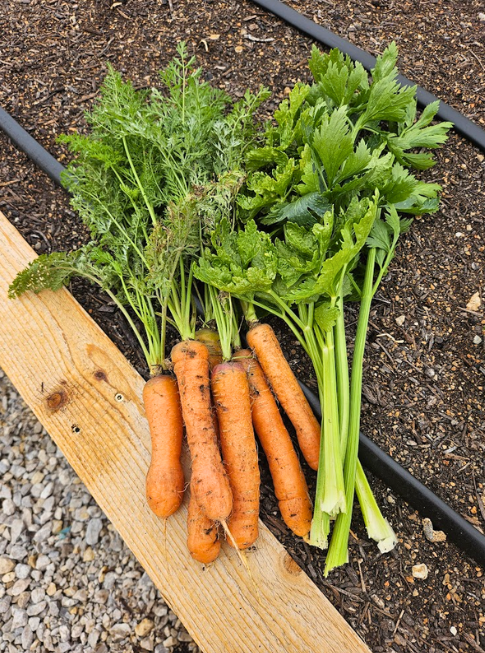
"BRB, Going Grocery Shopping in the Backyard!" 🛍️
Who's excited to say that one day?! Who's already gotten a taste of that experience?! The pure joy of walking outside and harvesting dinner. 🤗 These were the carrots & celery I harvested for some chicken and dumplings last night! Sooooo delish 😋 I CAN'T WAIT to see everything y'all harvest this year!!
🔥
7 likes • May 7
Later today I'm going to be picking my first cherry tomatoes of the season. The plant survived the winter and is growing like crazy!
🔥
3 likes • May 8
@Megan Webb it’s in a pot on my front porch under an overhang. It also helps that I live in Southern California. We didn’t get any temps under 37 this winter.

🔥
Apr 28 •
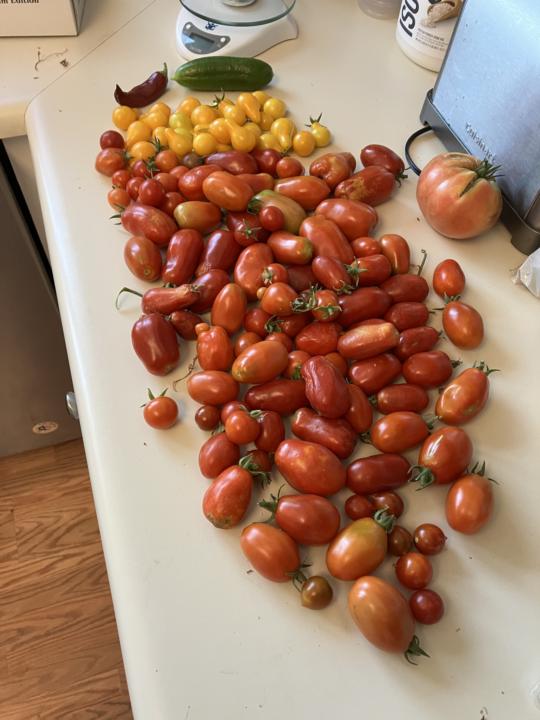
Latest tomato harvest...
We grow tomatoes every year and we've always been blessed with a good yield, but this year is nuts. The big one is a Brandywine (without the cat face) and there at least a dozen more ripening on the vine. At least five pounds on the counter. And, they taste SO GOOD! I just love home grown tomatoes. Good thing! LOL!😂
🔥
3 likes • Apr 29
Those look delicious! I have some cherry tomatoes getting ready. Can't wait to start harvesting them.
🔥
3 likes • Apr 30
@Sandy Chilese such a wonderful memory!
🔥
Apr 29 •
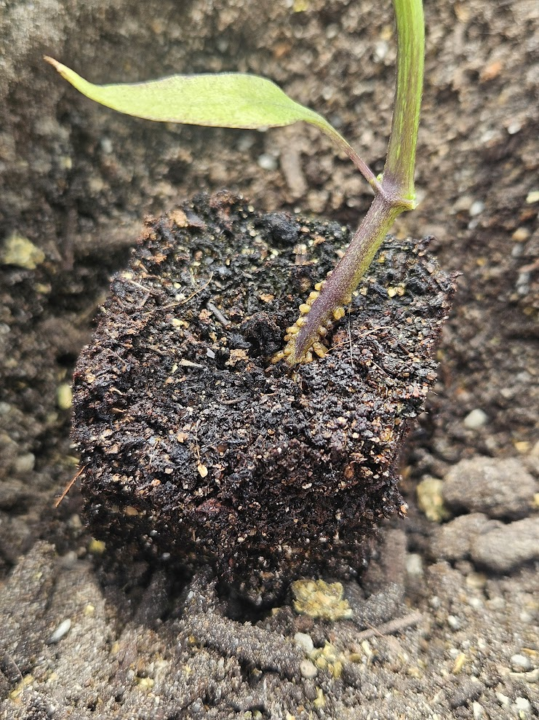
Have you ever seen this on your peppers? 👀🫑
I noticed these white bumps on the stems of my pepper plants while planting them out this weekend, and thought you might wanna know what’s happening here. While I’ll admit, it looks a little creepy, these are actually just roots! Specifically, adventitious roots, which is just a fancy way of saying roots that are growing from non-root tissues like stems, leaves, or branches, rather than the primary root system. It usually happens when: - There is high humidity and warmth - The plant is searching for more water and nutrients - The stem frequently comes into contact with damp soil - The plant experiences environmental stressors like too much water or outgrowing its container So, if this happens, what should you do about it? The nifty thing is, you can actually use this to your advantage! I’d recommend transplanting out into your garden or potting up into a larger container. When you transplant, plant them deep enough to cover the adventitious roots. They will develop into normal roots and contribute to a stronger, more established root system! How cool is that?! Have you seen this happen before? P.S. I included an action shot + after pic of planting all my peppers out! Can’t wait until they start producing!
🔥
5 likes • Apr 29
I have seen that before. It happens on tomatoes, too. Love your garden layout!
1-6 of 6
🔥
@richard-quintana-5997
I'm a seasoned Garden Coach with a few decades of experience. I'm also a crystal loving, oracle card pulling, tree hugging Druid.
Active 4h ago
Joined Apr 8, 2026
Thousand Oaks, CA
Powered by