Activity
Mon
Wed
Fri
Sun
Jun
Jul
Aug
Sep
Oct
Nov
Dec
Jan
Feb
Mar
Apr
May
What is this?
Less
More
Memberships
Zukunftsmacher Community
538 members • Free
The AI Advantage
122.4k members • Free
UP Credit™
5.8k members • Free
TechnikMut
244 members • Free
Community StarterClass
1.4k members • Free
Aloha Hawaii 🌺 Reisen
62 members • Free
AI Automation Society
364.5k members • Free
75 contributions to The AI Advantage

13d •
Maxed my paid account
Need to know if anybody else is running into issues of maxing out their Claude account or their ChatGPT account for available messages and tasks. This is my third reset today and it’s getting old. I understand I can buy more space but I don’t feel like I’ve used even enough to validate what I’m paying. I know right now this is just me letting off some steam. I’m frustrated and I just need a different settled lenses to help see my way through this and discover a workaround.

0 likes • 13d
@William Brown the Problem is WHAT you are doing... and that no system really tells you how the credits are used... example: when I tried to edit a long book...claude took two times to finish...and then I was nearly out of credits...when you do chatting... it works long... I guess when Claude goes in "reading skills" it really eats up the credits...
0 likes • 13d
@AI Advantage Team I never came to limits with gemini/copilots... I use Claude only for specific tasks what the others cant like producing a Powerpoint in ppt... I think they reduced the limits...because of overuse...

⭐
16d •
Day 3 Replay Unlocked + Next steps! 🔥
Today shattered the myth that more growth has to mean more complexity. Day 3 of the AI Advantage Summit showed you a better way. Instead of doing everything yourself… you can build a playbook, hand it to AI, and let technology help handle the tasks that slow you down. And that was just the beginning. In just a few hours, we broke down: • The powerful exercise that makes failure feel impossible • How to build operations playbooks so AI can handle the work that drains you • How to dive into AI without overwhelm and which opportunities to act on right now And Tony Robbins brought it all home by showing how to get out of freeze state so you can make fast, effective decisions that move your life, career, and business forward. Watch the FULL Day 3 Replay here (for a limited time). Thank you for making these last 3 days so special. By now, we hope you can see what’s possible when you overcome hesitation, build the right skills, and learn how to ride the wave of new technology instead of resisting it. And if part of you knows you’re ready for the next step… If you want to build your own AI Clone-Agent System so you can hand off repetitive tasks once and for all and get back 15+ hours every single week… Check out the AI Advantage Bootcamp before enrollment closes soon and we kick of May 1st If you’re one of the thousands who already joined, congratulations No matter what, we hope you walk away from this experience proud of yourself for taking a chance, investing the time, and learning something new. And remember… This is only the beginning.
0 likes • 16d
thats what I did from the beginning... building an operating-system - DEUX-OS... its based on the networkstate-idee and has proven its scaleablility with DLT/Azure

18d •
DAY 1 WAS OFF THE CHARTS!
Most people will spend the next year trying to figure out where AI fits into their life and business… and still won’t come close to what we accomplished together in just 3 hours today. Day 1 of the AI Advantage Summit was ELECTRIC. In a few short hours, we tackled one of the biggest challenges people are facing right now: too many tools, too much noise, and not enough clarity. And together, we cut through it. Today you learned: • Why AI is here to empower us, not replace us • The 4 levers to achieve peak AI success • How to build real AI fluency and go from Level 1 to Level 3 • Why you do not need to be “techy” to win with AI And Tony’s session on the patterns you can model to thrive through any world shift… unforgettable. Today was about seeing what’s possible. Tomorrow is about taking action and making it real. But before we move into Day 2, I’d love to hear from you… What was your biggest takeaway from Day 1? What clicked for you? What are you most excited to apply? Drop it below. Your insight might be the breakthrough someone else in this community needs right now 👇
1 like • 18d
I just did what you learned...first time used notebook llm... my band.presentation... and wo needs external designers etc...if you can do it just from giving it the website-adress... and it makes in seconds something like this...
0 likes • 17d
@Amber Mirza if you need high-end-products... you need professionals who know the deep details... like with real films... all the daily basic stuff AI can do mostly already...
18d •
When you get to the real things...My in Depth-Training and results...
Two weeks ago I had a possibilty to join a pro-training in LLMs - Agents...still trying to follow up that ... The result was: I have produced four Music-LPs... established two new music styles - Sacred EBM and Anantolian Delta Noir - and established myself on bandcamp... How do you get such done in two weeks? Creativity...SUNO Pro for the legal rights and a standard AI-Model... told ai to use a psalm , write a text in old German, Latin and KJV-English... and use 150 BPM and hard ebm-industrial... result is a clear text for suno...and SUNO ... produced the music...clubready...to blow you of your feet... you feel in your tummy when the cherub comes down from heaven and the door are blown out of the angles... no soft knocking:-). Do you have the creativity for such a project?
0 likes • 18d
understanding how SUNO works... you dont have to imagine all again from scratch... I found a turkish blues song... and looked into the styles... copied them and let copilot use my text to produce a german/turkish song in the style... like this...black-shadow: https://suno.com/s/PUDfbtDUvQF8qazn you think you are in the dark parts of istanbul and a black shadow follows you... then I just put the sad psalms and let copilot put the styles... and you really get the pure depressive style...feel being lost in the nowhere...

18d •
Homework
Here is my homework from day 1. I tried to animate it but Gemini said I had to upgrade.
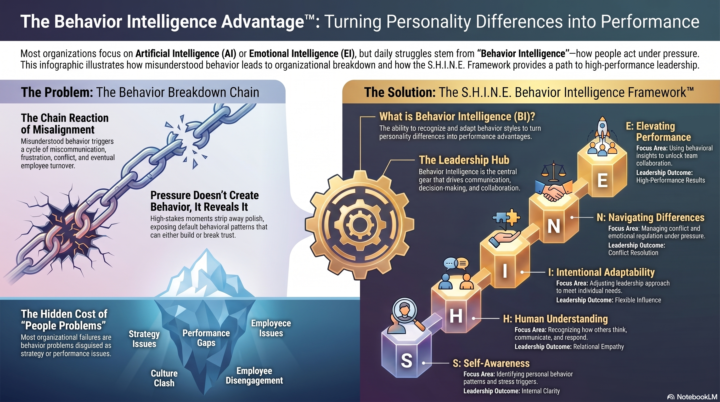
0 likes • 18d
notebook does really powerful things as I see...
1-10 of 75

@pilger-carsten
Systemarchitekt-Basis - DLT - DEUX-OS...Pilger...nicht mehr Teil des Hustles...
Weiterentwickler des Steve-Jobs-Erfolgsprinzips.https://jesaja58.org
Active 12h ago
Joined Nov 9, 2025
ENTJ
Celle - Germany
Powered by