Activity
Mon
Wed
Fri
Sun
Aug
Sep
Oct
Nov
Dec
Jan
Feb
Mar
Apr
May
Jun
Jul
What is this?
Less
More
Memberships
The Writer's Forge
663 members • $7/month
216 contributions to The Writer's Forge
3d •
Pitch deck
Hey everyone Hope you’re all having a wonderful day. I was hoping to please get some feedback. Before I carry on. I’m working on my pitch deck - I’m just playing around with tone and the vibe of how it looks - the writing will be changed as I just wanted to se show it looked. Soo ignore the actual words because they will be changed. I’ve only done three pages. Before work - is this the kind of thing and way it’s meant to look. I’ can’t seem to find examples or many online, so I’m guessing. Thank you sm.
2 likes • 3d
@David Hinnebusch ahaha noooo don’t be silly. I thought you were very helpful. 🥰
1 like • 22h
@Thia Markson ahh thanks thia. Amaizng. Yess I havnt spent too much time on it yet. I was just trying to get a visual for the overall look to begin with. Then curate any text and information for the movie - so the order and none of the wording I’ve really spent any time on. Just the visual side. This is really helpful Thank you so much you’re smashing it. 🥰
6d •
Your Script Needs... Something
On The Rugrats Movie there was a Russian director named Igor. His English wasn't great. He'd read our latest draft, find me and my writing partner in the hallway, and deliver the same review every time. Imagine this in thick Russian accent: "I read script. Script needs... something." That was it. He never said what the something was. It pissed me off. It felt unfair. But he was absolutely right. It did need something. And he wasn't a writer, so pointing to it wasn't his job. Finding it was ours. The same way it's an actor's job to bring a character to life, or an art director's job to bring a set to life. Your job as a writer is to find the something. // I used to think the something was plot. Things happen, and characters happen to be standing in them. So I'd rearrange events, punch up scenes, and Igor would find me in the hallway again. Script needs something. After a long series of beating my head against the wall, I found it. The something is what your character is hiding. Or is in deep denial of. // Rugrats turned around when we leaned into Tommy's denial. Suddenly there was comic juxtaposition between the scene Tommy insisted was happening and the scene his friends could plainly see. Same engine in Shrek. Shrek at dinner with Fiona's parents is funny because he's in denial about how obviously they hate him. But look closer. The King is in denial too. He's hiding that he was the frog a princess kissed. He believes that part of him is unlovable. Rewatch the movie and you'll see it: everything that happens in that kingdom happens not because the father hates Shrek, but because he hates the frog in himself. All of us hide parts of ourselves from the world. Including from the people closest to us. So when a character on screen does it, we don't watch them. We recognize ourselves. // Here's the truth nobody tells you. The audience doesn't care about you. They don't care about your story. They don't even care about your characters. They care about themselves. That's why they bought the ticket.

5 likes • 6d
Billy’s BIG FAT LIE. Billy denies himself because he thinks he and his job is the reason his loved ones die. He punishes himself for a choice he made that resulted in the loss of his fiance. - the lie that if he SAVES Bella he will find redemption. Which disguises ⬇️ Deeper- he dosent want to admit that not only is he great at his job. He LOVES it. So every fight and situation his head denies. His body betrays him. If he admits he loves it. Then he has to admits he loves that world he is in. Then with the truth he realises along the way of accepting himself - he can use his skill and new found power for greater good.
7d •
The black list
Hope everyone’s having a lovely weekend and are all well :) What’s everyone’s thoughts about uploading your script to the black list, I was thinking about doing it soon maybe - not sure how it works - Thanks :)
0 likes • 7d
@Shauna G ah amazing thank you sm. 🥰
0 likes • 7d
@Anna Fermin ahhh thank you Anna 🥰
7d •
Today’s sprint. 10am PST
Let’s go! Come together, let’s work, let’s chat, let’s hold eachother accountable. https://www.skool.com/live/3JtGgwmDGwn Hopefully see you there 🥳🥳
1
0
7d •
HS Wrestling.
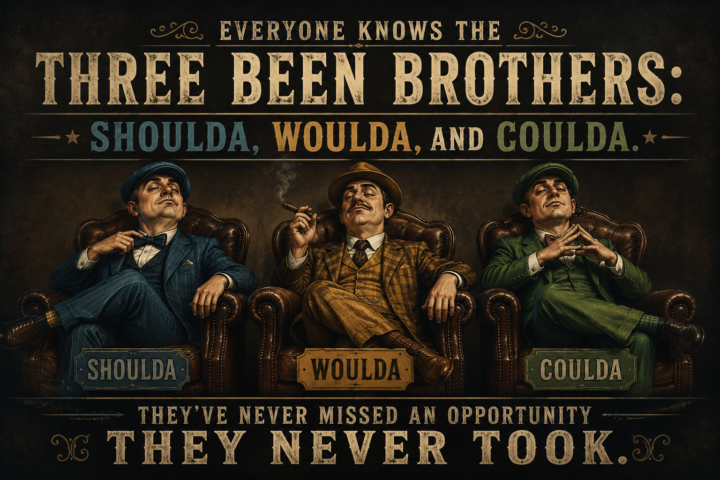
In HS wrestling locker room we had motivational posters all over the walls. This is the one that has stood with me for over 30 years. It's now my desktop wallpaper. Take a shot at the Black list @Pia Crawford Do it. It's too late when you're dead.
1 like • 7d
aha thanks Jason 🥳🥳🥰
1-10 of 216
Active 10h ago
Joined Jan 11, 2026
U.K.
Powered by