Activity
Mon
Wed
Fri
Sun
Sep
Oct
Nov
Dec
Jan
Feb
Mar
Apr
May
Jun
Jul
Aug
What is this?
Less
More
Torwart - Eltern - Community
73 members • Free
Sports Brand Builders
115 members • Free
Goalkeepers
297 members • Free
26 contributions to Total Goalkeeping

13h •
Goalkeeper Finger Injuries: Prevention, Treatment and Return to Play
Goalkeepers participate less in the game than their teammates and make fewer accelerations and decelerations when running, match actions closely linked to muscle injuries, and yet they face a high risk of injury. His role consists, almost constantly, of absorbing with his hands the force of each shot on goal, cross or rebound. That’s why a study published in the American Journal of Sports Medicine found that goalkeepers suffer hand and wrist injuries at a rate seven times higher than outfield players, with an even more pronounced difference in training-related hand injuries, which occur 24.7 times more often. Here, the cause is clear: systematic repetitions in training sessions create the perfect environment for injuries to develop. It is therefore essential that goalkeepers train with specific prevention programmes. Dislocations, fractures, and tendon injuries in the fingers can sideline a goalkeeper for weeks or even months, and approximately 75% of all upper extremity injuries in goalkeepers involve the fingers and hand. This is due to goalkeepers’ specific actions, such as catches, falls, and lateral stretches, which generate direct impact mechanisms, axial loads on the fingers, and rotational forces when securing the ball, which explains the high incidence of joint and ligamentous injuries in the hand. To prevent these types of injuries, the most important step is to understand them. Understanding the biomechanics of the most frequent incidents, practical prevention strategies, and safe timelines for returning to play is essential. The goalkeeper is one of the most important positions in a squad and yet there is still a limited volume of research and studies on his specific situation, when his very nature demands a differentiated approach within football. Common Types of Goalkeeper Hand Injuries Goalkeeper hand injuries are divided into several different categories, each with different mechanisms, severity levels and recovery times. Knowing the difference matters, because a misdiagnosis can lead to chronic instability or permanent deformity.

Jul 14 •
Goal-line technology: How football solved the ghost goals debate in less than a second
On June 27, 2010, in the round of 16 of the World Cup in South Africa between England and Germany, Frank Lampard hit a shot from outside the area that hit the crossbar, clearly hit the goal and bounced off. The referee did not grant it. The image of the ball crossing the goal line between 30 and 50 cm, without any human official being able to certify it, traveled on television and forced FIFA to do what it had been avoiding for more than a century, which was to automate the most binary decision in football. Twelve years later, goal-line technology (GLT) detects when the ball crosses the line with an error of less than 1.5 or 2 centimeters (the threshold required in the tests) and communicates the decision to the referee in less than a second. Paradoxically, determining whether there is a goal seems a trivial decision, but from a technological point of view it is one of the most demanding problems in sports refereeing. The ball can exceed 100 km/h, bounce off the crossbar, be hidden by several players and remain just a few tenths of a second close to the line. For a technology to be accepted by FIFA, it is not enough for it to work most of the time, it must do so practically always, in any stadium, under rain, fog, artificial lighting or extreme media pressure. The story of goal-line technology is, to a large extent, the story of how engineering managed to turn an instantaneous decision into a verifiable physical measurement. FIFA and the International Football Association Board (IFAB), the two bodies responsible for changing the laws of the game, resisted introducing technology for several documented reasons: - Universality of the game: any regulatory modification affects both the Champions League and a rural field in any corner of the world. Imposing expensive technology was not compatible with historical doctrine. - Risk of “technification” of football: the belief that refereeing imperfection was part of the culture of the game. - Lack of a robust system: Until the 2000s, no existing technology simultaneously met requirements for centimeter accuracy, sub-second latency, and robustness to moisture, dust, and shock.

2 likes • Jul 16
@José Carlos Cimorra There is a lot of debate around technology in football, but in my opinion the problem is often not the technology itself — it is the way it is implemented. Do we really believe a striker gains a meaningful advantage from being 1 cm offside? The current interpretation can create situations where the technology is incredibly precise, but the decision does not necessarily reflect the reality of the game. The same applies to incidents where a goal is disallowed because of an extremely marginal touch or a minimal technical infringement. Are we improving fairness, or are we sometimes removing the natural flow and emotion of football? The conversation also often focuses on the technology itself, while the bigger issue is the decision-making process around VAR: - When should VAR intervene? - What is a clear and obvious error? - Should referees explain decisions? - How do we keep the game understandable for players and supporters? Other sports, such as rugby and American football, seem to have integrated technology more effectively because the process is clearer: - communication is transparent, - decisions are explained, - the role of technology is better defined. Football should not reject technology, but it needs to find the right balance between accuracy, common sense and the spirit of the game.
5 likes • Jul 16
@David Radbourne Goal-line technology is a clear success. It solves a specific problem with a clear answer: did the ball cross the line or not? There is very little debate around it. My concerns are more about VAR. How can we still get decisions wrong when officials have access to multiple camera angles, replays and slow motion? The technology is there, but the consistency and application are still questionable. In my opinion, VAR has become too involved in parts of the game where human judgement and the flow of football should remain important. A 1cm offside decision or a very marginal contact can lead to major consequences, even when there is no obvious advantage gained. At the same time, we have seen situations — including at major tournaments — where VAR does not intervene when many people expect it to. That creates the feeling that the system is not always clear about its own purpose. The biggest concern is that some referees appear to rely on VAR instead of making decisions themselves. VAR should be a safety net, not a replacement for the referee’s judgement. The referee on the pitch should remain the decision-maker, with VAR correcting clear and obvious mistakes. Other sports have arguably integrated technology better because the process is clearer. In rugby and American football, communication with the audience is more transparent, and everyone understands when and why technology is being used. Football needs technology, but it needs the right balance: more accuracy, more consistency, and less interference with the natural character of the game.

Jul 14 •
Tactical Tuesday: The One-on-One Angle Trap
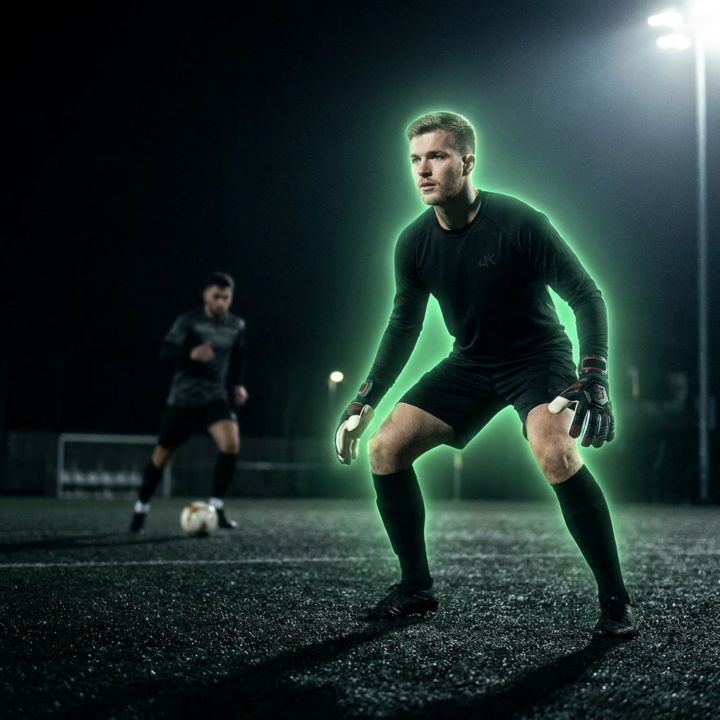
Every Tuesday, I am going to break down the exact real-game scenarios I had to deal with as a professional goalkeeper, and the high-pressure situations I coach my students to overcome. Here is your scenario for this week: The Situation: You are the goalkeeper. A fast striker breaks past your defence on your right-hand side. They are entering the penalty box at a tight, 45-degree angle. Your defender is sprinting back but cannot catch them. What would you do ? Vote Below AND explain why you voted this way, and why the other choices could cost you a goal!
Poll
36 members have voted
7 likes • Jul 14
Great question @Ray Newland. I will be interested to see the results.
Jul 1 •
The silent shoulder of the goalkeeper and the throwers
The outfield footballer’s shoulder almost never appears in injury statistics. The goalkeeper’s shoulder, on the other hand, is one of the most punished anatomical areas in professional sport. Every plank start, every corner clearance and every block demands the rotator cuff, the muscle complex that stabilizes the shoulder and controls much of the arm’s movements, to work in extreme positions and with loads that very few outfield players experience. This exposure makes the complex formed by supraspinatus, infraspinatus, subscapularis and teres minor (the SITS muscles) the most vulnerable link in the goalkeeper’s upper limb. It is worth knowing the functional anatomy of the cuff, the typical injury mechanisms in goalkeepers and other throwing sports in order to establish preventive protocols with the support of scientific evidence. The relevance of the rotator cuff is better understood if one takes into account that the shoulder is the most mobile joint in the human body. This extraordinary freedom of movement allows complex overhead gestures to be performed, the arm to be accelerated at high speed and high forces to be absorbed during falls or impacts. However, that mobility comes at a price: bone stability is limited and depends heavily on soft structures such as muscles, tendons, ligaments, and the glenoid labrum. Among all of them, the rotator cuff plays a central role, as it keeps the head of the humerus centered in the glenoid cavity during movement and prevents displacements that could compromise joint function. When this structure becomes fatigued or injured, not only does the strength of the shoulder decrease, but its mechanical stability is also altered and the risk of more complex injuries increases. Although goalkeepers cover approximately half the distance of an outfield player and have lower overall energy requirements, the mechanical demands derived from repeated jumps, falls, blocks and throws concentrate enormous stress on certain anatomical structures


🔥
Jun 28 •
World cup competition entries
So the vote has closed for the world cup competition @Ray Newland has kindly said he will give a pair of gloves as the prize. So if you pick the winner your name goes in to a hat to win a pair of gloves. The following teams were selected France @xavier stark @Kian Patterson @Roxy Mattick @Dan Turner @Jayden Roberts @Anthony Oshea @Mirko Engelhardt @Andrew Smith @Ian Alexander @Trent O neill @Riley Reynolds Germany @Deleted @David Radbourne @Tyler Miah-Dodkin Spain @Florence D @José Carlos Cimorra @Isabelle Simpson @Jerry Kurtti @Umut Özdemir @Preston Oldfield @Finley Perkins @Margot Hardinge @William Barlow @Erin Bothwick @Jamie Kyne Portugal @Leanne Morgan @Nathan Hallwood @Joao Ferreira @Mélissa Pereira @David Dunne Argentina @Chris Billinge @Alex Cook @Emily Hart @Amy Walker Brazil @Richard Elliott @Alan O hara @Emma Dowling

5 likes • Jun 29
Well done for organising this ☺️ Germany could struggle with Manuel Neuer in goal. He has defined goalkeeping for decades, but based on his performances so far, I’m not convinced he can help Germany compete with France in the next round, assuming they get past Paraguay today.
5 likes • Jun 30
@Xavier Stark Absolutely. Germany going out to Paraguay on penalties and Morocco knocking out the Netherlands is exactly the kind of chaos that makes a World Cup feel alive. Paraguay even declared a national holiday after the Germany upset. Germany found no siolution against Paraguay...
1-10 of 26

@mirko-engelhardt-6111
Mirko Engelhardt, Goalkeeper-Coach and Owner GÖALKEEPING
https://www.xn--galkeeping-ecb.de/
Active 12h ago
Joined Dec 10, 2025
Powered by