Activity
Mon
Wed
Fri
Sun
Oct
Nov
Dec
Jan
Feb
Mar
Apr
May
Jun
Jul
Aug
What is this?
Less
More
Owned by Michael
Mobile Home Park Investment for new or existing investors who want to find cash-flowing, off-market deals + analyze + close + manage them like a pro!
OpenClaw One Click Install & Support group! We help you get set up in seconds and demo skills you'll ACTUALLY USE. Plus weekly live learning sessions!
Openclaw Builders Club
324 members • Free
The MHP Network
3 members • Free
EverAds | Growth Boost Style
1.2k members • Free
Cortex
318 members • $9/month
GrantHouse
5.4k members • Free
Mobile Home Investing Club
1.4k members • $10/month
𝗔𝗜 𝗩𝗜𝗗𝗘𝗢 𝗦𝗞𝗢𝗢𝗟
1.9k members • $9/month
Land Home Package Investing
382 members • Free
Grow With Evelyn
3.7k members • $19/month
852 contributions to The MHP Pros Mastermind

6d •
TOH Conversion Strategy
Has anyone successfully gone through the process of buying an all POH community and converting it to TOH? If so, I'd love to chat.

🍀
3 likes • 6d
@Karl Kulpak great info Karl! I agree with everything you said! I would highlight what you said that you always charge SOMETHING for the home even if its a low price. This instill ownership and makes them pay off a balance, during which time you still hold title
🍀
1 like • 2d
@Caleb Hogan this is great insight thank you caleb. We'd love to have you on to talk about this sometime soon.

5d •
Home Equity as Down Payment?
Under contract for another mobile home park in Nebraska and our bank said they would consider using another one of our owned real estate as our down payment. This is a small park and the down payment would be about $45,000. If the bank agrees to use that equity in my home as a down payment instead of cash, is that something I should consider? Or is that a terrible idea?
🍀
2 likes • 3d
@Karl Kulpak same for me on the retirement accounts! This i think is a very smart move if you have limited equity
🍀
3 likes • 3d
@Charlie Wang i did the math and the 10% penalty was worth it (for me!)
5d •
Evictions...
Month 3 of mobile home park ownership... woohoo! At what point do you evict TOH's? We have two tenants: one paid $200 for July (less than half of rent), nothing in August so far)... the other nothing in August yet but paid July with a late fee. Our property management company wants to do a "7 day notice to quit", but is it better to try to work with the tenants on a payment plan? Or is that a long term disaster?
🍀
3 likes • 5d
Summary of @Ryan Narus' answer from our conversation with Rachel on Group Mentorship today. Rachel was revisiting a question about her RTOs (Rent-to-Own residents) who had not paid rent. A resident had promised to pay by end of day Monday or Tuesday but did not follow through. Rachel wanted to discuss the pros and cons of what to do next, noting she and Kevin were not interested in flipping the homes back to park-owned. Ryans Answer: 1. Start the clock immediately Send the notice the moment your contract allows it, typically day 30. Even if you've set up a payment plan, send it anyway and tell the resident it's procedural. Every day you delay gives them free days and leverage to push you further. 2.File the eviction after the notice period Once your demand period passes (10 days in North Carolina), file. You can dismiss the case any time before the sheriff executes the writ, so filing costs you nothing but time. Only hold off a day or two before filing, never before noticing. Filing creates a public court record, which is your leverage. 3.The writ is permanent Once executed, it's on the resident's record for good. They can't undo it. 4.The principle to remember Be aggressive starting the clock, generous stopping it. You can pause or dismiss anytime, but you can't go back and restart a clock you never started. Time is your biggest negotiating tool here, so get it running. 5.On tone and approach Be firm, friendly, and direct. Not mean. Acknowledge what the resident is going through ("it sounds like you're really going through something") without calling out the lie. Still push for payment or help them find alternative housing. 6.On park-owned homes Ryan gets that you don't want park-owned homes, but he's pushing you to get control of those units anyway. Here's why: if a resident gets evicted but keeps ownership of the home, they hold you hostage. You can't place a new resident or a new home on that lot. Own the home and the land, and you can lease it up in a couple weeks instead of sitting in a legal gray area.
🍀
3 likes • 5d
@Kari Pesch Thats the risk of a property management company period. They have 0 equity in the deal so why would they care to deal with problems?

10d •
Fake gurus and influencers
If you’re following guru’s because they’re rude and brash “experts”, ask to take a peak behind the curtains at their pnl reports. Just closed on a 2 park purchase from a “guru” in my state. Guy charges for masterminds, YouTube and instagram bragger, you know the type and can find him easy since there’s only a handful from my state. Worst pnl reports I’ve ever seen. Historically bad. Elite at being bad. Looked at his entire portfolio. Every park was the same, 70% expenses, and not padded by management fees or veiled kickbacks. His purchase price 3.46m 6 years ago. Down payment of at least 700k and most likely 1.05m. We purchased at 3.3m…65 lots 64 filled bought for under market lot rent pricing. Bragging about cash flow but couldn’t pay his property taxes last year and instead letting the park go to sheriff sale tax lien. Posted his “profit” pics of 500k.. do that math real quick and tell me the profit again? I can tell you with verified certainty that the founders of this group are not influencers selling lies and hopium. Follow this system for profits and actual cash flow. No social media bragging required.
🍀
7 likes • 10d
I believe the guys name rhymes with Bliss Food. I want to further expand on this because ive now heard from multiple people that they paid another influencer whose name rhymes with Space Dorby for a Mobile Home Park mastermind. They more or less were scammed. Please beware of who you are listening to and paying for advice!
🍀
1 like • 5d
@Kari Pesch Bliss and Space have really unique names

May 9 •
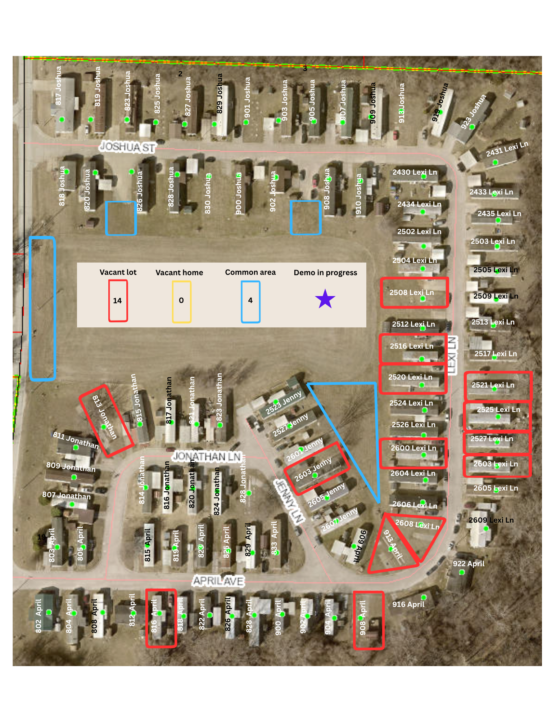
Park map - Can this be automated?
I make maps of my parks in Canva to visualize my parks in real time. I find it helpful for my contractors such as lawncare to have maps with real time occupancy. Does anyone know if there is a better way to do this? I use Rent Manager for my management software & curious if anyone has seen or built anything that pulls data from RM and updates a map? In the storage facility software world, this is common. I have found it extremely helpful when you're on the phone with someone trying to explain where a certain home is.
🍀
2 likes • May 10
RentManager has a module for this already - i dont use it yet but Three Pillar who owned the park before me did. @Ryan Narus do you use the map function in RM?
🍀
2 likes • 5d
@Kyle Grimm take a look at the Bird's Eye View module. We now have all relevant RentManager Trainings in our library
1-10 of 852

🍀
@michaelpansolini
🏡 Teaching The Proven System to Invest in Mobile Home Parks & Implement AI into Business Ops, 💪🏻 Ex-Wall Street Real Estate Private Equity
Active 3h ago
Joined May 7, 2024
ENTP
New York, NY
Powered by