Activity
Mon
Wed
Fri
Sun
Aug
Sep
Oct
Nov
Dec
Jan
Feb
Mar
Apr
May
Jun
Jul
What is this?
Less
More
Memberships
GovconOS
14.2k members • Free
Sharpshooter Life Community
87 members • Free
AI Blueprint
74 members • $10/m
14 contributions to Sharpshooter Life Community

May 29 •
Most people would rather have someone to blame.
True freedom means being responsible for the direction of your life. For some the burden of making life work for and by yourself is too much to bear. Its more comfortable to get back to the “herd mentality”. It's easier to fall in line and do what everyone else is doing. The hurd is safe and doesn't have the personal risk of failure. But true freedom is the will to be responsible for ourselves. It is terrifying, yes. But it is the only way to truly live. 🙌

5 likes • May 29
Don’t be the victim in your story. Change the narrative. Make the plan, work the plan and own it
May 21 •
Winning at your life is up to you
It takes planning and hard work. It takes awareness and practice. It gets better with time. Practice daily. #R³
1 like • May 22
discipline needs to be practiced daily otherwise you lose it. no one is going to save me - gotta get to work
Apr 13 •
Start Embarrassingly Small to Achieve Massive Results
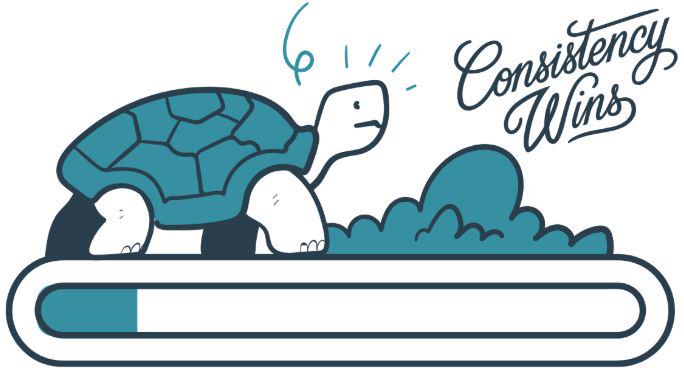
As high performers, we possess a burning desire to completely transform our lives. When we set our sights on a new target—whether it is scaling a business, getting into elite physical shape, or mastering a new skill—our default approach is to go all in. We attempt to overhaul everything overnight, relying on massive bursts of intensity and motivation to propel us forward. But after a few days or weeks, the initial excitement fades, friction sets in, and we inevitably miss a day. That miss turns into a week, and soon we abandon the plan entirely. We are so obsessed with making spectacular leaps that we fail to sustain the effort, ultimately spinning our wheels, again—going, but not growing. Why do these grand, intensive overhauls almost always fail? The answer lies in how your brain manages its cognitive resources. Relying purely on motivation and willpower is a fundamentally flawed strategy because willpower is a finite, unpredictable resource that depletes rapidly under stress. When you attempt to force massive behavioral changes all at once, you require a tremendous amount of "activation energy". Furthermore, the human brain is biologically hardwired to seek comfort and follow the path of least resistance to conserve energy. When you introduce a massive, difficult new routine, your brain perceives this sudden spike in effort as a literal threat, triggering resistance that pushes you to quit. However, behavior becomes sustainable when it transitions into a habit. Habits are neurological algorithms that operate automatically in the background, requiring almost no cognitive effort. Consistent repetition physically rewires your brain, forging strong neural networks that make performing the behavior easier than skipping it. To successfully build these networks without triggering your brain's alarm system, the initial action must be so trivial that survival is not at stake. If you want to achieve extraordinary results, you must stop trying to be spectacular and start mastering the mundane. Here is what a Sharpshooter practices to build a strong foundation:
0 likes • May 22
The amount of effort it takes to get to that target habit is always so severely underestimated. Putting it into perspective with how the brain works and genuinely comprehending has always helped me change my actions. I had to channel my inner voice again (all the way back to my time in Marine Corps) to get back on track. Its insane how hard bad habits are to break, but do you really want it? The results answer that question
May 18 •
Lock In: Cut the Noise & Change Your Life's Trajectory
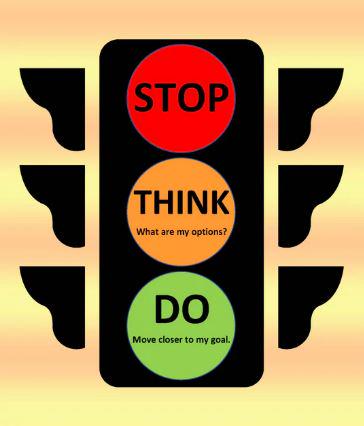
As high performers, we set massive goals and constantly want to achieve great things. We look at the calendar, get a burst of motivation, and tell ourselves that we are finally going to make this next month count. But then Monday hits. We get caught up in the "whirlwind" of daily, urgent, busywork. Our phones ping, we check social media, and we fragment our attention into smaller and smaller pieces, switching tasks dozens of times an hour. We dabble in five different projects instead of committing to one because we want immediate results, falling victim to a culture of instant gratification that makes us impatient. We end up being "half-in" on our ambitions, and the problem with being half-in is that it never gets you the results you actually want. We realize, with frustration, that we are going, but we aren't growing. Why is it so hard to just sit down, block out the world, and do the deep work required to move the needle? Your brain is an incredibly efficient machine that is hardwired to conserve energy and follow the path of least resistance. When you try to "lock in" and do hard, focused work, you are actively fighting against your brain's "inertia default"—the biological urge to resist change because staying in your comfort zone requires fewer mental calories Our modern digital environment is literally designed to hijack your dopamine reward system. When you constantly switch tasks or react to notifications, your prefrontal cortex—the area of the brain responsible for executive control, clear decision-making, and long-term planning—gets severely depleted. Breaking this cycle requires actively fighting distraction with awareness. This is a deliberate, initial burst of cognitive effort required to break the autopilot loop and force your brain to form new neural pathways. If you want to completely change your life in the next few months, you need to stop dabbling and lock in. You must transition from passive consumption to relentless execution. Here is how a Sharpshooter locks in:
0 likes • May 22
its so easy to miss this but this is literally how you get to where you're trying to go (if you really want it)
May 11 •
Execution: The Gap Between Knowing and Doing
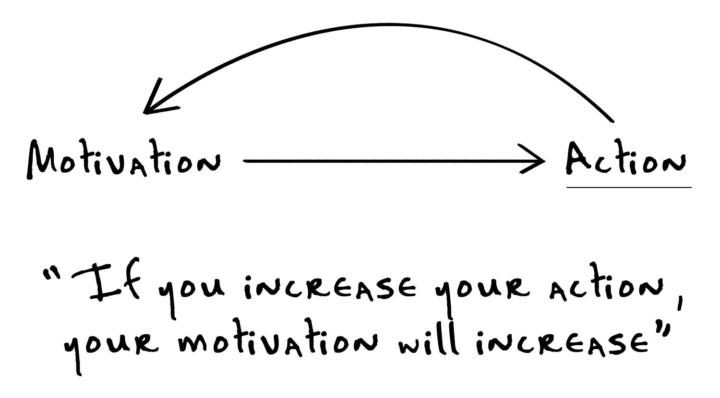
We wake up hungry to improve and build a greater life. We collect insights like currency—devouring self-improvement podcasts, books, and articles, and saving way too many online posts. We are incredibly good at learning about change, but consuming ideas about your life is not the same as actually living differently. It can feel like progress, but this endless preparation is simply procrastination disguised as productive work. We suffer from "shelf help" rather than true self-help, getting stuck in consumption mode and battling the "constipation of execution". Most people are great at knowing, but we fundamentally fail at doing. The part that actually moves the needle. Why do we hoard knowledge but fail to execute? From a psychological perspective, this is known as the "intention-behavior gap". We strongly intend to act, but become "inclined abstainers" who fail to translate those goals into action. Your brain is an efficiency machine wired to follow the path of least resistance—the "inertia default". Gathering information and planning feel incredibly safe; they provide a dopamine hit that tricks your brain into thinking you are making progress without ever exposing you to the actual risk of failure. Transitioning from consumption to execution requires a deliberate, initial burst of cognitive effort to break the autopilot cycle and force your prefrontal cortex to take command. Without this, your brain avoids the discomfort of change and keeps you safely stuck in the weeds of theory. Knowledge is not power; it is only potential power until you consistently apply it. If you want to get better at the doing part, you must deploy the 50/50 rule: for every hour you spend reading, listening, or learning, spend an hour applying that knowledge. As a Sharpshooter, here is what that actually looks like: 1. Pick One Idea, Not Ten: If you chase two rabbits, you will catch none. After finishing a podcast or a chapter, write down the single takeaway that hit hardest and ignore the other nine. You cannot apply ten things at once; you can only apply one.
2 likes • May 11
I loved the line 'constipation of execution'. What I have started to ask myself (because we constantly ignore the consequences of not doing / executing what we are targeting) is what happens if I don't do this hard thing? We constantly go after the easier stuff because of that dopamine hit but I have to constantly remind myself now of what happens if I don't do this hard thing. I won't hit my target and I get off track. We fail and totally disregard the bad things that accumulate over time.
1-10 of 14