Activity
Mon
Wed
Fri
Sun
Jan
Feb
Mar
Apr
May
Jun
Jul
Aug
Sep
Oct
Nov
What is this?
Less
More
Memberships
Natural Self-Leadership
422 members • $7/month
ADHD Business Women
122 members • Free
The AI Coach Growth Club
1k members • $7/month
Gratitude for Muslim Women
890 members • Free
Your First $5k Club w/ARLAN
2.5k members • $50/y
Nervous System Journaling Club
273 members • $7/m
ADMORI SOCIETY
374 members • $27/month
100 Walks Club
369 members • $9/month
2 contributions to The Feeling Index

🔥
3d •
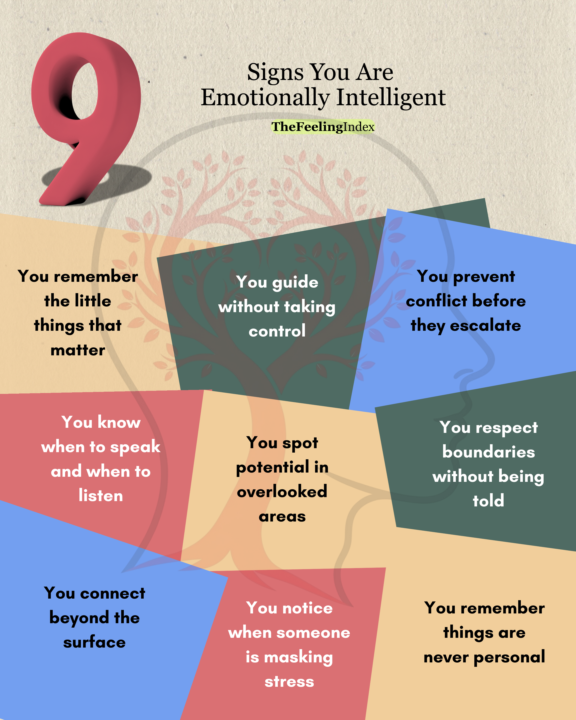
9 Rare Signs of EQ
Emotional intelligence isn’t loud, flashy, or always visible. But it consistently shapes how we lead, communicate, and build trust. These 9 signs reflect the quieter strengths of emotionally intelligent people, the ones who make teams safer, relationships stronger, and decisions clearer: ✨ They guide without taking control ✨ They prevent conflict before it escalates ✨ They know when to speak and when to listen ✨ They notice when someone is masking stress ✨ They connect beyond the surface ✨ They spot potential in overlooked areas ✨ They respect boundaries without being told ✨ They remember the little things that matter ✨ They remember that things are rarely personal In a world full of noise, EQ is a competitive advantage and a human one. Which of these resonates most with you right now?

0 likes • 2h
@Rachel Mobley I love this idea! Thanks for sharing! I've done the gratitude list and what went well during the day, but not 3 things I love about myself ooo powerful. 🔥💪🏽
🔥
13d •
What Do You Do When You're Upset?
Emotional intelligence does not mean that you never get upset. Emotional Intelligence is about knowing how to respond when you are upset. To be human is to feel — emotions are part of our survival system. They release hormones and neurotransmitters into our bloodstream to prepare our body for action. When we get into an argument, our mind can convince our body that we’re in danger. The chemicals released in those moments pull resources away from higher-order thinking. Survival gets prioritized over complex thought, and this is where things can spiral. If we can’t think rationally, we’re far more likely to make the situation worse. This is why certain practices can help reduce the impact of that cognitive impairment and keep you grounded when emotions run high. Here are a few practical exercises you can introduce into your day-to-day: 1️⃣ The 10-Second PauseBefore reacting, pause for 10 seconds and take one slow breath. This interrupts the emotional spike and gives your prefrontal cortex a chance to come back online. 2️⃣ Name the EmotionSay (out loud or in your mind): “I’m feeling angry / overwhelmed / tense.”Labeling the emotion decreases amygdala activation and increases emotional clarity. 3️⃣ Change Your PhysiologyStand up, stretch your hands, unclench your jaw, roll your shoulders.Loosening the body sends a signal to the nervous system that the threat has decreased. 4️⃣ Redirect the FocusAsk yourself: “What is the actual problem I’m trying to solve here?”This shifts you out of emotional reaction and back into intentional action. 5️⃣ Practice Micro-RecoveryIf you feel escalation: take a 2-minute break, drink water, step outside, or walk to another room. Physical interruption = emotional reset. what other things work for you when you start feeling upset?
1 like • 1d
@Luis Castro yes.... the mind is so sneaky sometimes 😳😆🙃
1 like • 1d
@Luis Castro @Luis Castro 😆 tell me about it. My dayz, it feels like a constant battle. I started the limiting beliefs training....🤓 Thank you for the reminder to get back to it and implement the actions.💪🏽
1-2 of 2

@melanie-buchanan-4779
Lover of writing, fascinated by psychology and nature. Always learning 🤓📝
Online now
Joined Nov 22, 2025