Activity
Mon
Wed
Fri
Sun
Jan
Feb
Mar
Apr
May
Jun
Jul
Aug
Sep
Oct
Nov
What is this?
Less
More
Memberships
LA
Lunari Atlas Institute
130 members • Free
WW
Weed & Wellness
1.3k members • Free
Theory of Man
138 members • Free
2 contributions to Theory of Man
29d •
Grounding: How Earth Resets Stress and Sleep
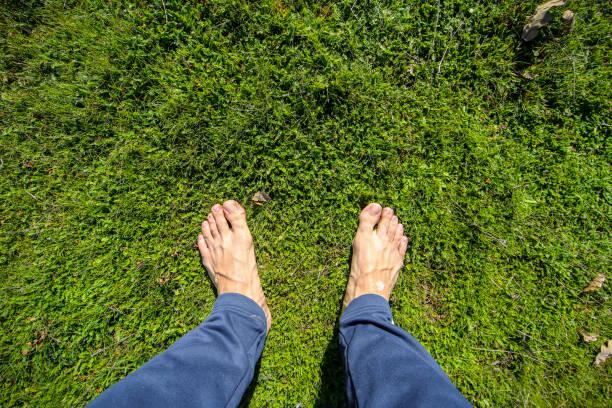
You’ve probably felt it before, that quiet calm that hits you when your bare feet touch the ground. Maybe it’s after walking on wet grass, standing at the edge of the ocean, or lying in the sand after a long swim. Your mind slows down, your breathing evens out, and for a moment, you feel connected to something bigger than yourself. That’s not imagination. That’s physiology. For thousands of years, humans lived in direct contact with the earth’s surface. We slept on the ground, moved barefoot, hunted, and worked outdoors. Our skin was constantly conducting small electrical exchanges with the planet a subtle but powerful connection that helped regulate stress, inflammation, and sleep cycles. Then came shoes, concrete, high-rises, and Wi-Fi. We insulated ourselves from the ground and called it progress. Now science is starting to catch up with what our ancestors already knew: the human body is an electrical system, and the earth is its grounding wire. What Happens When You Touch the Earth The earth carries a natural negative charge. When you make direct skin contact, feet, hands, or any part of your body — electrons flow into your tissues and help neutralize excess positive charge (free radicals) created by stress, pollution, and modern living. This isn’t spiritual; it’s measurable physics. Studies published in The Journal of Environmental and Public Health have shown that grounding reduces inflammation markers, lower cortisol, improve sleep, and even normalize circadian rhythms. Why Modern Life Disrupts the Charge Everything around us now creates electrical noise, phones, routers, artificial lighting, air conditioning, even the flooring beneath our feet. Combine that with constant stress and poor sleep, and you have a nervous system that’s permanently “charged up,” always in fight or flight. When your body stays electrically isolated for too long, oxidative stress and inflammation accumulate. You may not feel it right away, but over time it shows up as tightness in the shoulders, irritability, shallow breathing, poor recovery, and restless sleep. Grounding acts as a discharge point, literally helping your body reset to a calmer, more balanced state.
Poll
2 members have voted

1 like • 28d
I recently spent some time in Spain next to the sea. I went for frequent walks on the beach. I felt how the water and earth connection was doing my body a lot of good. Both physically and mentally. I realized that grounding is not hype, it has real impact. Couple that with sun exposure which helps your body to create vitamin D and you will see how your overall health and wellbeing improves dramatically.
Oct 9 •
Alcohol and Aging: How Much Is Too Much If You Want to Stay Strong?
If your goal is to stay strong, sharp, and capable as you age, alcohol is one of the first things you should reconsider. Not because it’s “bad” in a moral sense, but because of what it actually does inside your body. For decades, we’ve been told that a glass of wine a day is harmless, maybe even “heart-healthy.” But multiple newest data tells a very different story. Alcohol interferes with your sleep, hormones, muscle recovery, and brain chemistry in ways that directly accelerate aging and harms mental health, even at doses most people still call moderate. What Alcohol Really Does Inside You: When you drink, the liver metabolizes ethanol into acetaldehyde, a toxic compound that damages cells and DNA. Your body prioritizes getting rid of it, meaning it pauses muscle repair, fat oxidation, and hormone synthesis until the toxin is cleared. This metabolic shift is one of the main reasons alcohol blunts recovery, no matter how “clean” your training or diet are. Even small doses trigger inflammation and oxidative stress in the brain, particularly in regions tied to memory, motivation, and impulse control. That’s why alcohol doesn’t just make you tired, it can make you less consistent, less disciplined, and less likely to train with intent the next day. The Sleep Trap One of alcohol’s most deceptive effects is on sleep. It can make you fall asleep faster, but it fragments sleep architecture, reducing deep sleep (slow-wave) and REM. Those are the exact phases where testosterone and growth hormone are produced and tissue repair happens. Studies show that even two standard drinks can reduce deep sleep by 20–40%. And I'm sure many of you noticed this. The result, you wake up feeling foggy, weaker, and unmotivated, even if you “slept eight hours.” Over time, this compounds into lower testosterone, slower recovery, and increased fat storage, all markers of accelerated aging. Hormones and Strength For men, alcohol directly undermines the hormonal environment that keeps strength and energy high.
Poll
13 members have voted

0 likes • 28d
I stopped drinking recently after my mum passed away. She had suffered for a long time of heartfailure and she was a heavy drinker, I realized that I too was drinking too much. So, I stopped, got back to the gym and decided to take charge of my health. The result is that now at 56 im in the best shape of my life. I lost more than 10kg of weight, mostly fat. I went from a body composition with 25%fat to less than 10% now. I feel great. I have an occasional drink now once in a blue moon.
1-2 of 2

Active 7d ago
Joined Nov 6, 2025