Activity
Mon
Wed
Fri
Sun
Feb
Mar
Apr
May
Jun
Jul
Aug
Sep
Oct
Nov
Dec
Jan
What is this?
Less
More
Memberships
Get Good With Horses Courses
78 members • Free
10 contributions to Get Good With Horses Courses
21h •
🧼 🫧 Sheath & Udder Hygiene…
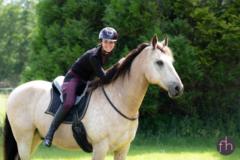
✨ Hey Get Gooders, something I think that doesn’t get talked about or taught enough is the importance of sheath and udder hygiene as part of whole-horse care. This isn’t just about cleanliness. 👉 When geldings develop beans or heavy buildup, it can: • cause discomfort or pain • change posture and movement • contribute to tension patterns • and in some cases even show up as lameness or behavioural changes ⚠️ Mares are no exception - udder sensitivity and hygiene matter just as much. Especially if they are breeding. We also shouldn’t forget the back end - for both boys and girls. This includes being comfortable with a gentle sponge wipe, taking a temperature when needed, and for mares, having their privates cleaned when required. What I want to gently but clearly say is this: 👉 It IS possible for all horses to be comfortable being touched everywhere. The only reason it often isn’t, is because they haven’t been shown how to feel safe, confident, and understood in those moments. Basically the way I see it is that all body parts should be tamed. Not just the parts we need to lead and ride. I’ll be releasing a way of teaching this soon in my Heart in Your Hand - Body Awareness Scan . It will be available: • as a level unlock, • as a one-time purchase, • and as part of a full course of relatable subjects inside the Get Good With Horses Skool when it is launched. The attached video is for fun filmed yesterday! Lenny the Kid has no issues with this kind of handling because I started early, back when he was a yearling. Weanlings and young horses generally accept these things quite easily, but given time and different experiences, they can become more protective and tense - especially geldings who may carry tension or trauma from castration. How comfortable is your horse with being touched everywhere on their body - and where do you notice the most sensitivity? Or another way of saying it is: If your horse could choose one area of their body to feel more comfortable being touched, where would it be?

2 likes • 20h
Lenny was like “oh no not the willy again” 🤣🤣
2 likes • 8h
@Reiki Ranch my boy hates his being touched so this is one I’m going to have to work on 😩
5d •
Worming!!!
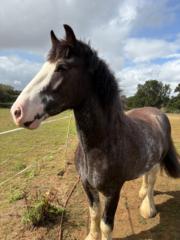
After years of horse managing I still find worming the most hardest task! I have tried everything ( or have I!😂) My horses know I have it!!! They sense it hiding in my back pocket lol 🤣 I have tried generally holding them and giving but end up either losing half of it/ heads rearing/or them running off. They mirror each other so once one pony susses on the other will pick up!! I have tried apple sauce in syringes with rewards to try and teach them to accept the wormer...did not work 😟 I have mixed with food but they stamp on it so I am worried the wormer does not reach where needed...So please, if you know of the simplest way of worming let me know... 🐴🤠
1 like • 21h
@Zoë Coade awesome thank you, I want to do right by my boy whilst he is a blank canvas but there are so many different opinions about giving a reward, I will continue with the chaff, thank u 😊
1 like • 20h
@Zoë Coade I sure will, hoping the rain stops soon so I can get back out there 😩
1d •
New beginnings
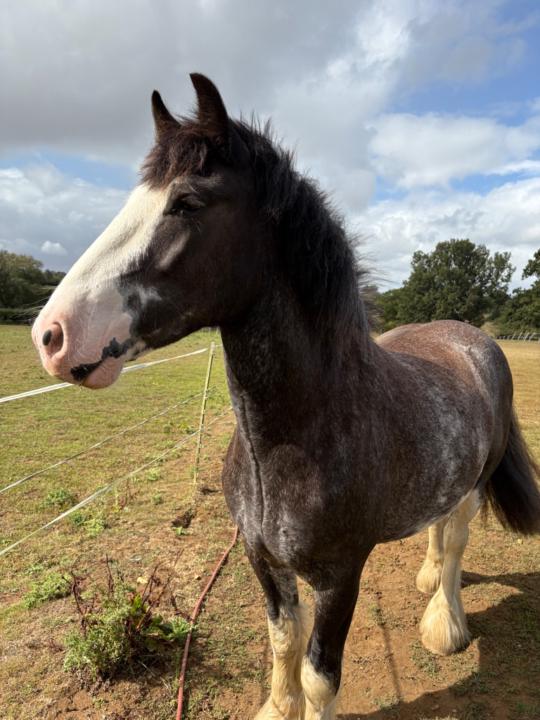
Hi, I’m Lucy and been around horses for many years, I purchased a 3 year last year after losing my mare of 26 years, I backed my youngster last year and he’s currently turned away but will bring him back into work this year. Looking to grow my relationship with my boy deeper and grow my understanding of horses in their language
2 likes • 1d
@Reiki Ranch yes so pleased we have memories, soon after we lost little Winnie we saw white feathers for ages in our fields but only see them now and again now, we will always be grateful that we have her a much better life than she had for 6 years 🕊️
1 like • 1d
@Zoë Coade thank you 🥰
2d •
🐴 GET GOOD HORSEMANSHIP TIP 5.
✨ Horses don’t need lots of sleep like us but they do need to lie down. Most horses only sleep around 3-5 hours in a 24-hour period, much of it standing up. But REM sleep, the deep, restorative kind can only happen when a horse lies down.💤 If a horse isn’t lying down at least once every 24 hours, something isn’t right. Environment, safety, pain, stress, herd dynamics, or physical discomfort can all prevent it. Lack of REM sleep doesn’t just affect rest, it impacts learning, emotional regulation, soundness, and overall wellbeing. In extreme cases, sleep deprivation can even cause collapse. I witnessed this once in a horse that was standing in cross ties, it was a mess and if I can be honest, preventable! Therefore seeing or knowing your horse lies down regularly is one of the clearest signs they feel safe enough to truly rest. Some questions, you don't have to answer all, is just for fun: 1. What signs do you look for to know your horse is getting enough quality rest? 2. Before today, did you know horses need to lie down for REM sleep? 3. Do you know what signs to look for with sleep deprivation? 4. Are there any factors in your horse’s environment which might affect whether they feel safe enough to lie down? For example here in certain parts of the Netherlands we now have a Wolf epidemic - quite the prooblem as you can imagine. Love to hear your thoughts, Zoë 🐴✨🫶
1 like • 1d
@Zoë Coade they sure do, also since putting cameras up I realised how much they walk about at night, I suppose we just assumed everyone went to bed at night like we do.
1 like • 1d
@Zoë Coade yes it’s my go to thing when I wake up to see what they have been up to
4d •
🧰 General Skills: The Missing 75%…
✨ When I’m out teaching in the field, I’d honestly say up to 75% of what I help with comes back to what I call - General Skills. Not tricks. Not disciplines. Not advanced movements. But the everyday, often and overlooked skills a horse needs to function safely and calmly in a man-made world. Things like: • being led with clarity and connection • standing still when asked • yielding to pressure without tension • responding to boundaries without fear or force • understanding where the human is - physically and mentally These are the skills that keep horses safe. They’re also the skills that make horses understandable. When these foundations are missing, horses are trying to cope/function/survive without a full tool-kit. Confusion shows up as pulling, spooking, rushing, freezing, or switching off. And unfortunately, more often than not, the horse gets blamed. 🙈 General skills are not basic - they’re essential. ✨ They create clarity. ✨ They reduce stress. ✨ They allow everything else including riding, performance, confidence to actually work. If your horse struggles in “simple” situations, it’s often not a bigger problem…it’s a missing piece. And the good news? Those pieces can be learned fairly, and step by step. Besides what we’ve spoke about self-regulation and positive energy - what everyday situation feels harder than it should right now? Wishing you a great rest of the day, Zoë 🐴✨🫶
2 likes • 4d
@Zoë Coade oh great, yes please 🙏 tomorrow would be perfect, thank you ☺️
2 likes • 4d
@Zoë Coade lovely thank you, I think I will take a look tomorrow as there is info I’ve missed 🤭
1-10 of 10
@lucy-seeley-1417
Looking for inspiration whilst I work through bringing on my youngster
Active 8h ago
Joined Jan 12, 2026
Brackley, Northants