Activity
Mon
Wed
Fri
Sun
Apr
May
Jun
Jul
Aug
Sep
Oct
Nov
Dec
Jan
Feb
Mar
What is this?
Less
More
Memberships
The Grove Kung Fu
209 members • Free
The Traditional Tai Chi Method
127 members • Free
Rooted Alchemy
230 members • $40/month
8 contributions to The Grove Kung Fu

11h •
Baguazhang
Made it through lessons one and two. Started lesson three. Began practice with the apprehension of learning something new that requires coordination and rhythm which I lack both. It was fun. Did a Qi and flow for a warm up then into the lesson. On the outside Baguazhang seems simple but there are way more moving parts than Tai Ji. As an old helicopter pilot it reminds me of a helicopter. Thousands of parts moving in the opposite direction. Lots of practice needed. Looking forward to tomorrow
1
0
Dec '25 •
Da Bei Quan
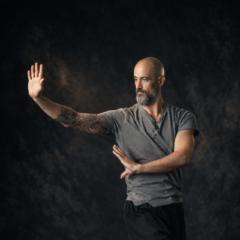
I thought I would share a bit of this practice with you all. This is section one of the Da Bei Quan, a set I learned while living in Beijing. It is a very interesting sequence that was developed by a monk in the northern temples near Beijing. After the temples were shut down by the government he began teaching this set in the city. It is mixture of a bunch of different things that he had learned throughout his life. Some Shaolin, tai ji, qi gong, bagua, xing yi and other basic kung fu movements. The monk, Qi Yun, had been a martial artist and soldier throughout his life. After he became a monk he wanted a set that would still work him physically but that he could relax into and not think about fighting. So the only concepts in the Da Bei are open and close. It is meant to be a physical cultivation set to improve flexibility, focus and strength. It is a very challenging form to learn and perform. The entire form is a 7 sections long with 63 postures and takes about 20-40 minutes depending on speed. If there is enough interest over time we can open a specific class to study and learn this set!
0 likes • 21h
That was beautiful. After I get more experience in Tai Ji and Bagua I’d love to learn Da Bei Quan

Dec '25 •
DIY PVC dummy
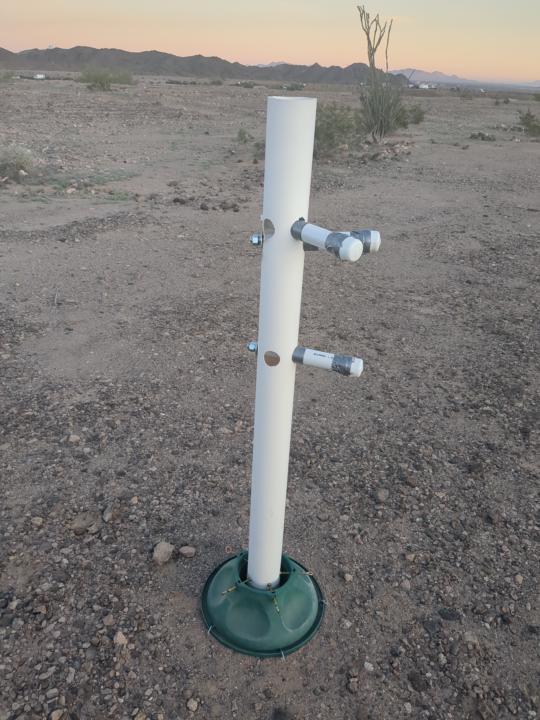
I'm a little proud of this: My first attempt at a mukyanyong! The arms are concentric PVC pipes with a threaded rod running through, and I drilled some extra holes for tent stakes around the base. The arms are too short and too low, and there's just a little more flex in the post than I want. The next one will have better caps on the arms. I'll also wrap the middle with my white belt and the lower part with dock line for shin kicks. I'll make a bill of materials once I get it straight.
0 likes • 21h
@Kirby Mannon that is a wonderful idea forBagua
16d •
hello everybody...
Greetings from Madeira Island, Portugal. Best of health to everyone in here...
0 likes • 21h
Sorry I’m a bit late in welcoming you to the community but welcome the Grove Kung Fu

9d •
Bagua Academy (3.5.26) Week 2 Recap
In this Bagua Academy live session, we went over: - Body Awareness & Structural Alignment : Baguazhang training requires listening to the body, especially when managing injuries such as knee issues. Proper circle walking can strengthen the knees, while incorrect mechanics create strain and inefficient movement. : The key alignment relationship is feet → knees → hips, ensuring force travels from the ground into the waist. Many knee problems arise from small alignment errors that accumulate over time, so correct movement patterns help rebuild natural strength and coordination. - Qigong Integration in Baguazhang : Baguazhang Qigong combines breath, posture, and intention directly within martial training rather than as a separate practice. Intentional walking itself is considered a core qigong method. : The system includes standing postures (Zhan Zhuang), breathing and movement drills, and walking patterns connected to circle walking. Breathing follows a natural pattern—inhale when rising, exhale when lowering—with relaxed 360-degree breathing expanding the torso in all directions. - Key Foundational Drills : The Column breathing exercise builds vertical alignment by imagining the body as a pillar from the crown of the head to the feet while coordinating breath and arm movement. : The Fountain drill develops expansion and contraction with spiraling arm movements representing internal martial qualities such as rising, drilling, falling, and overturning. : The Millstone drill trains separation of upper and lower body by rotating the hands across the body while stabilizing the hips and legs. - Circle Walking & Footwork Basics : Circle walking begins by establishing direction (north) and stepping along a curved path around a point roughly 45° ahead, usually practicing 8–16 steps per circle. : The stepping pattern is shift weight → collect foot → step forward → hook slightly inward, keeping the knees bent and connected. Weight should transfer fully onto the stepping foot to maintain stability and flow.
0 likes • 1d
You make it look so simple.
1-8 of 8

Active 55m ago
Joined Mar 6, 2026
Goodland, Kansas. USA
Powered by