Activity
Mon
Wed
Fri
Sun
Aug
Sep
Oct
Nov
Dec
Jan
Feb
Mar
Apr
May
Jun
Jul
What is this?
Less
More
Memberships
Fellowship of Mad Scientists
44 members • Free
2 contributions to Fellowship of Mad Scientists
Jul '25 •
Microscopy
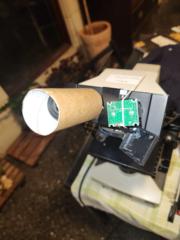
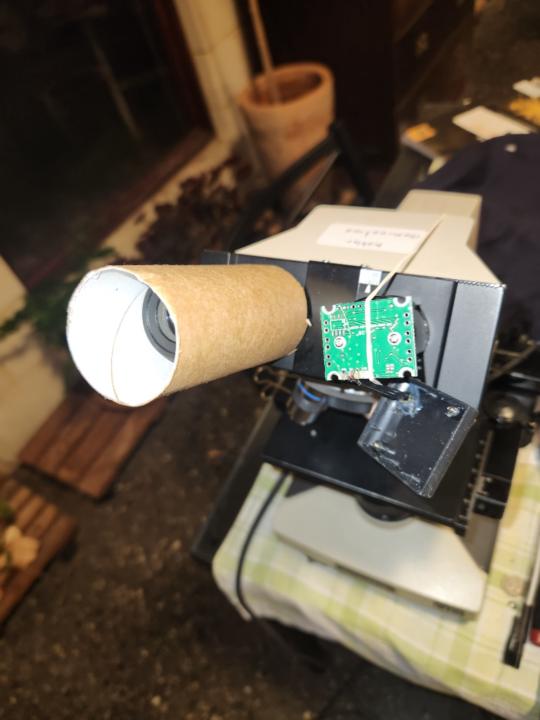
Points from a workshop I gave at CONASTA last week. These are cheap tips to power up your classroom. In the spirit of "teaching being the fine art of imparting knowledge without actually posessing it", I give you ... 1) make a darkfield filter and mount it under your microscopes stage. This is a circle of electricians tape on a microscope slide or transparent plastic. Google for many tutorials. 2) use a toilet roll over the eyepieve, cut to correct height and angle to stabilise phone recordings for students. Cheap, easily reproducable 3) consider David Seamers book ( disclaimer: other than fellow countryman, I have no relationship). Beatifully drawn, and good to show students how biological drawings should be done. 4) consider the ecology of the protazoans when you sample: you wont get stentors and rotifers from a midwater sample, and the bottom layer is best for amoeba. We also briefly talked about estimating the minimum mean generation time for prey ciliates and its calculation: mgt = prey population / number of prey eaten per hour , assuming steady predator and prey populations. From this you can play with food pyramids, and see if you can get something closer to the "10% rule". ( the 10% rule is a bit of pedagogical sugar, usually not true, that we teach to get kids to understand cycles of matter and energy in biology).


Jul '25 •
Corona discharge as a disinfectant?
I put this on my list of projects to try a few years ago. Unfortunately, I never got try it, so I thought I'd share it with you and see what you all think. Please enjoy and comment. Tallyho!
2 likes • Jul '25
There are applications for this kind of approach. Instead of relying on ozone, try ionising a stream of argon. Ionised argon is like super alpha radiation. It's big, fat, slow and charged. Meaning zero penetration, but excellent at surface sterilisation. Would be a good thing for studying growing tissue cultered plant root material with arbuscular fungi ( mycorhizzal) - at least thats the application I have for it. I made something like this out of an old tv flyback transformer and a 2n3055 transistor once but didnt get enough current for a good plasma, this one would be good to go back and revisit that idea.
1-2 of 2
Active 48d ago
Joined Jul 14, 2025