Activity
Mon
Wed
Fri
Sun
Aug
Sep
Oct
Nov
Dec
Jan
Feb
Mar
Apr
May
Jun
Jul
What is this?
Less
More
Memberships
The School of Bits
55 members • Free
Publish & Profit Challenge
5k members • Free
32 contributions to The School of Bits

May 22 •
Everyone assumes Trump's family is crypto rich. They just lost $405 million.
If there was ever some folks you'd expect to be winning at Bitcoin, it's the Trumps. Memecoins. NFTs. A whole presidential campaign wrapped in crypto promises. But Trump Media's Bitcoin bet tells a different story. Here's what happened: - Trump Media bought 11,542 Bitcoin at an average price of ~$118,000 per coin - Bitcoin dropped 35% to ~$77,000 - The company reported a $405.9 million net loss last quarter - Today, on-chain data shows they moved 2,650 BTC ($205 million) to exchange Crypto.com They appear to be selling. Into the dip lol. What went wrong? - They dumped $1.36 billion into Bitcoin at one price point near the peak - They had no strategy for a drawdown - When the price dropped, pressure to sell got louder than any conviction to hold Connections, influence, and hype don't protect you from bad strategy. The rules of Bitcoin don't care who you are. The fix is boring. And it works. It's called DCA (Dollar Cost Averaging). Here's how it works: - Buy a fixed dollar amount on a regular schedule (weekly, biweekly, monthly) - When the price is high, your fixed amount buys less Bitcoin - When the price is low, that same amount buys more - Over time, your average cost smooths out and you stop watching the daily chart If they had spread that $1.36 billion across 12 monthly purchases, their average cost might be closer to ~$92k per coin, not $118,000. And they'd still be holding. So here's the takeaway for regular folks: Bitcoin is healthy. Has been for 15 years and counting. The network processes a new block every 10 minutes, same as it did yesterday, last year, and the day Trump Media bought in. The code kept running. The strategy is what broke. DCA works because it takes your feelings out of the buy decision. And in Bitcoin, feelings are the most expensive line item on your balance sheet. Have you ever panic sold something and watched it recover? What did that teach you? Let us know. We wanna hear from you!


0 likes • May 22
@Joshua Tennefrancia just keep swimming
May 8 •
Bitcoin Is Becoming Digital Switzerland
Switzerland just backed away from a proposal to make its central bank hold Bitcoin. The campaign needed 100,000 signatures to trigger a national vote. It reportedly got about half. The Swiss National Bank has also argued Bitcoin is too volatile and not liquid enough for official reserves. Fair concern. But there’s an irony here. For decades, Switzerland represented something very specific in people’s minds: - Neutral ground - Strong property rights - Wealth protection - Distance from political chaos - A place value could hide when the world got messy That reputation made Switzerland feel like an old world financial fortress. Bitcoin is trying to play a similar role in the digital world. But instead of trusting a country, a bank, or a vault in the mountains, Bitcoin relies on a public network with rules anyone can check. Here’s how the analogy works: - Switzerland offered neutrality through geography and institutions - Bitcoin offers neutrality through code and global verification - Swiss banks protected value inside borders - Bitcoin lets people move value across borders - A bank account can be frozen - A Bitcoin wallet can be held by the person who owns the keys - A country can change policy - Bitcoin’s supply limit is built into the network rules That last part really, really matters. Bitcoin has a hard cap of 21 million coins. No central bank meeting can vote more into existence. That doesn’t make Bitcoin risk free. Cause sure the price moves and the technology requires responsibility. Self custody means the key is yours, and so is the burden. Not everyone may want that, but it's crucial people have that option in an increasingly centralized and digital world. But the bigger lesson is simple: People used to look for neutral places to protect wealth. Now they’re starting to look for neutral networks. That’s why “digital Switzerland” is such a useful way to understand Bitcoin. It turns Bitcoin from a confusing internet coin into something older and easier to grasp:

1 like • May 8
@Joshua Tennefrancia wasn’t it Obama who said this? To criticize how Bitcoin is essentially autonomy from centralized gov authoritarianism
May 7 •
5/7 - Market Update: A Summer Rally. Should You Trust It?
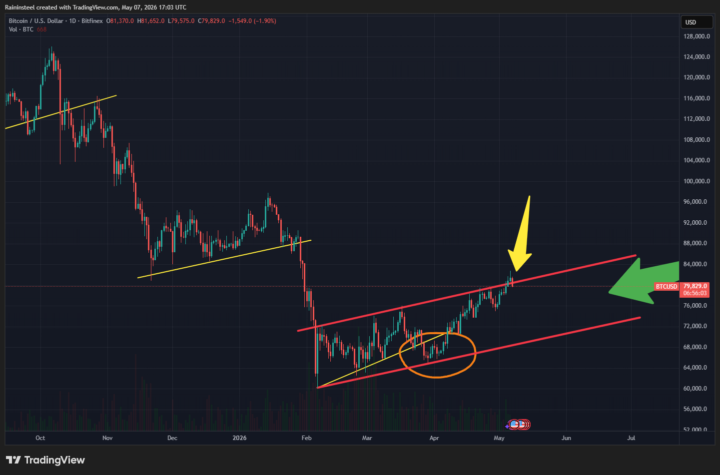
Bitcoin - $81,160 ETH rose to around $23,430 Markets rallying. Month-to-date, BTC is up around 2.6%, following a strong April (+11.87%) that helped lift overall sentiment in the market. The Fear & Greed Index has recovered from a low of 12 last months to around 47 so closer to neutral. Big Headline News? - Iran War Deal Imminent Overall picture market picture though? It's looking like a good start to May with lots of positive news but it feels... temporary. Plus we're hitting the upper trendline of the channel I showcased in the previous market update. It feels like we'll head down from here but if not, what would cause a reversal and a breakout? I'm looking for these 3 things: 1. Iran War Deal Completed 2. Clarity Act Passed 3. Dollar Strength Index (DXY) down. (weaker dollar -> higher BTC price and vice versa) ___________________________________________________________________________ Big Institutional Moves backing the rally: - Goldman Sachs disclosed a nearly $108M position in spot SOL ETFs, and total AUM across Bitwise, Fidelity, and Morgan Stanley for Solana products has surpassed $1 billion. Crypto.com - a16z Crypto raised $2.2B for its fifth fund, down from its record $4.5B fourth fund, promoting CTO Eddy Lazzarin to general partner. Cryptointegrat - Strategy (formerly MicroStrategy) reported a $12.54B net loss in Q1 driven by a $14.46B unrealized markdown on its Bitcoin holdings, while holding 818,334 BTC. Cryptointegrat - Coinbase is cutting ~14% of its workforce, citing crypto market volatility and a shift to AI-native operations. Cryptointegrat CLARITY Act Progress: This is the big story right now. Over the weekend, lawmakers struck a compromise on the CLARITY Act, with Circle shares surging nearly 20% on the news. The key update: language was added restricting crypto companies from paying savings account-style yield on passive stablecoin deposits, preserving that function for traditional banks but stablecoin reward programs were preserved under certain conditions. CNBC
1 like • May 8
Hard to shake the power of incumbent banks for sure
May 5 •
The company that settles every US stock trade just moved to blockchain.
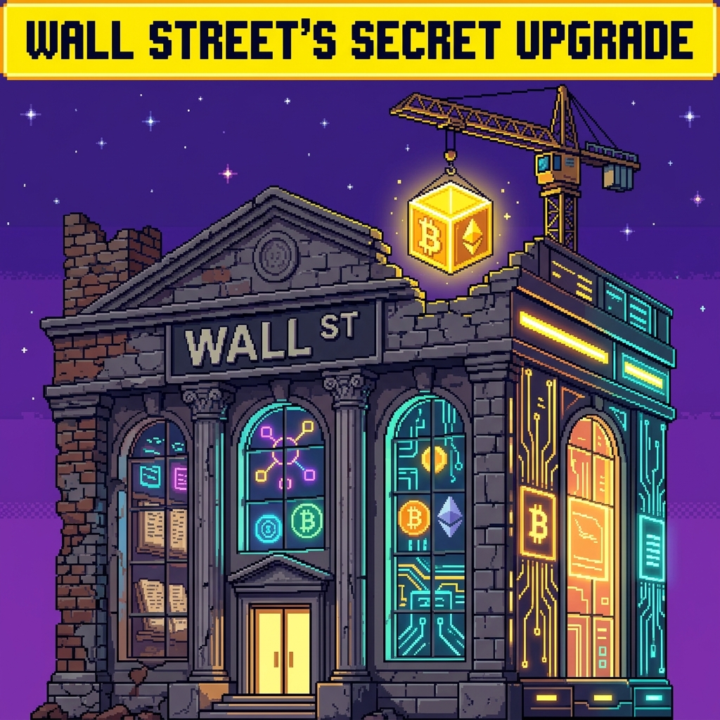
You probably didn't hear about this. Most people didn't. DTCC processes roughly $2.4 quadrillion in securities transactions every year. Quadrillion with a Q. They're the plumbing underneath Wall Street. When you buy a share and it actually shows up in your account, that's DTCC making it happen. They just announced a few industry bombshells: - July 2026: First live trades of tokenized securities go into production - October 2026: Full commercial launch - Assets covered: Russell 1000 stocks, major ETFs, U.S. Treasury bonds - SEC backing: 3-year no-action letter, granted December 2025 - The big dogs helped build it: BlackRock, Goldman Sachs, JPMorgan, Morgan Stanley, Coinbase, and 50+ other firms Ir's real calendar timelines with Real engineering resources. So think about what just happened. The single most entrenched institution in traditional finance looked at blockchain technology and committed to rebuilding on top of it. With a budget. With the SEC's written blessing. With every major bank in the room. And once you're building on blockchain, one question always comes up eventually: which one is the most secure, most decentralized, most battle-tested? That question has had the same answer for 17 years. "Blockchain, not Bitcoin" was the safe line for a long time. A way to sound informed while ignoring the asset that proved the technology works. That's getting harder to say with a straight face when the company that clears every trade on Wall Street is building on the same foundation. What do you know about different blockchains? What makes the blockchain a game changer in your opinion? We wanna hear your thoughts...
2 likes • May 5
Eth and maybe sol prolly long term early type Amazon Microsoft Apple type of projects
Apr 20 •
$2.5 Billion in Bitcoin. One Buyer. One Week.
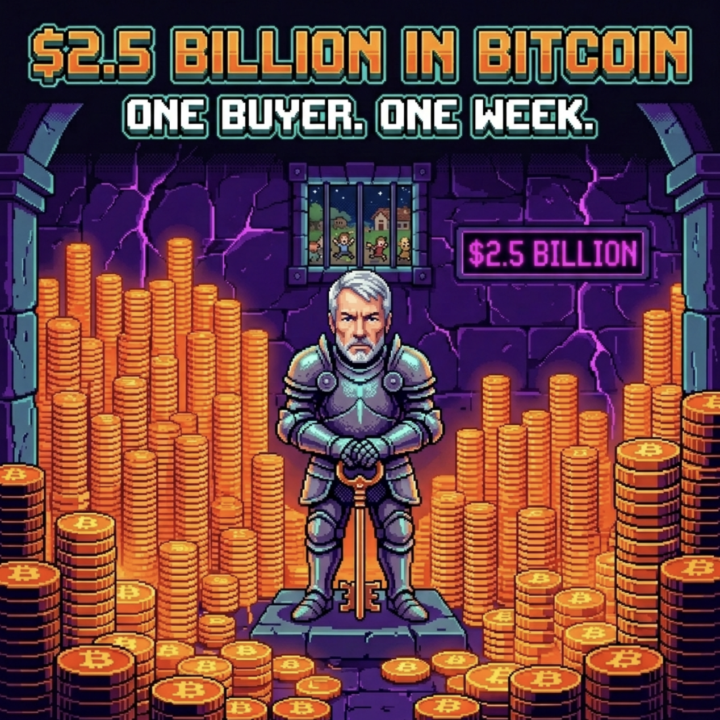
There's a CEO who has spent $61 billion buying a single asset. The same asset...over and over. For 5 straight years. His name is Michael Saylor. He runs a publicly traded company called Strategy (used to be called MicroStrategy). On paper, it's a tech firm. In practice, the company does one thing now: buy Bitcoin and hold it. That's basically the entire business model. If you follow crypto at all, you've probably seen the headlines. "Saylor buys more Bitcoin." Again. And again. To a lot of people, he looks like a billionaire with a gambling habit and a podcast mic. Fair reaction. Whether you've heard of him or not, what his company did this week is worth understanding. Between April 13 and April 19, Strategy purchased 34,164 Bitcoin. One week. $2.54 billion. Third-largest single buy in the company's history. And he's already signaling another one is coming. Here's why the coin count matters more than the dollar amount...Let's walk through the math, because the numbers tell a different story than the headlines: - There will only ever be 21 million Bitcoin. That's a hard cap coded into the protocol. Nobody votes to change it. - Over 20 million have already been mined. Less than 1 million are left, and the rate of new coins slows every 4 years. - An estimated 2.3 to 4 million are permanently gone. Lost keys, dead wallets, hard drives sitting in landfills in Wales. - That leaves roughly 16 to 17.7 million in active circulation. Strategy now holds 815,061 Bitcoin. Nearly 4% of every Bitcoin that will ever exist, bought over 5 years for about $61.56 billion ($75,527 average per coin). And they just pulled 34,000 more off the market in a single week. What's crazy is they're now not the only ones doing this. - BlackRock's Bitcoin fund (IBIT) took in $906 million of new investor money last week alone (week of April 17) - Morgan Stanley launched their own spot Bitcoin trust (MSBT) on April 8, and it's already drawing capital - Fidelity runs its own spot Bitcoin ETF, steadily absorbing supply - Abu Dhabi's Mubadala Investment Company holds over $1 billion in BlackRock's IBIT shares - Norway's Government Pension Fund has indirect Bitcoin exposure equivalent to roughly 9,573 BTC through equity holdings in companies like Strategy and Coinbase - Michigan and Wisconsin state pension systems have allocated to Bitcoin ETFs directly
2 likes • Apr 23
@Jasmin Noe what is the kWh cost of mining where you’re located? I’m always hearing from skeptics about how Bitcoin uses too much energy, but compared to banking it’s an extremely efficient system
1-10 of 32

@lemuel-reber-2102
I am a medical student with the cutest daughter in the world and I am passionate about the digital revolution empowering billions of people.
Active 38d ago
Joined Oct 17, 2025