Activity
Mon
Wed
Fri
Sun
Sep
Oct
Nov
Dec
Jan
Feb
Mar
Apr
May
Jun
Jul
Aug
What is this?
Less
More
TalkDog
230 members • Free
The Eternal Older Dog
141 members • Free
Skool for Happy Healthy Dogs
37 members • Free
Beyond The Leash
90 members • Free
The Detection Dog Lab
861 members • Free
Job Seekers Community
3.4k members • Free
Healthy Dog Nutrition Academy
192 members • Free
Dog Arthritis Exercise Group
180 members • Free
7 contributions to Beyond The Leash
Apr 17 •
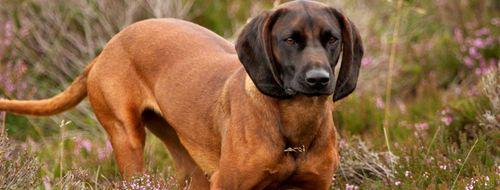
Bavarian Mountain Hound
Bavarian Mountain Hounds come from, you guessed it, Germany where they are known as Bayerischer Gebirgsschweisshund (no a cat did not just walk on my laptop). They are said to be descended from a breed called a Bracken which is “the original hunting dog”. The Bavarian Mountain Hound was bred to be lighter for more versatility and agility and this was done in the late 18th and early 19th Centuries by Baron Karg-Bebenburg when he crossed Red Mountain Hounds with Hanoverian Scenthounds. The Bavarian Mountain Hound was bred for tracking game, both wounded and bloodied, and has an amazing “cold nose” which means they possess an amazing sense of smell that they can detect older trails better than other dogs. This breed is even tempered, agile, robust and versatile. They have the stamina to pursue game until the game cannot run anymore even in mountainous terrain. They are still used for tracking game to this day but can also be used for tracking/trailing for search and rescue groups like their bloodhound counterparts. The Bavarian Mountain Hound was recognized by the UKC on January 1, 1996. The Club for Bavarian Mountain Hounds, which is headquartered in Munich, came about in 1912. The FCI published a breed standard in 1996 and they were included in the AKC Foundation Stock Service in October 2016. Sources: https://www.ukcdogs.com/bavarian-mountain-hound, https://pulsarvision.com/journal/the-original-hunting-dog-bavarian-mountain-scent-hound/, https://gundogcentral.com/hunting-dog-breeds/Bavarian-Mountain-hound,https://www.101dogbreeds.com/bavarian-mountain-hound.asp

1 like • Apr 19
Beautiful 😍
Apr 15 •
Counter-Conditioning to Common Prey Triggers
A big part of predation substitution is counter conditioning. In order to understand what it is we are looking for it is important to be on the same page of what counter conditioning means. AlleyDog.com describes it as “…a type of therapy based on the principles of classical conditioning that attempts to replace bad or unpleasant emotional responses to a stimulus with more pleasant, adaptive responses.” As a refresher lets also define classical conditioning. As found on SimplyPsychology.org “classical conditioning is a fundamental form of associative learning in which an organism learns to connect or associate two stimuli that repeatedly occur together.” With the groundwork now laid let’s talk about how to approach this with our dogs. Many dogs, even nontraditional working breeds, can have strong reactions to certain animals or objects in the environment such as bicycles and skateboards. These reactions can be anywhere from overarousal to fear. How we, the human, respond with our dog is also important. In short we must also remain calm for the majority of encounters (exceptions are those of self-defense if something were to happen. You and your dog’s safety are #1) and how you respond to those encounters (even the ones of self-defense) do impact your dog. If your dog sees his trigger, starts to become emotional and your reaction is that of frustration and punishment then your dog may decrease his behavior, but no learning will have occurred for what to do instead. All the dog will learn is that his human will be upset with him and it will have a damper your relationship with your dog. Overtime this could lead to either your dog not enjoying going on walks (and you won’t either) and/or your dog taking out his frustration on something else such as your fence, yard, pillows, housemates, etc. This cycle is something that will have a handful of outcomes: a dog that is locked away most of the time, a dog that is “forgotten” about in the backyard, a dog that is surrendered to a shelter or a dog that is abandoned just to name a few. This is obviously very sad and for those of us that understand and enjoy dogs with more energy and drive is especially heartbreaking because more often than not it isn’t the dog’s fault.
1 like • Apr 18
This is fantastic 👏 thank you 😊
Apr 11 •
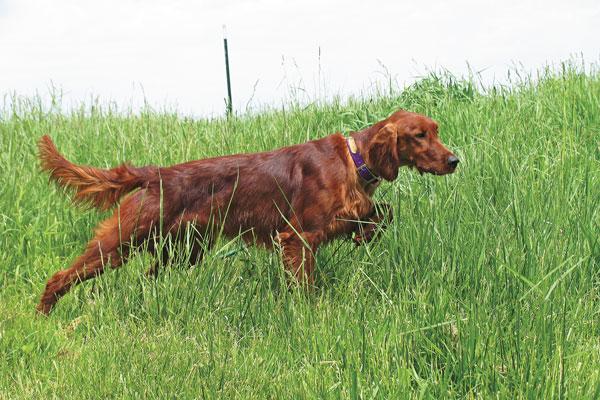
Irish Setter
The Irish Red Setter showed up in the early 18th Century and is the result of a mix that likely consisted of: English and Gordon setters, spaniels and pointers. They were bred to be a hunting dog and would point and freeze at game using their snout and would hold position, i.e. be set at the prey. Some early forms of the breed were trained to either sit or lie down in the direction of the game. The original Irish Setter was red and white although the mahogany (so fancy sounding) or chestnut brown are the desired coat color for the Irish Setter while the red and white counterparts are now their own distinct breed. In 1882 the Red Setter Club was formed and shortly after a breed standard was established. The red and white setters were then seen as cross breeds as the red setters gained popularity. After WWI the red and white setters were near extinction. Thanks to a Presbyterian minister named Rev. Huston and his cousin Dr. Elliot, they found a few remaining red and white setters not to far and began breeding them. Rev. Huston was alone in his desire to reinvigorate the breed and the decades between wars did not help. It was not until the end of this life that a woman named Maureen Clarke nursed a sick red and white setter puppy back to health and bred her to one of Rev. Huston’s males. There are working and show lines of the Irish Red Setter and an easy way to tell which one is which is with coat density. The show line has a thicker and longer coat while the working line has a thinner and shorter coat. It is thought to help with thermoregulation and collecting vegetation in the fur while out in the field. In 1962 the Walt Disney movie called “Big Red” debuted and the breed’s popularity went from 4,000 AKC registrations to 60,000+ per year. Due to the “demand” low moral breeders jumped on the trend and in no time at all bred the “…brains and hunting instinct out of what had once been a glorious breed in the field.” The Irish Red Setter gained a new nickname “Irish airheads” during this time. Thankfully for the quality of the breed the trend died down, registrations went down to just above 3,000 pups per year and responsible and genuinely passionate advocates for the breed were the ones solely responsible for the breed once again.
1 like • Apr 11
Beautiful dogs 🐕
Apr 7 •
Identifying Your Dog's Predatory Triggers and Threshold Levels
In order to understand and identify your dog’s predatory trigger it is highly beneficial to know what breed(s) of dog you have and to know what that breed was bred to do. For example, my Vizslas were bred to locate birds and other small game. Most dogs are not born with impulse control and so it must be taught otherwise they will see a trigger (or what I also call a stimulus) and want to chase after it. The chase part of the predatory motor sequence is only the beginning of the upswing for the undesired portion of the PMS on dopamine, and other feel good hormones. The peak is if they are successful in grab biting. That is when the dopamine and other hormones will start to come down and the dog will start to relax in satisfaction. Depending on what your dog is bred for, prefers on an individual level and personal experience the types of triggers will vary. Some dogs learn to use their eyes heavily to look for that exciting trigger. Some dogs will use their nose to sniff out a critter trail and some will use their ears to listen for a disturbance to bolt after. Many dogs will use all 3 of these approaches but not all at equal levels all of the time. Paying attention to your dog while out on walks (even while on leash) is very important. This is the best and safest way to teach your dog how to be safe and have impulse control around wildlife. So be sure to not be on your phone and if you have to take an important phone call do your best to be in as little of a distracting area as possible while that call takes place (even if you are using Bluetooth or otherwise hands free). So now let’s talk about threshold levels. There are three different thresholds that we should be aware of: under threshold, at threshold and over threshold. You can think of them this way: - Under threshold = green light - At threshold = yellow light - Over threshold = red light Green light threshold, a dog is able to think, be engaged with you enthusiastically and listen to you when you give a command.
1 like • Apr 8
@Christina Brewster it is all very helpful I have a two and half year old red fox labrador who very much loves sheep 🐑 so we are doing alot off standing and watching then sheep and then walking off he is coming along as at first he used to bark at them
1 like • Apr 8
@Christina Brewster he is fine with them just 🐑 sheep
Feb 5 •
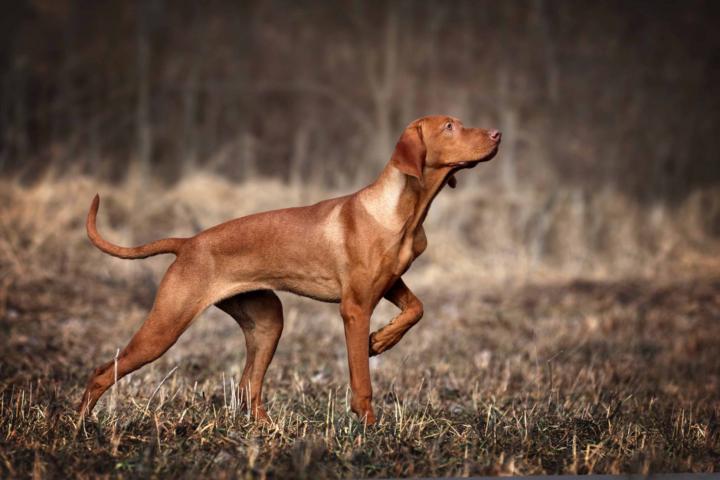
Hungarian Vizsla
The Vizsla has multiple names just like the Australian Cattle Dog. They are known as Vizsla (which means pointer), Hungarian pointer or the Magyar Vizsla. This breed has been around for over a thousand years and are considered one of the oldest known hunting dogs. It is thought that the vizsla is a descendant of the eighth-century Hungarian hunting dogs. The vizsla has faced near extinction not once but twice with the first being from the Turkish Occupation (1526-1696) with a more serious decline after the Hungarian Civil War (1848-1849). The breed recovered from a small stock of about 12 true vizslas thanks to Hungarian sportsmen. The second near extinction the vizslas faced was after the two World Wars and Russian Occupation but were saved this time in part thanks to Mrs. Elizabeth Mihalyi. Mrs. Elizabeth escaped Hungary with her family Vizsla named Panni XV and was bred with Betyar from Austria. This breeding established the Panni-Betyar line which is recognized by the AKC as a foundation stock of the breed. Vizslas are known for their exceptional hunting skills, relentless loyalty, and versatility. The breed was highly regarded and treasured by Hungarian nobility. For centuries landowning aristocrats horded the vizsla and preserved their pure blood with more recently the breed is seen as not only a great hunting companion but also one great for families. The vizsla is not only treasured for their physical features but also their ability to adapt to various situations which made them versatile and reliable for tasks beyond hunting. The vizslas were not only tied to nobility and status but they also proved their worth during times of war and conflict. They were used to guard camps, sentinels, deliver messages and be a part of military campaigns. Due to their speed and endurance that allowed them to be able to travel long and difficult terrains the breed was entrusted with carrying important messages across the battlefield to friendly commanders and troops. Even during the hardships of the battlefield the vizsla remained by the side of their soldier companions.
1 like • Feb 5
Aw they are beautiful 😍
1 like • Feb 6
@Christina Brewster ah yes still beautiful xx
1-7 of 7

@leah-markley-9098
My name is Leah, I have a red fox labrador called Jude and a black cat called Tdog ( I didn't name the cat lol ) I am a dog walker and home boarder
Active 3h ago
Joined Dec 24, 2025