
Write something
Pinned
Dec '25 •
Introduce yourself...
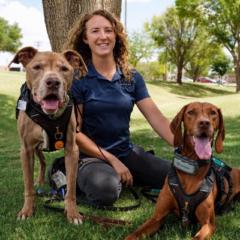
Hello my name is Christina Brewster and I am a professional dog trainer who has a passion on how dogs think and perceive the world. I am a training partner with Chiron K9 and I am a certified Predation Substitution Instructor. The type of dog training I do is off leash detection but a lot of what it takes to have a great and dependable off leash detection dog are skills every dog can benefit from knowing. A big concern for both working dogs and pet dogs is chasing wildlife. A dog that is interested in chasing wildlife can find themselves in dangerous situations. They could run into traffic, they can get their gear caught up in branches, they can become impaled by branches or the animal itself, they can find themselves lost for extended periods, etc. Instead of getting frustrated and suppressing the dog’s quality of life I want to help owners, handlers and other trainers understand what is happening in their dog and how to redirect it in a safe way. “Frustration begins where knowledge ends” - Clinton Anderson
Pinned
Dec '25 •
What is a breed anyways?
Mary Starling 1. From a breeder's perspective:A breed is a group of dogs from known lineage of similar dogs, with an agreed set of physical and behavioural attributes which (preferably) breed 'true' ie reliably replicate these characteristics in their progeny 2. From a geneticist's perspective:A breed is a group of dogs with defined characteristics which exist in a closed gene pool. The founders may have been the same landrace breed or a mix of different breeds giving rise to the dog bred today. Jennifer Willshire What is a Breed?“Breeds are consistent and predictable genetic entities. The status of breeds as genetic resources is a consequence of the fact that breeds, breed true.”(Sponenberg & Bixby, 2007. Managing Breeds For A Secure Future, Strategies For breeders and Breed Associations. The American Livestock Breeds Conservatory Pittsboro, North Carolina). “A breed is a group of animals that is consistent enough in type to be logically grouped together, and that when mated within the group reproduces the same type.”(Clutton-Brock, Juliet. 1987. A Natural History of Domesticated Mammals. London, Cambridge University Press and British Museum of Natural History). How does a purebred dog breeder define breed? Most purebred dog breeders define a breed in terms of appearance and physical attributes. They mainly aspire (and are encouraged) to breed healthy, ideal specimens of a breed in terms of look and temperament, as defined by the breed standard. Many registries now issue directives for judges to select dogs that be ‘fit for their original function’ so breeders must also include this in their definition of a breed. How is breed defined as a biological or genetic concept?The biological definition of a breed targets identification and best serves conservation purposes. Animal populations consist largely of very uniform and predictable genetic packages. The biological definition for these packages specifies their predictable attributes and characteristics. Definitions for a breed that are not biologically based are more likely to represent breeds that are less predictable genetic packages that express higher degrees of variability. These types may have less value as a genetic resource but could have important political or cultural contributions to consider. When would you would be able to say that a particular breed was first recognizable? I believe that a breed would first have become recognizable for its abilities and then its attributes. Mastiffs made themselves recognizable as a breed type in the hunting field. Their immense courage and particular ways of hunting were valued and admired by early and medieval hunters. Their eagerness to catch their prey and their willingness to confront large, enraged and ferocious game coupled with their unique ability to seize and hold their prey until hunters arrived to dispatch it, got them noticed and bred for. Just as most bird hunters preferred retriever dogs with soft mouths, so too did early big game hunters value large hunting dogs that could slow down and/or stop large game and not inflict excess damage on its flesh. Mastiffs were also noted for their guarding abilities. Fearless and fully capable of protecting all in their charge, they were kept and bred as vigilant night watch dogs. They proved themselves useful in other fields too such as agriculture and baiting arenas.When you would say a breed could be designated as "purebred"? Dogs could be designated as ‘purebred’ when they became noted and recorded for breeding true to themselves and sharing certain characteristics and attributes. They could only be bred with others of their kind that were also officially noted as being of similar type. The founding of breed clubs and kennel clubs played a large role in the formation of many of today’s purebred dogs. Cerberati Kennels in the UK recently gave a brief summary of how the UK Kennel Club got started and how most purebred dogs exploded onto the scene. Their summary was researched and written by the infamous vocal Mr P Burns. It states…"In 1859, the first formal dog show was held at Newcastle upon Tyne in Great Britain, sponsored by two shotgun makers, and featuring only Pointers and Setters. John Henry Walsh, the editor of The Field magazine, was one of the judges. He later went on to found the Kennel Club. With the start of dog shows, the creation of breeds exploded. In 1800, there were only 15 designated breeds of dogs, but by 1865 that number had grown to more than 50, and it exploded to triple digits soon after the Kennel Club was founded in 1873. In the Kennel Club, broad types of dogs were no longer allowed. Setters, pointers, hounds, terriers, and collies had to be sorted, segmented, catalogued, and segregated. Dog shows became social scenes, with middle class climbers purchasing "purebred" puppies to insinuate themselves up the social register. As one Victorian periodical noted, "nobody now who is anybody can afford to be followed about by a mongrel dog." The rapid differentiation between show dogs and working dogs became more pronounced as time went on. Increasing numbers of people bought dogs, bred dogs, wrote standards, or changed them. Points were given for the set of a dog’s tail, colourful markings on coats, the colour of the eye, and even a dog’s "expression." By the turn of the 20th Century Kennel Club terriers were no longer expected to go to ground or even chase a rat. Most Kennel Club retrievers fetched nothing bigger than a ball, while owning a Kennel Club pointer or setter was more likely a fashion statement than the mark of a sportsman. The world of dogs was changing, and not for the better! Around 1900, the Kennel Club began to close breed registries, and inbreeding to the point of defect began in earnest. By 1950, most Kennel Club breeds no longer worked, and rapidly rising rates of inherited defect were being observed." References:Sponenberg & Bixby, 2007. Managing Breeds for a Secure Future, Strategies for breeders and Breed Associations. The American Livestock Breeds Conservatory Pittsboro, North CarolinaCerberati Kennels - http://www.cerberati.com/
Pinned
Dec '25 •
Rules for Breed of the Week:
- Be respectful. - If you don’t like a certain breed remember this rule: if you don’t have anything nice to say don’t say anything at all. - It is okay if a particular breed is not your cup of tea. We all have preferences. - If you are being disrespectful, rude, mean, etc about a breed or to someone in this community you will be removed and blocked.
6
0
3d •
Why Your Dog Pulls Back When You Pull
A couple of weeks ago I was at the ophthalmologist with my cat, Minka, who was diagnosed with histoplasmosis. We were waiting in the lobby for her recheck when I saw something that I have not been able to stop thinking about. There was a large middle aged dog (dog #1) at the reception desk with his owners and someone had just entered the lobby with their medium/large dog (dog #2). I immediately could tell that dog #1 was going to have an issue with dog #2 and the owner saw it too but did not do anything. He just stared at the stand off his dog was having and instead of creating distance or removing the dog entirely from the lobby (the owner was there with his wife so no dine and dash would have occurred) his dog reacted and owner of dog #1 pulled back with the leash. Owner of dog #1 then pulled his dog further into the lobby and closer to the other pets that were there and his wife finished up talking to the staff. What was demonstrated above is something called opposition reflex which is when the person pulls back against the dog wanting to go forward. This type of pressure, dog wants to go forward and the person is pulling back, creates an involuntary counter response. This involuntary counter response will actually increase the dog’s resistance instead of dampening it. This is due to increased frustration within the dog and typically the response to being frustrated is persistence. Think about how people increase toy drive: they hold the dog back while the toy that they want is out of reach. So how can we change how we physically remove a dog from a situation whether that be in the lobby at the vet or on a nature walk near interesting critters? You use something called Conditioned Harness (Collar) Pressure. This is found within the PST curriculum and while it is recommended to have a dog on a harness to minimize tracheal damage this can work on a collar as well. This is something that should be taught to all dogs so they understand what you are wanting but especially to dogs that may have a negative reaction to being grabbed/startled especially while focused on a stimulus.
1
0
5d •
I would like your opinion...
I am wanting to come up with a new community name due to Beyond the Leash already being taken on Youtube and for a couple of obedience schools. I am leaning towards Redirect K9s as I think it encompasses what I talk about on Tuesdays and Fridays while also still showing a working dog intent (hopefully regardless of starting point). I will also be redoing my about page to reflect this. I look forward to your thoughts and feedback.
1-30 of 96
powered by
skool.com/beyond-the-leash-9053
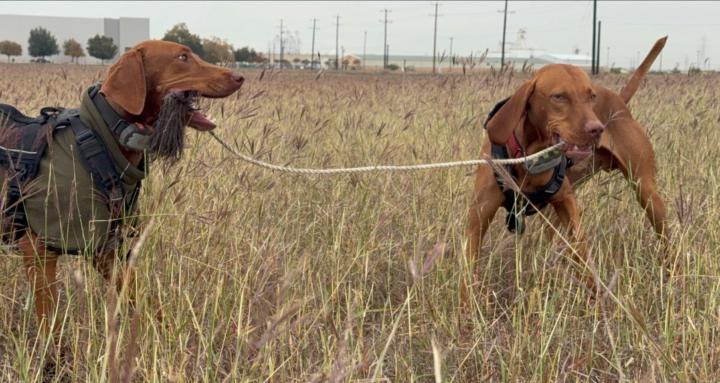
Redirecting prey drive into purpose. Off-leash freedom through Predation Substitution Training
Suggested communities
Powered by