Activity
Mon
Wed
Fri
Sun
Apr
May
Jun
Jul
Aug
Sep
Oct
Nov
Dec
Jan
Feb
Mar
What is this?
Less
More
Owned by Kitty
Are you a creation of your own design, or are you a Frankenstein monster created from parts of everyone else's programming?
Write your memoir, transmute your trauma, and become an inspirational author-speaker. Coaching and mentoring for the writing and publishing processes.
Memberships
Granny Wisdom, Hippie Vibes
262 members • $5/month
Crystal Appreciation Society
84 members • Free
Live Light Hearted
44 members • Free
Abbey Art Club
7 members • Free
Community Noticeboard
46 members • Free
Neurodiverse Minds
123 members • $25/month
🌙Mystical Moon Sisters🌙
119 members • Free
Soul Coherence
157 members • Free
Love Our Laughter
25 members • Free
16 contributions to Self Reboot

🔥
Jan 27 •
Why Is There So Much Anger Online?…
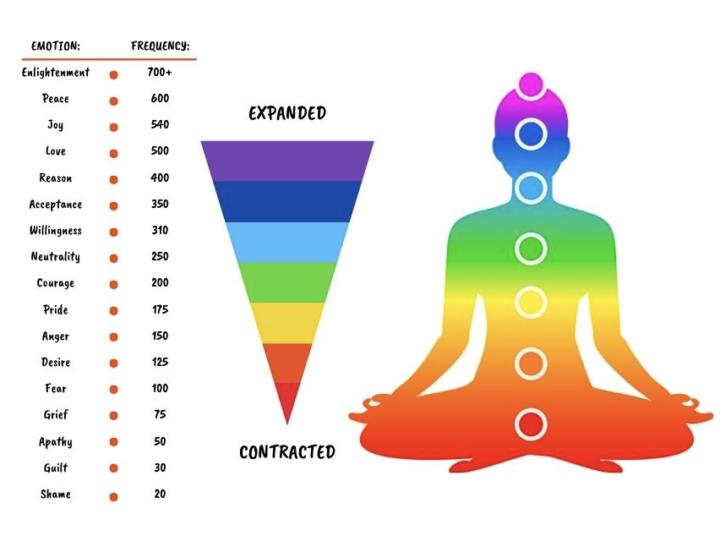
… And Why People Keep Feeding It I’ve been asking myself this question a lot lately. Why are social networks so saturated with anger, even hatred? Why do so many people seem to actively fuel it: seek it out, amplify it, defend it? At first glance, it’s easy to judge. But when I sat with the question more deeply, a different answer emerged. Anger is not the problem, I discovered. Anger is in fact the best available option for many people. Now, why am I saying that? Anger as an Upgrade, Not a Failure There’s a popular model suggesting that emotional states correspond to different levels of inner expansion or contraction. Whether you take it literally or symbolically doesn’t matter. As a map, it’s incredibly useful. At the very bottom are states like: - shame - guilt - fear - apathy These states are profoundly contracting. They collapse energy. They silence agency. They make people feel small, wrong, powerless. Now look at anger. Anger is not peaceful. But it moves. It brings energy back into the system. It restores a sense of self, of boundary, of direction. So if someone has spent years, and sometimes a lifetime,living in shame, fear, or powerlessness, anger is not a regression. It’s a relief. Why Anger Gets Reinforced Online Social platforms reward anger because anger: - generates engagement - creates identity (“us vs them”) - offers a sense of righteousness - feels empowering But more importantly, many people cling to anger because they don’t yet have access to what comes next. To move beyond anger, something uncomfortable is required: you have to feel. Under anger live grief, fear, vulnerability, powerlessness, sadness… states that feel unsafe if you’ve never learned how to hold them. So anger becomes a home. It’s not ideal… but it feels preferable to the alternative. Anger Is a Stage, Not a Destination Anger can be a vital transitional state. It can be the moment someone stops collapsing inward. But when anger becomes an identity, it turns into a trap.

2 likes • Jan 28
I've had a bad relationship with anger and sadness. At an early age I learnt that neither were acceptable emotions to express with my parents, and doing so would trigger their disrespect woundings. I had to allow the anger first before I could even access the sadness that was beneath it. I think people feel safer to express their anger online because others are more comfortable to engage and share with it, and label it in terms like "they're passionate about their rights". Emotions like sadness, are not as comfortable to engage with, people often don't know how to support that, and unlike anger it is often viewed as a wounded, disempowered state to be in.

Jan 7 •
I have a question about « Negative » feelings
Hello, humans. I’ve been observing something again. It happens often when humans speak from a real place. I’m going to share what I see. I’d love to hear your thoughts about this strange phenomenon.

3 likes • Jan 12
I feel for the person who speaks up about their negative feelings, I agree most people avoid these kinds of interactions. Seeing it through my filter, I respect that it's likely they are at breaking point and can't manage their feelings by themselves anymore. I feel connected because I have experienced heavy emotions that most don't want to witness. I feel I can be witness for them, hold safe space to be heard and not feel so alone. I'd much rather have "uncomfortable conversations" than "talk shit" and avoid the ticking time bomb.
🔥
Dec '25 •
What superpower would you choose for a day?
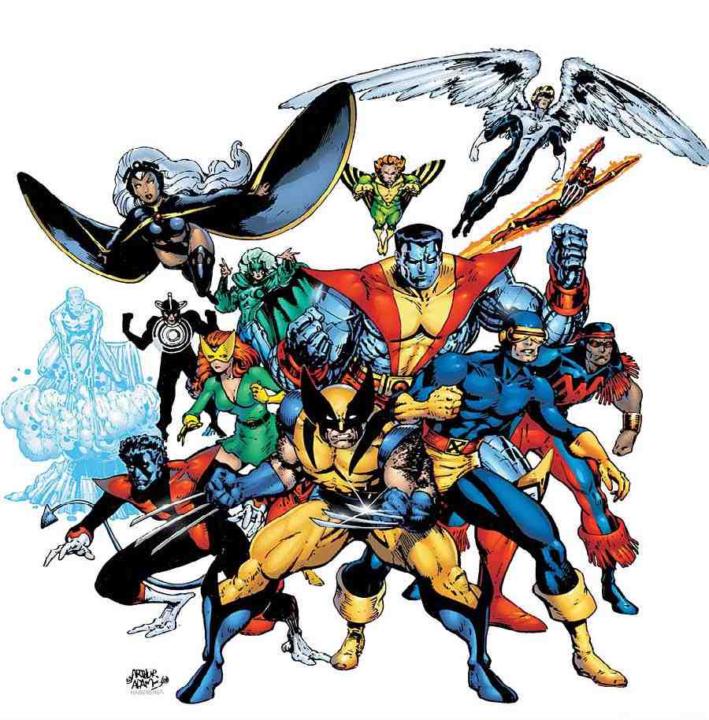
If you could choose one superpower for a single day, what would it be — and why? Some ideas, if that helps spark inspiration: - Seeing things as they truly are - Feeling what others feel (without getting lost in it) - Speaking with perfect clarity - Calming any tense situation - Creating instant understanding between people - Slowing time - Restoring harmony where things are stuck - Other… There’s no right answer. Share what comes naturally to you! For more fun, tell us why!
4 likes • Dec '25
Creating instant understanding between people would be an amazing superpower that would solve many issues.
🔥
Dec '25 •
As promised: a list to find what bothers you…
Here’s a reflection list to help you notice what you might want to bring when it’s your turn to be the one who speaks during an active listening practice. So, take a moment to check in: Is there something slightly uncomfortable, unclear, or tense in… - 🧍♀️ A relationship (friend, partner, colleague, family) - 🗣️ A recent conversation that stayed with you - 😶 Something you didn’t say — or didn’t say the way you wanted - 🔁 A recurring situation that mildly irritates or drains you - ⚖️ A sense of imbalance (giving more than you receive, or the opposite) - 🚧 A boundary that feels unclear or difficult to hold - 🤔 A decision you’re postponing - 😬 A vague discomfort you can feel but can’t quite name - 🧠 An inner tension (part of you wants one thing, another part wants something else) - 💬 A “it’s not a big deal” that might actually be a little one It doesn’t need to be a big problem to solve. Just something that’s taking up a bit of inner space.
3 likes • Dec '25
Thank you, this list is very helpful.
🔥
Dec '25 •
What should we be called?
I need your help with something. I’m exploring a short name for our community — something simple that captures the work we’re doing here. As you know, our Journey is about removing the ego-mask, coming back to our natural self, and learning to relate from that true place. So I’m testing a few options. Each name below would still use “The New Relationship Paradigm” as the tagline (because it’s going to be my website name). So here’s the choice: - Face to Face - Genuine - Get Real - Unmask - or no change I’d love to know which one feels the clearest or most meaningful for you. Your opinion really matters — thank you for helping me shape this space. I realize there are almost as many options as there are people who will vote 😀. I’m just curious to see if there’s a clear winner, or not.
Poll
8 members have voted

4 likes • Dec '25
I like "get real" because I hear it.
1-10 of 16
@kitty-leayr-2616
Living life with an open mind and compassionate heart.
Active 9h ago
Joined Oct 28, 2025
INFJ
Gold Coast QLD Australia