

🔥
7d •
The Effects of Self-Abandonment
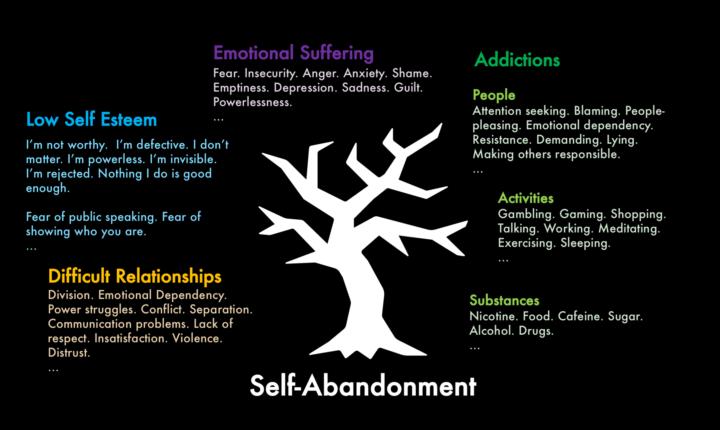
First… what IS self-abandonment? Self-abandonment is what happens when we turn away from ourselves. When we ignore what we feel. When we silence what we know. When we override our truth to avoid discomfort, rejection, or conflict. It can look small. Saying “it’s fine” when it isn’t. Laughing when something hurts. Staying quiet when something matters. Trying to be who we think we need to be. What are the effects of self-abandonment? When we disconnect from ourselves, certain patterns appear. Low self-esteem. Emotional suffering. Difficult relationships. Addictions — to people, substances, or activities. We start seeking outside what we no longer give ourselves inside. We look for validation. We try to control. We blame. We overwork. We numb. After a while, we may collapse. Look around you. Can you see how often we are encouraged to ignore what we feel, override what we know, and disconnect from ourselves in order to belong, succeed, or survive? Most of us were taught to abandon ourselves… quietly, early, and repeatedly. Can you see it?
🔥
14d •
In the Right/Wrong Game, Everyone Loses
I was talking to my neighbor yesterday, and she asked me: “How do I know if I’m the problem in my relationship… or if he is?” She was exhausted. Confused. She wanted clarity. A diagnosis. Someone to finally say: It’s you. Or: It’s him. I told her, “You probably won’t like my answer.” Then I said: Everything that hurts inside you is yours. That doesn’t mean his behavior is always acceptable. It doesn’t mean he isn’t defensive, blaming, distant, or manipulative. It doesn’t mean you’re imagining things. What I’m really saying is that the pain activated in you belongs to your nervous system, your history, your unmet needs, your self-abandonment. - When he withdraws, what happens inside you? - When he blames, what do you feel? - When he shuts down, do you collapse? Attack? Over-explain? Comply? That part is yours. Relationships are systems.Two nervous systems dancing with each other’s wounds. Trying to figure out “who has the problem” keeps you focused outward. Healing begins the moment you turn inward: - Where am I abandoning myself here? - What am I afraid to feel? - What am I tolerating that hurts me? - What would be loving toward myself right now? Here is the paradox: He may have real issues. And you still cannot solve them. But you can change your participation in the dynamic. When one person stops self-abandoning, the entire system shifts. Sometimes the relationship improves. Sometimes it falls apart. But either way, clarity comes. And you start healing the day you decide to take care of what is hurting you, instead of placing all your attention on the other person.

🔥
14d •
How I’m learning to trust the flow
A few months ago, I was wondering how anyone could truly trust life. It sounded naive to me. Almost reckless. If you stop trying to control what happens, don’t you become passive? Don’t you risk losing everything? Trust felt like giving up. Lately, something has shifted. I’ve realized we can live in two very different ways. We can fight for or against what happens.We can resist, argue, push, try to bend reality to our will. Or we can let ourselves move with what is here. In both cases, what happens is not fully under our control. The events themselves are not ours to command. What is ours is how we meet them. When I fight reality, I tense. I contract. I replay conversations. I try to correct, fix, defend, justify. I exhaust myself trying to manage outcomes that were never fully mine to manage. When I return to myself, something softens. I don’t become passive. I don’t stop acting.I simply stop fighting what already is. And I’ve started to see that returning to yourself and letting go of the outcome are the same movement. The more I anchor inside — in my values, in my clarity, in my integrity — the less I need the outside world to cooperate in order to feel steady. Trusting life is not believing that everything will go your way. It is accepting that you don’t control the river —but you do choose how you stand in it. And sometimes, the deepest strength is not in swimming harder. It’s in relaxing your grip and staying with yourself as the current moves.
2
0

🔥
16d •
The Relationship That Comes First
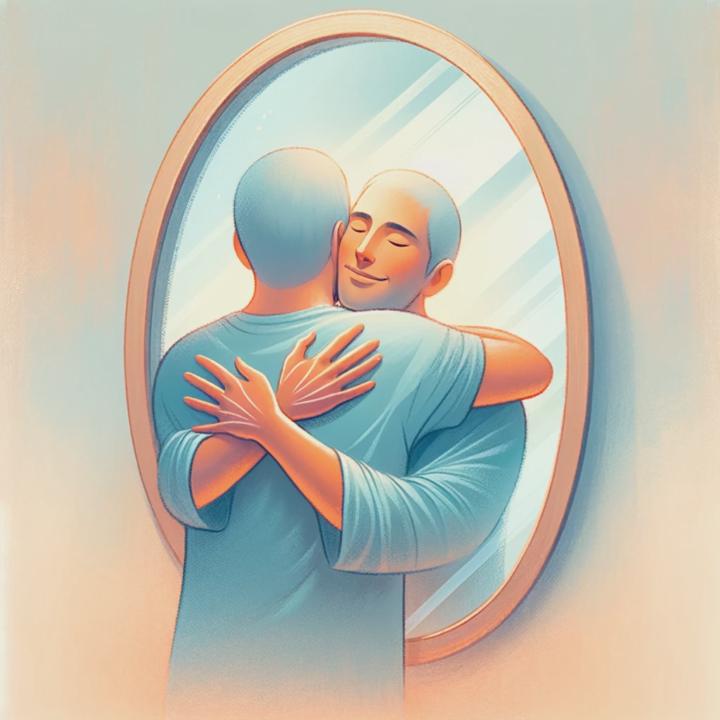
We often grow up believing that love will complete us.That the right relationship will finally make us feel secure, worthy, happy. But emotional stability doesn’t come from being chosen. It comes from being connected to yourself. If you feel empty, anxious, or unsure inside, a relationship won’t erase that. It will simply highlight it. Two people who are disconnected from themselves don’t magically create harmony together. They usually create more confusion. The quality of your relationships tends to reflect the quality of your inner life. So instead of searching for the person who will make you happy, start by building a relationship with yourself that feels solid, kind, and steady. From there, connection becomes a sharing of happiness — not a desperate attempt to obtain it. And that changes everything. Have you experienced that yourself before? If not… try doing the work of our core teachings for a while. It will change you, if you let it.
🔥
29d •
When Is It Helpful to Share Your Feelings?
"I just have to tell you how I feel. I'm very upset about what you did." "I'm really angry with you." "I just want to be honest with you. I'm so hurt by what you said." Each of these statements is a sharing of feelings. Yet the chances are that the person at the receiving end of this sharing of feelings will feel attacked and respond defensively. So, what's the problem? Aren't we supposed to share our feelings? Well, yes and no. It depends upon your intent. When feelings are shared from the wounded self, then they are being used as a means of manipulation and control. The message behind the above sharing of feelings is, "I'm upset, or angry, or hurt and it's your fault. You are responsible for my feelings. Your unacceptable behavior is the cause of my painful feelings." When feelings are shared from the loving adult, the intent is to learn about oneself and the other, or to just give information. For example, if you say, "I'm very upset about what you did, and there must be a good reason you did it. Can we talk about it?", your intent is to learn rather than blame. Instead of being a victim of the other person's behavior, you are interested in understanding the situation. Or, you might say, "I'm really angry at you, and I don't want to take it out on you. So I'm going for a walk and see if I can get through this." In this case, you are taking responsibility for your own feelings, your own reactions, and just giving the other person information about your behavior. Our wounded feelings, such as anger, anxiety, depression, guilt, shame, annoyance, aloneness, emptiness, envy, and jealousy, come from our thoughts, not from others' behavior. For example, let's say that your friend tells you she wants to get off the phone because she is feeling judged by you, and she doesn't like it. There are many things you can tell yourself about this, and what you tell yourself will determine what you feel: - If you tell yourself that your friend may be in a bad place and projecting her judgments of herself onto you, you might feel compassionate toward her. - If you tell yourself that you can never do anything right and that you are a bad person for judging, you might feel inadequate, unworthy, and rejected. - If you tell yourself that your friend has no right to say this to you, you might feel angry. - If you tell yourself you might be judging, and maybe there is something important for you to learn here - that there must be good reason you are judging - you may feel open and curious. - If you tell yourself that only a really good friend would tell you her truth, you might feel grateful and appreciative of her courage. - If you tell yourself that you are not judging, that it is your friend who is judging, and you take her judgment personally as an attack, you might feel hurt. - If you tell yourself that your friend is unkind, crazy or off the wall, you may feel righteous.

1-30 of 31
powered by
skool.com/the-social-experiment-1716
A community focused on inner clarity, conscious relationships, and collective change.
Suggested communities
Powered by