Activity
Mon
Wed
Fri
Sun
May
Jun
Jul
Aug
Sep
Oct
Nov
Dec
Jan
Feb
Mar
Apr
What is this?
Less
More
Memberships
Skoolyard 🧃
1k members • Free
Our Peaceful Liberation 🌎✌🏽
31 members • Free
AI Automation (A-Z)
152.7k members • Free
Free Skool Course
65.9k members • Free
AI Automation Society
338.9k members • Free
High Vibe Tribe
80.4k members • Free
New Earth Network
25 members • Free
New Earth Community
7.1k members • Free
AI Automation Agency Hub
311.8k members • Free
53 contributions to The AI Advantage

🔥
2d •
📰 AI News: An AI-Generated Song Just Hit No. 1 on iTunes, and That Changes the Music Conversation Fast
📝 TL;DR An AI-generated track reportedly reached No. 1 on the U.S. and global iTunes charts, and that is a much bigger deal than a novelty headline. It shows AI music is no longer just experimental, it is starting to compete in the same commercial spaces as human artists. 🧠 Overview According to recent reporting, the AI-generated song “Celebrate Me” by the virtual artist IngaRose climbed to the top of the U.S. and global iTunes charts around April 17. That matters because this is not just about one viral song, it is a signal that AI-generated music is becoming mainstream enough to win real consumer attention. The bigger issue is not whether AI can make a song anymore, it is whether audiences care who or what made it. 📜 The Announcement The reporting says “Celebrate Me” was released on March 31, 2026 and quickly rose up the iTunes sales charts, hitting No. 1 in the U.S. and globally. IngaRose is presented as an AI-generated act, and the song is believed to have been made using Suno, one of the biggest AI music tools in the market. While AI music has already been gaining traction on streaming platforms, this chart milestone gives the trend a much more visible and commercially credible moment. ⚙️ How It Works • Virtual artist model - IngaRose appears to be positioned as a synthetic music act rather than a traditional human performer. • AI music generation - The song is widely reported to have been created using Suno, a platform that can generate vocals, instrumentals, and full songs from prompts. • Chart momentum - “Celebrate Me” reportedly climbed to No. 1 on both U.S. and global iTunes sales charts in mid-April. • Fast commercial validation - This was not just a niche tech demo, it translated into actual purchases and chart performance. • Blurred authorship - The song’s success raises familiar questions about who should get creative credit when AI tools do much of the production work.


0 likes • 2d
Thanks for the heads up. I’m deep in this space myself at the moment, incubating 100+ Suno tracks, and a handful already feel like they may have genuine commercial potential. That’s why this matters. The conversation is moving very quickly from “can AI make music?” to “what happens when AI music starts competing seriously in the market?” To me, the deeper issue is not only music generation. It is trust, disclosure, and authorship. When songs, visuals, artist personas, and distribution can all be spun up at low cost, the real questions become: Who made this? How was it made? Was it disclosed clearly? And will audiences care enough to differentiate? AI is not removing the need for taste. It is raising the value of taste, truth, and transparency.

6d •
🧪 AI as a Lab Assistant: Why the Next Time Win May Come From Faster Experimentation, Not Just Faster Content
A lot of AI conversation still circles around content. Faster drafts, quicker summaries, more polished outputs. Those are useful gains, but they are not the whole story. One of the more interesting shifts right now is the idea of AI as a lab assistant, not just in science, but in any environment where people are testing ideas, comparing options, and learning through iteration. That matters because some of the greatest time savings do not come from producing the first answer faster. They come from shortening the cycle of experimentation itself. ------------- Context ------------- Many teams spend more time than they realize waiting to learn. They test an idea, pause for feedback, reconsider the framing, gather more inputs, and then try again. That loop can take days or weeks, even when the actual insight needed to move forward is relatively small. This is true in product development, strategy, content, marketing, operations, and internal process design. The slowdown is often not in making something. It is in comparing possibilities, spotting patterns, and deciding which direction deserves the next investment of effort. That is why the “lab assistant” framing is so useful. It positions AI as a tool for helping teams explore options faster, organize findings more clearly, and reduce the cost of trying something imperfect. The benefit is not simply that it generates material. The benefit is that it helps the team learn sooner. And learning sooner is a time advantage. When feedback loops shorten, wasted effort shrinks. Teams spend less time building the wrong thing too far and more time adjusting while the cost of change is still low. ------------- Faster Iteration Beats Slower Certainty ------------- A lot of organizations still work as if certainty should come before experimentation. They want the fully formed plan, the polished idea, the complete answer. That sounds responsible, but it often stretches cycle time because too much effort is invested before enough learning has happened.

2 likes • 5d
Strong post Igor, and yes I’ll be there! I think this gets closer to the real leverage point. AI is useful for faster drafts, yes. But the bigger gain may come from shortening the distance between question and insight. When experimentation becomes cheaper, teams can test more, learn sooner, and commit with better judgment. That reduces rework, lowers the cost of weak assumptions, and improves decision quality before too much time has been sunk. So the AI advantage is not just content speed. It is learning velocity. And in fast-moving environments, that may be the metric that matters most.

⭐
6d •
🚀 The Entrepreneurs Who Will Own the Next Decade Are Doing This Right Now
The next decade will not be owned by the busiest entrepreneurs. It will be owned by the ones building leverage early, and using AI to do it faster. Right now, while many people are still stuck in reaction mode, the smartest entrepreneurs are doing something different. They are learning faster, simplifying faster, and using AI to remove the kind of friction that slows growth down. They are not just working harder. They are building smarter ways to operate. That is the real separator. The future does not belong to people who simply put in more hours. It belongs to people who know how to make each hour produce more. That is exactly where AI comes in. AI helps entrepreneurs reclaim time from the tasks that quietly drain momentum every week. It can speed up research, generate first drafts, organize ideas, summarize meetings, improve planning, streamline communication, and reduce the manual work that keeps people stuck in the weeds. What used to take an hour can often take minutes. What used to create mental clutter can become clear much faster. And that advantage compounds. The entrepreneurs who will dominate the next decade are using AI not as a gimmick, but as a growth tool. They are using it to cut time-to-first-draft, shorten decision cycles, reduce rework, and create more space for high-value thinking. That means more time for strategy, better offers, stronger leadership, and faster execution. They are not letting admin eat their ambition. They are not letting busywork steal their best energy. They are using AI to protect their attention and redirect it toward the work that actually moves the business forward. That is what smart leverage looks like. These entrepreneurs are also obsessed with clarity. They know confusion creates delay. They know scattered attention kills momentum. They know complexity slows everything down. So they use AI to help create cleaner workflows, sharper messaging, better documentation, and faster access to information. They are building businesses that can move with more speed and less chaos.
13 likes • 5d
Agreed. AI is becoming a real leverage multiplier for entrepreneurs who know how to use it well. But I think the next real separator goes beyond speed alone. It’s clarity, discernment, and judgment. The winners won’t just automate more tasks. They’ll build better systems, shorten decision cycles, reduce wasted motion, and protect their best attention for the work only humans should still be doing. That’s where the real edge starts to compound: not just doing more, but building smarter.
🔥
8d •
📰 AI News: The Biggest Compute Cluster in Orbit Just Went Live
📝 TL;DR Orbital computing just moved from futuristic idea to actual business. Kepler Communications now has the largest compute cluster currently in space, and companies are already lining up to use it. 🧠 Overview A Canadian company called Kepler Communications has put what is currently the largest orbital compute cluster into operation, using 10 satellites linked by laser communications and packed with about 40 Nvidia Orin edge processors. That means real computing power is now running in orbit, not just collecting data and sending it back to Earth. The big deal here is speed, because processing data in space could make satellites, defense systems, and remote sensing tools far more responsive. 📜 The Announcement Kepler’s cluster was launched in January 2026, and the company says it already has 18 customers. Its newest partner is Sophia Space, a startup building passively cooled orbital computers. Sophia plans to upload its operating system to one of Kepler’s satellites and try running it across six GPUs on two spacecraft, which would be one of the first real attempts to deploy and configure this kind of compute workload directly in orbit. ⚙️ How It Works • Space-based compute cluster - Kepler has connected 10 operational satellites using laser links, creating a distributed compute network in orbit. • Edge processors in space - The cluster uses roughly 40 Nvidia Orin processors, designed for inference and local processing rather than giant training workloads. • Real customers already onboard - Kepler says 18 customers are already using or testing the system, showing this is not just a lab demo. • New Sophia partnership - Sophia Space will test its own orbital computer software on Kepler’s network as a step toward its planned 2027 launch. • Focus on in-orbit processing - The near-term goal is to process data where it is collected, instead of sending everything back to Earth first.
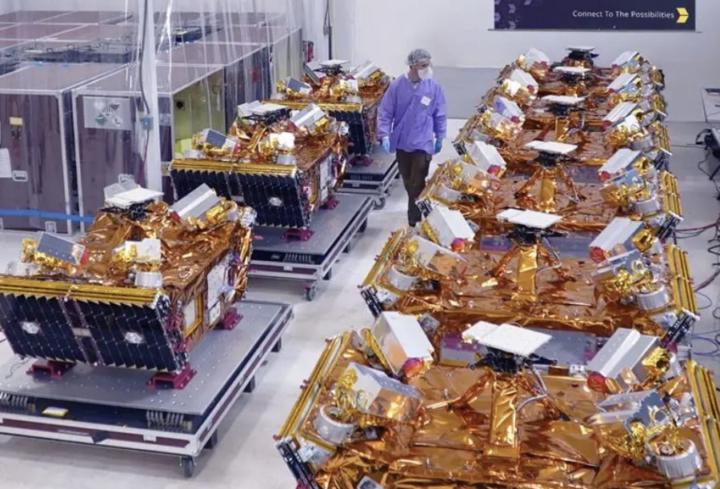
2 likes • 7d
This does feel like a real step toward a more “Star Wars” kind of future in space, not because it is a weapon, but because it is infrastructure. That is usually how these shifts begin. Not with a giant sci-fi leap, but with practical systems that make sensing, processing, communication, and decision-making faster at the edge. From a business and engineering perspective, it makes a lot of sense. If data can be processed closer to where it is collected, latency drops, responsiveness improves, and whole new markets start to open up around orbital services. But the strategic question is bigger than the technical one. The same infrastructure that can help with Earth observation, weather, communications, and remote operations can also support surveillance, defense, and more autonomous military capability. That is where this gets serious. So for me, the SWOT is fairly clear: Strong commercial upside. Strong dual-use risk. Big opportunity for orbital infrastructure, software, and security layers. Big threat if governance arrives last, again. So yes, this may be an early step toward a Star Wars-style future in space, but the real issue is not the hardware. It is whether we build the rules, oversight, and accountability layer fast enough to stop “space compute” becoming “space escalation.” Amazing milestone. Also a reminder that capability keeps accelerating faster than governance... I’m working tirelessly on a solution for this. Governance in space is perhaps even more important than on Earth?
1 like • 6d
@Amber Mirza Beautifully put, Amber. I think that is exactly the tension: progress is not the problem in itself, progress without aligned incentives, thoughtful filters, and trustworthy governance is. And yes, governance is hard precisely because the people and institutions shaping it often carry conflicting interests, commercial pressures, and strategic incentives of their own. That is why I increasingly think governance in space may become even more important than governance on Earth. Once critical infrastructure, autonomous systems, and defense-relevant capabilities begin moving off-planet, the distance, speed, opacity, and dual-use nature of it all could make weak oversight even harder to correct after the fact. So I’m with you: fear is not a good foundation.But neither is blind acceleration. What we need is intentional, considered progress with decision-making filters strong enough to serve the highest good, not just profit, speed, or power. That is a big part of what I’m working on. The question that keeps surfacing for me is:how do we build governance that remains wise under pressure, not just efficient under momentum?
⭐
9d •
📚 Why the Most Successful People Are Obsessed With Learning
The most successful people are not successful because they know everything. They are successful because they never stop learning. That is the difference. While most people want quick answers, high performers keep building better thinking. They stay curious. They ask better questions. They study what is changing. They refine how they work. They know that the faster the world moves, the more dangerous it is to rely on old assumptions. Learning keeps them sharp. It keeps them adaptable. It keeps them relevant. The people who keep growing are usually the ones who keep learning before they are forced to. They do not wait until the market changes, the tools evolve, or the results slow down. They stay in motion. They read, test, listen, observe, and apply. That is why they spot opportunities earlier and adjust faster than everyone else. Learning is not just knowledge. It is leverage. Every new skill shortens future struggle. Every new insight reduces trial and error. Every lesson compounds into faster decisions, better execution, and less wasted time. That is why the best people are not obsessed with learning for appearance. They are obsessed with it because it saves them time, helps them move with confidence, and keeps them from getting stuck. And here is the truth a lot of people miss. Success can make people comfortable. Comfort can make people lazy. And laziness in learning is often the beginning of irrelevance. The most successful people know they cannot afford to coast. They know yesterday’s strategy will not guarantee tomorrow’s results. So they keep sharpening their edge. They stay open. They stay humble. They stay willing to be a beginner again. That mindset is powerful. Because people who love learning do not panic when things change. They adapt. They figure it out. They learn the tool, study the shift, test the idea, and keep moving. While others feel threatened by change, they use learning to stay ahead of it. That is why they keep winning. In a world moving this fast, learning is no longer optional. It is part of staying valuable. It is part of protecting momentum. It is part of building a future where growth does not stall the moment the environment changes.
49 likes • 9d
Absolutely. Continuous learning is really continuous adaptation. The people who stay effective are usually the ones willing to let go of outdated assumptions, become a beginner again, and keep sharpening their thinking as the world changes. Knowledge matters, but the real advantage is staying teachable.
1 like • 9d
@AI Advantage Team Exactly Justin and a good question. I usually catch it when I find myself defending a method more than examining whether it still works. That is often the giveaway that experience has started hardening into assumption. With AI, the landscape shifts so fast that old thinking can feel true long after it has stopped being useful. So I try to build in a simple discipline: question the model, test the result, update the approach. Staying teachable is really staying willing to let reality overrule habit.
1-10 of 53

@kevin-brown-2649
✨ From Trauma to Transcendence ✨
Through Eterna Works Creative, I craft books, music, and worlds that help humanity remember who we truly are.
Active 25m ago
Joined Nov 1, 2025
North West England & Greece
Powered by