Activity
Mon
Wed
Fri
Sun
Jun
Jul
Aug
Sep
Oct
Nov
Dec
Jan
Feb
Mar
Apr
May
What is this?
Less
More
Memberships
🧬 🔮 🌌 SKOOL OF I AM 🌌 🔮 🧬
18 members • Free
⭐️🌠💫🔮 Skool of IAM 💖⭐️🧬
8 members • Free
Foundations of Ascension
9.6k members • Free
Leaders of Light
808 members • Free
Science Nerd 🤓 🧫🧬🔬⚗️🔭
140 members • Free
Formless Flow
418 members • Free
17 contributions to Foundations of Ascension

8d •
Our Life
You are not defined by what you’ve been through. Your past shaped you — yes.Your environment influenced you — absolutely.But what you learned to survive… isn’t who you have to stay. A lot of what we call “personality” is really just patterns. Ways of thinking.Ways of reacting.Ways of protecting ourselves. And those patterns were built for a reason. But here’s the part most people miss: Just because a pattern helped you survive…doesn’t mean it’s helping you live. The moment you start to notice your patterns, something shifts. You realize:“I’m not stuck… I’ve just been repeating.” And once you can see it, you can change it. Not all at once. Not perfectly.But intentionally. That’s where growth actually happens. And this is where humility matters. Because growth doesn’t come from thinking you’ve figured yourself out…it comes from staying open enough to keep learning. You are allowed to evolve. You are allowed to choose differently. You are allowed to become someone new — not by rejecting your past… …but by understanding it, and deciding what comes next.
2
0
8d •
Our Life
You are not defined by what you’ve been through. Your past shaped you — yes.Your environment influenced you — absolutely.But what you learned to survive… isn’t who you have to stay. A lot of what we call “personality” is really just patterns. Ways of thinking.Ways of reacting.Ways of protecting ourselves. And those patterns were built for a reason. But here’s the part most people miss: Just because a pattern helped you survive…doesn’t mean it’s helping you live. The moment you start to notice your patterns, something shifts. You realize:“I’m not stuck… I’ve just been repeating.” And once you can see it, you can change it. Not all at once. Not perfectly.But intentionally. That’s where growth actually happens. And this is where humility matters. Because growth doesn’t come from thinking you’ve figured yourself out…it comes from staying open enough to keep learning. You are allowed to evolve. You are allowed to choose differently. You are allowed to become someone new — not by rejecting your past… …but by understanding it, and deciding what comes next.
1
0
Nov '25 •
Sensory Manifesto
The Sensory Manifesto By Ken Parrott There’s a different way to move through the world — one that isn’t driven by pressure or performance, but by rhythm, awareness, and authenticity. This is the lens I live from. 1. The body is the first truth. Before emotions or thoughts, the body signals everything. I pay attention to what most people overlook — tension, breath, rhythm. The body never lies. 2. Internal and external are one system. My inner state and environment speak to each other. I read the whole field — tone, energy, micro-shifts — not just the words. 3. Rhythm creates connection, not control. Force breaks communication. Matching rhythm builds trust, calm, and understanding. 4. Attention is sacred. Where attention goes, energy follows. I protect mine — it fuels clarity, creativity, and emotional balance. 5. Deep focus is a portal, not a problem. Immersion isn’t obsession. It’s how I understand patterns, process complexity, and access authenticity. 6. Shame shuts people down; understanding opens them up. I move through curiosity and compassion, not guilt or judgment. Growth requires safety, not fear. 7. Memory is sensory, not linear. I remember tone, energy, pattern, and truth — not just words. This clarity keeps me grounded in reality. 8. Boundaries are regulation, not rejection. I don’t mirror other people’s chaos. I stay aligned with my own rhythm. 9. Authenticity is my alignment. I no longer contort myself to fit anyone’s expectations. I live in my natural flow — intuitive, grounded, aware. 10. Awareness makes life human. When you tune into the body, the rhythm, the sensory field — the world stops feeling chaotic and starts feeling navigable. This is the framework that guides me. This is the rhythm I choose every day.
1 like • Nov '25
@Ayoola Oluwa I'm happy teaching students to thrive.
0 likes • Nov '25
@Ayoola Oluwa yes.💪
Nov '25 •
Pattern-Guided Cognition
Definition: Pattern-Guided Cognition Pattern-guided cognition is the process by which the nervous system uses learned regularities in sensory input—patterns—to interpret ongoing experience, generate thoughts, and construct a workable model of reality. Rather than arising from pure logic or abstract reasoning, cognition emerges as the brain matches current input to previously encoded pattern templates, many of which are established early in development through repeated exposure and conditioning. Clarifying Write-Up: From this view, human thought is fundamentally a pattern-recognition operation. Sensory systems continuously sample the environment; the brain then compares this stream of input to stored patterns (associations, scripts, schemas). What we experience as “understanding” or “making sense of something” is the successful matching of new input to an existing pattern. Early life plays a disproportionate role because it’s when many of these templates are first seeded. Repeated emotional climates, relational dynamics, cultural messages, and environmental rhythms become the baseline patterns the system expects. Later in life, new situations are not processed in isolation—they are interpreted *through* these pre-existing patterns, which can bias perception long before conscious thought occurs. Conditioning, in this framework, is not just “learning rules.” It is the gradual **installation of patterns** that guide how reality is parsed: what we notice, what we ignore, what we fear, what we trust, and which explanations feel “true.” Once established, these patterns shape both automatic reactions and higher-order beliefs, creating a recursive loop between experience, interpretation, and future perception. In ORF terms, pattern-guided cognition is the mechanism that links sensory input, autonomic response, emotion, narrative, and identity across scales. To understand a person’s behavior or worldview, we “follow the patterns” they were exposed to and the patterns their nervous system now expects.
1 like • Nov '25
@Robin Simonds hi.😊
Nov '25 •
Helping Others
What it means to truly help someone Empathy Empathy is feeling with someone instead of just looking at them from the outside. It sounds like: “That sounds really hard. I can see why you feel that way.” You’re not fixing, judging, or comparing. You’re saying: “You’re not alone in this.” Support Support is what you *do* with that empathy. It sounds like: “I’m here with you. What do you need right now?” “Can I sit with you, call someone, bring you food, go with you to that appointment?” Support turns care into action, even if the action is just staying present. Validation Validation is telling someone their feelings make sense, even if you’d feel differently. It sounds like: “Given what you’ve been through, it makes sense you feel scared/angry/sad.” You’re not saying the situation is fair or okay. You’re saying they are not crazy for feeling what they feel. Why this matters for real help Without empathy, support can feel cold. Without support, empathy can feel empty. Without validation, people feel unseen and often shut down. When all three are there: people feel safe enough to be honest shame and isolation start to loosen they’re more able to think clearly, make decisions, and accept deeper help Real help doesn’t start with advice. Real help starts with: “I see you. You make sense. I’m here with you.”
1 like • Nov '25
@Harris Cheeda thank you, I appreciate it!!🙏✨️
1 like • Nov '25
@Earl Luttrall I appreciate you!! Namaste 🙏✨️
1-10 of 17
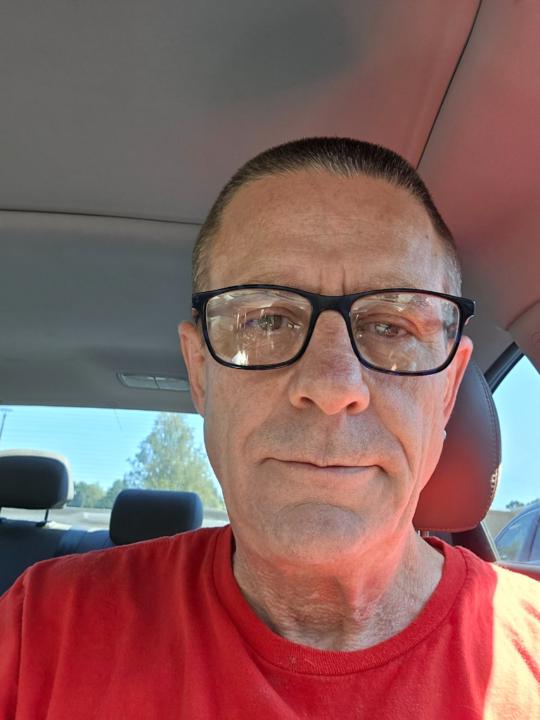
@ken-parrott-1442
Autistic Abilities Advocate for connecting with our inner most senses the interceptors for mental well-being!!
Active 1d ago
Joined Oct 13, 2025
Manchester, Connecticut
Powered by