Activity
Mon
Wed
Fri
Sun
Jun
Jul
Aug
Sep
Oct
Nov
Dec
Jan
Feb
Mar
Apr
What is this?
Less
More
Memberships
The Independent Pianist Circle
56 members • Free
5 contributions to The Independent Pianist Circle

Nov '25 •
Introducing Victoria
Hi everyone, I’m a returning piano player looking to up my game in playing by ear. I came to realise that all I really wanted to do was sit down at the piano and play pieces I know and love with confidence! I sing too, so aim to accompany myself a bit more too.

2 likes • Nov '25
Welcome Victoria!
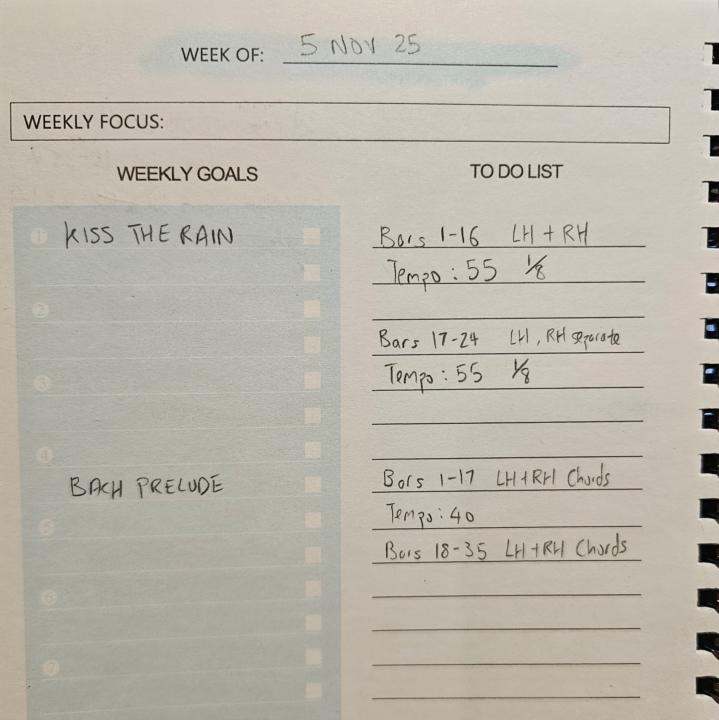

Oct '25 •
🎹 New Workshop: Beating Piano Frustration — How to Practise Without Losing Heart
If you’ve ever sat at the piano and thought: “Why can’t I play this yet?” “I used to be better than this…” “Maybe I’m just not improving anymore.” …you’re definitely not alone. This workshop is about understanding why those feelings happen — and what to do when they do. We’ll look at: ✅ The real reason piano frustration creeps in (it’s not lack of talent) ✅ How to balance expectations with reality ✅ How to structure practice so you see progress faster ✅ Tools for staying calm, resilient, and motivated — even on off days 🗓 This Saturday at 10:30am (UK time) 📍 Full details are in the Classroom tab. You’ll leave with a clear plan for your next practice session — and a calmer mindset about your playing. If you’ve ever felt stuck or lost momentum, this one’s for you. Come along — you’ll leave with practical tools, not just pep talk. 🎵 Calm structure. Steady progress. Real music.
1 like • Oct '25
Hi Benedict, would there be a recording? Unfortunately, I can't make it for the workshop.
Sep '25 •
Your Go-To Sight-Reading Workout
Once you understand the mindset and you’ve built the habit, the next step is structure. Otherwise, sight-reading practice can feel aimless. Here’s a simple workout you can repeat daily (15 minutes is plenty): 1. Rhythm warm-up (1–2 mins): Clap or tap a short rhythm exercise. Don’t worry about notes yet — just get the pulse steady. 2. Hands separately (4–5 mins): Take 4 bars of an easy piece. Play right hand once, then left hand once. Don’t stop, don’t fix. 3. Hands together (4–5 mins): Now play those same bars with both hands at a slow tempo. Focus on flow, not accuracy. 4. New piece challenge (5 mins): Pick something below your level and play it straight through — one time only. 👉 Try this: Set a timer for 15 minutes. Follow the workout above. At the end, jot a quick note: Did I keep the beat? How many times did I stop? Over time, you’ll measure progress not by “fewer mistakes,” but by: • You stop less often. • Your rhythm stays steady even when you slip. • You cover more material in less time. Remember: progress in sight-reading is invisible in the short term but dramatic over months. The more pages you turn, the more fluent you’ll feel. Reflection question: Would you like me to share a list of my favourite “easy but useful” books for sight-reading practice?
1 like • Sep '25
I have the exact question of where to find sight reading material. Please share!
Sep '25 •
🎹 15-Minute Practice Plan
This plan keeps you focused on where you are in the process while also building the core skills that make everything easier. ⏱️ 0:00 – 2:00 | Write in Your Practice Notebook - Write today’s date. - Write down exactly where you are in the process for your piece: - Set a clear aim for this session (e.g. “Play LH at 50%–70% tempo with metronome, no errors”). ⏱️ 2:00 – 10:00 | Core Piece Work (8 mins) - Work only on the step you’ve written down. - Don’t jump ahead — repeat the same step until it feels solid. - Use the metronome when needed: start at 50% of target tempo, increase only if perfect. - If you can’t play at 50% → reconsider whether your target performance tempo is realistic. ⏱️ 10:00 – 13:00 | Sight-Reading Snapshot (3 mins) - Pick something much easier than your main piece. - Clap/tap the rhythm once, then play straight through with no stopping. - Goal: fluency and flow, not perfection. ⏱️ 13:00 – 15:00 | Skills Boost (2 mins) - Quick scale, arpeggio, or chord pattern of your choice. - Focus on evenness, relaxation, and steady rhythm. - End with something that feels smooth and successful. ✅ End of Session – Notebook Review - Write one sentence on what you achieved. - Note where to start tomorrow (so you don’t waste time remembering). - Optional: give yourself a quick ☹️, 😐, or 🙂 to track motivation. 💡 Key Principle: Don’t try to race through all the learning stages in one sitting. Your 15 minutes are about one clear aim + a little extra sight-reading and technique to keep you balanced. ❓If you had just 15 minutes at the piano today, which part of this plan would make the biggest difference for you right now — your core piece, sight-reading, or scales?
1 like • Sep '25
Thanks Benedict. It's helpful for short sessions. How about longer sessions like 1 hour?
1-5 of 5