Activity
Mon
Wed
Fri
Sun
Jul
Aug
Sep
Oct
Nov
Dec
Jan
Feb
Mar
Apr
May
Jun
What is this?
Less
More
Owned by Jordan
All level guided breathing exercises to support nervous system regulation, emotional awareness, and life resilience. Remember your power.
Memberships
ReWild Breathwork | Free
1.5k members • Free
Escape the Studio Event
129 members • Free
The CRD Challenge
3.3k members • Free
Entheo Breath
167 members • Free
Living as Source
375 members • Free
Tantra Nectar
28.9k members • Free
The Attune Circle
69 members • Free
Skool Growth Free Training Hub
8.4k members • Free
Food Forest Family (FREE)
3.7k members • Free
28 contributions to Breathe to Remember

11d •
Weekly check in question…
We’re going back to the basics. Our practice this week is noticing your breath. Throughout your day, I invite you to just notice your breath. Begin this practice at set times if that’s helpful for you. Maybe set an alarm on you phone for 8am, 12pm, 8pm. Check in and notice how your breath feels in your body. Most people never notice how they breathe. For most of my life, that was me too. I breathed the way most modern humans do — shallow, fast, restricted, and reactive. No matter where I was or what I was doing I was in the same loop. Whether I was relaxing, or hiking or mountain biking... All the time it was constricted, breathing into my chest, my neck. What I didn't realize is that beneath this nervous system response, I was running in overdrive. Running from myself and calling it normal. Breathwork changed that for me. It surely wasn't changed overnight. But slowly, steadily, and quietly, my breath became the trail back to myself. Small adjustments created massive shifts. When I started to notice my breath I could notice where and how I was gripping. This month we're going back to foundation. Because the breath can be transformational — but we have to practice the basics before we move into advanced techniques. This week's question: When you notice your breath, what attributes come to mind for you? This can be emotions, physical attributes, or something else.
2
0
11d •
Live Guided Breathwork this evening
Hey friends! I'm offering a live guided breathwork this evening. I'd love to have you! Here's the Zoom link: Topic: Weekly Live Breathwork Time: Jun 8, 2026 08:00 PM Mountain Time (US and Canada) Every week on Mon, 110 occurrence(s) Please download and import the following iCalendar (.ics) files to your calendar system. Weekly: https://us06web.zoom.us/meeting/tZMkcu2qrDgpEt0mq9cldb0sQvTYZcnrHYxU/ics?icsToken=DHfBntfITPX7I-p4pQAALAAAACSYCLzdd0i29A_yz8Us1Y5QJvXT2di11gS24oMSxbZ2yWqjDC_HNnoe7WYg9d0SZJMyiMWiVFIIt9XsezAwMDAwMQ&meetingMasterEventId=hhaxvaIwTnKOzetxGr6PUQ Join Zoom Meeting https://us06web.zoom.us/j/87954223389?pwd=SuFICLOoIRgKHYuR631kxohMdY8AHV.1 Meeting chat link https://us06web.zoom.us/launch/jc/87954223389 Meeting ID: 879 5422 3389 Passcode: 140023 --- One tap mobile +17207072699,,87954223389#,,,,*140023# US (Denver) +17193594580,,87954223389#,,,,*140023# US --- Join by SIP • 87954223389@zoomcrc.com Join instructions https://us06web.zoom.us/meetings/87954223389/invitations?signature=e6ojZGOfr-BxpIRlxOqHZlhriOKwJnjYzK-XQEs1Y6Q
Poll
3 members have voted
1
0
18d •
Monday Intentions
How was this past weekend for you? Did you feel your energy was being channeled into activities that are aligned? How about people? My intention for this upcoming week: Be more disciplined in my transition from trail work into yoga, Breathwork, and spiritual mentorship work. Eat clean, high vibrational foods, no coffee before 8am. Give myself space and time to rest.
3
0

28d •
Morning Breath Work with Chet
Hey everyone! Happy Friday! I wanted to share this photo of me and my breath work partner Chet. I know he doesnt look thrilled in the picture but he was basically napping on my chest while I did my exercises. He has been doing this since he was a 2 pound kitten.
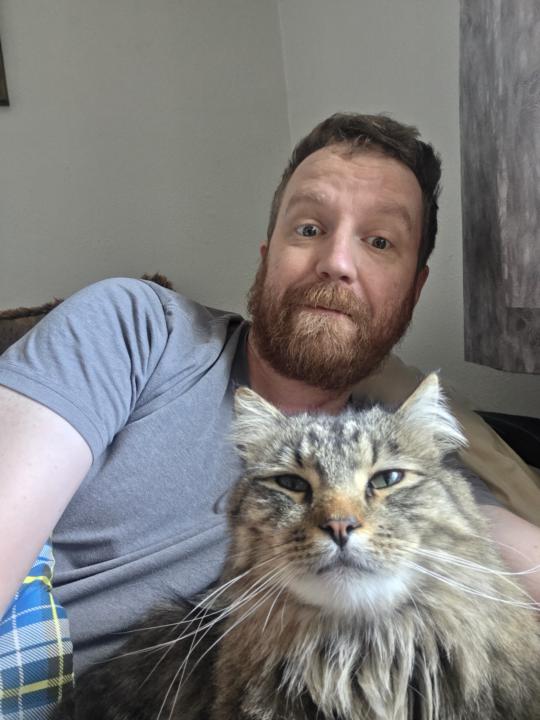
0 likes • 27d
@Kevin Sack what an adorable kitten Kev!
May 20 •
Checking in. How are you feeling midweek?
drop your intention for the remainder of the week below, even just one word. Something you want to carry with you, something you're calling in, whatever feels right. no pressure, just a little anchor for the remaining days ahead. CHALLENGE FOR THE REST OF THE WEEK 🌀 try the Box Breathing practice each morning and each evening for the next three days. Then come back here and tell us what you noticed! see you Friday at 8:00pm MST for BreathLove 🌀 We're going to go into our hearts this week. 👇 intention for the rest of the week, go! How are we all feeling mid week??
0 likes • 28d
@Jill Heredia beautiful intentions Jill! Have any particular styles of Breathwork been supportive for bringing you into presence?
0 likes • 28d
@Kevin Sack love this Kev. What’s been filling you with joy lately? Let’s plan to catch up soon.
1-10 of 28

@jordan-carr-5621
Embodying my light through trust and surrender. Supporting in the human awakening with psychedelic medicine, breathwork, and nature immersion.
Active 12h ago
Joined Oct 3, 2025
Durango, Colorado