Activity
Mon
Wed
Fri
Sun
Aug
Sep
Oct
Nov
Dec
Jan
Feb
Mar
Apr
May
Jun
What is this?
Less
More
Memberships
Small Zero Ai Influencers
1.4k members • Free
AI Automation Vault
18.7k members • Free
The RoboNuggets Network (free)
54.7k members • Free
NextGen AI
44.3k members • Free
Holistic Dynasty
542 members • Free
Real Primal Human
166 members • Free
Endless Evolution w/ Duffin
2.9k members • Free
Castore: Built to Adapt
1.1k members • Free
26 contributions to Castore: Built to Adapt

19d •
premium is awsome
If you're still on the fence about joining the membership, you're only delaying your own progress. The depth of understanding you gain by learning concepts from first principles is invaluable. I honestly can't recommend it enough. It completely changes the way you learn, study, and connect ideas, helping you rebuild your knowledge on a much stronger foundation.
2 likes • 21d
@Anthony Castore lol need to bookmark this an read it a few times at least

May 24 •
Help Us Hit 1,000 Members + Unlock a FREE Live Webinar: “The Updated Coach’s Protocol”
We are officially closing in on 1000 members inside the Built To Adapt community and I honestly can’t thank you guys enough for what this has become. What started as a place to have better conversations around cellular medicine, strength training, recovery, performance, and health has turned into one of the most thoughtful communities I’ve ever been part of. Some of the best conversations I’ve had this year have happened inside this group. I’ve watched people completely rethink how they approach recovery, training, supplementation, metabolism, and long-term health. More importantly, I’ve watched people learn how to think instead of just what to think. Truthfully, I think I’ve learned more from this community than I’ve taught. That’s the part I value most. This was never supposed to be me talking at people. It was supposed to be curious people learning together, challenging ideas together, and helping move the field forward together. We built this together. Now I have one favor to ask… We’re getting very close to 1000 members and I would genuinely love to cross that milestone before June. If this community has helped you, challenged you, or made you think differently, please invite ONE person who you think would love deeper conversations around health, performance, training, recovery, and human optimization. Invite a coach.Invite a clinician.Invite a biohacker.Invite someone tired of surface-level health advice. There is absolutely no cost to join. Even when the paid tier launches in June, this free community will always exist and I will continue posting free articles, education, and content here. The biggest benefit to me is simple:More minds.More discussion.More questions.More opportunities for all of us to learn together. My goal is to continue building THE place people can come for clear explanations and actionable insights on how to leverage cellular medicine and strength training to take agency over their health and performance. As a thank you, once we cross 1000 members I’m going to host a completely FREE live webinar:
1 like • May 24
🙌
1 like • 30d
best group! when paid membership?
May 21 •
The Problem Isn’t Low Energy. It’s Energetic Chaos.
A lot of people are looking at mitochondrial compounds right now the same way previous generations looked at anabolic steroids. Bigger engine equals bigger muscle. More ATP equals more hypertrophy. On the surface that sounds logical and honestly I understand why people get excited. You can feel some of these compounds. People notice better recovery, better work capacity, less fatigue accumulation, sometimes even better cognition. Training sessions feel cleaner. Output becomes more repeatable. There’s often this sensation people describe where they feel “harder to drain,” and that’s interesting because it hints at something deeper than simple stimulation. But this is where the conversation usually gets flattened into social media nonsense. Muscle growth and energy production are related, but they are not interchangeable. A better way to think about mitochondria is not as batteries but as adaptive traffic control systems. They’re constantly sensing nutrient flow, oxygen tension, redox state, calcium flux, inflammatory signals, mechanical stress, and energetic demand. They decide where resources go, how efficiently electrons move, whether stress is survivable, and whether the environment supports adaptation or threatens survival. That changes the conversation completely because compounds like SS-31, MA-5, and MOTS-c stop looking like “muscle builders” and start looking more like tools that may improve the environment surrounding adaptation. That distinction matters a lot. Take SS-31 for example. Most people casually refer to it as an “energy peptide,” but I think that framing creates confusion because it implies it’s forcing energy production upward like slamming the gas pedal on a damaged engine. The more interesting mechanism is that SS-31 appears to stabilize cardiolipin within the inner mitochondrial membrane. Cardiolipin is one of those molecules most people never hear about but it’s unbelievably important. Think of it like the scaffolding that helps organize the electron transport chain and maintain structural integrity inside the mitochondria. When cardiolipin becomes damaged or disorganized, electrons leak more easily, reactive oxygen species rise in the wrong places, ATP production becomes less efficient, oxygen handling worsens, and the entire energetic conversation inside the cell becomes noisy and chaotic. SS-31 appears to reduce some of that chaos. Now think about what that means for training adaptation. If a muscle cell can maintain cleaner electron flow during stress, it may tolerate repeated contractions better. ATP regeneration may become more stable. Oxidative stress may become more controlled instead of excessively chaotic. Recovery signaling may improve because the energetic system is no longer spending as many resources dealing with unnecessary leak and instability. That does not automatically mean bigger muscles. It means the muscle may be operating in a cleaner energetic environment. Huge difference. This is one of the reasons some of the older adult physiology studies with SS-31 became so interesting. Researchers observed improvements in mitochondrial ATP production and ADP sensitivity relatively rapidly after administration. In plain English, the mitochondria seemed to become more responsive and efficient at handling energy demand. Now imagine an older individual whose training output has been limited for years because fatigue arrives too early, recovery capacity is poor, and mitochondrial efficiency has drifted downward. Even a modest improvement in energetic handling could suddenly increase their ability to train consistently. Consistency compounds. People underestimate that. Sometimes the intervention is not directly building muscle. Sometimes it’s removing friction that prevented adaptation from happening in the first place. This is where things get interesting for strength coaches because a lot of athletes who plateau are not necessarily failing because the training stimulus is insufficient. Sometimes they’re accumulating energetic noise faster than they can resolve it. Recovery kinetics are impaired. Sympathetic tone stays elevated. Mitochondrial quality control lags behind mechanical demand. The athlete experiences this as poor recovery, flattening performance, poor pumps, excessive soreness, declining motivation, disrupted sleep, or reduced training density. Then everyone argues about programming variables while completely ignoring the cellular environment the program is landing on. That’s part of why mitochondrial compounds are generating so much interest. Not because they bypass adaptation, but because they may improve the quality of adaptation signaling. MA-5 becomes fascinating through this lens too. Mitochonic acid 5 appears to support ATP synthase oligomerization and supercomplex organization. That sounds incredibly technical until you simplify it visually. Imagine a city power grid where all the substations are poorly coordinated and partially disconnected. Energy can still move, but transmission becomes inefficient and unstable. MA-5 appears to improve organization within portions of the mitochondrial machinery itself, potentially improving local ATP generation even under dysfunctional conditions. Again, this is not “free muscle.” It’s potentially cleaner infrastructure. The distinction matters because people often assume ATP itself is the limiting factor for hypertrophy. Sometimes it is. Often it isn’t. Muscle growth is constrained by many overlapping systems simultaneously. Mechanical tension, amino acid availability, satellite cell activity, nervous system output, sleep architecture, local inflammation, connective tissue tolerance, glycogen status, blood flow, oxygen delivery, hormonal environment, mitochondrial redox handling. And importantly, the body is protective. Biology does not casually hand out hypertrophy because hypertrophy is metabolically expensive. Bigger muscle requires more maintenance, more oxygen, more substrate demand, more recovery demand, more structural management. Your body has to believe the environment supports carrying that tissue. That’s why some people can dramatically improve mitochondrial function and still only see modest changes in actual muscle cross-sectional area. The adaptation ceiling may have moved somewhat, but the stimulus and environmental inputs still determine whether the body chooses to build tissue. MOTS-c is another really interesting example because it shifts the conversation toward signaling rather than pure energetics. MOTS-c is encoded within mitochondrial DNA itself and behaves almost like a stress-responsive metabolic messenger. Exercise appears to increase it. Energy stress appears connected to it. In rodent models it influences glucose handling, metabolic flexibility, and some atrophy-related signaling pathways. This is where people often get lost because they hear phrases like “myostatin reduction” and immediately jump to fantasies of explosive hypertrophy. But signaling is contextual. Reducing atrophy signaling is not the same thing as inducing maximal growth signaling. Those are different biological conversations. A starving organism might reduce tissue breakdown without aggressively building new tissue. An endurance athlete might improve metabolic resilience without significantly increasing muscle size. A recovering patient may preserve muscle quality without experiencing bodybuilding-level hypertrophy. Muscle quality and muscle quantity are not identical concepts, and honestly that’s something clinicians should probably think about more carefully. Sometimes the biggest functional improvement comes from improving mitochondrial efficiency, neuromuscular coordination, metabolic flexibility, and fatigue resistance rather than adding huge amounts of tissue. A patient climbing stairs without crashing afterward matters. An aging athlete maintaining power output matters. A strength athlete recovering between sessions faster matters. The visible outcome is not always the entire outcome. Practically, this means mitochondrial interventions probably need to be viewed through context and sequencing rather than hype. If someone is profoundly sleep deprived, severely inflamed, sedentary, under-recovered, hyperglycemic, nutrient deficient, and sympathetically overdriven, adding mitochondrial compounds without changing the environment may produce disappointing results. The mitochondria are responding to the total environment. That’s why some people respond incredibly well while others barely notice anything. The signal lands differently depending on the terrain. For strength coaches, this changes how we think about readiness and adaptation density. An athlete who can maintain mitochondrial efficiency under repeated training stress may tolerate higher quality volume, maintain force production deeper into sessions, and recover faster between exposures. Conditioning work may stop interfering as aggressively with strength expression. But this also means these compounds can potentially mask fatigue if coaches are not paying attention. An athlete feeling less fatigued does not always mean structural recovery has fully occurred. The energetic system may improve before connective tissue remodeling catches up. Coaches who understand this tend to make better decisions because they don’t confuse improved sensation with unlimited recoverability. The best coaches are not just managing muscles. They’re managing adaptive capacity, and that includes bioenergetics. One thing I think the industry gets very wrong is the obsession with forcing biology instead of improving conditions for biology. People want the magic hypertrophy peptide, the limitless energy stack, the cellular cheat code. Most biology does not work that way. Most interventions act more like dimmer switches than light switches. They shift probability. They improve resilience. They reduce friction. They improve signaling clarity. They widen adaptation windows. Sometimes that creates dramatic outcomes over time because consistency and recoverability improve enough to compound, but the compounding is still being earned through intelligent inputs. Training still matters. Nutrition still matters. Circadian rhythm still matters. Mechanical tension still matters. The mitochondria are not isolated engines floating independently from the rest of physiology. They are deeply integrated sensors constantly responding to movement, nutrients, stress hormones, inflammatory signals, light exposure, oxygen tension, temperature, and nervous system state. That’s why I think the future of performance and longevity is probably less about finding the “best molecule” and more about environmental orchestration. What combination of signals tells the body adaptation is safe, worthwhile, and sustainable? That’s the deeper question, and honestly it’s probably the more interesting one too.
1 like • May 21
hey @Anthony Castore how is your experiment with MA-5 going?
1 like • May 22
@Anthony Castore thats really cool cant wait
May 16 •
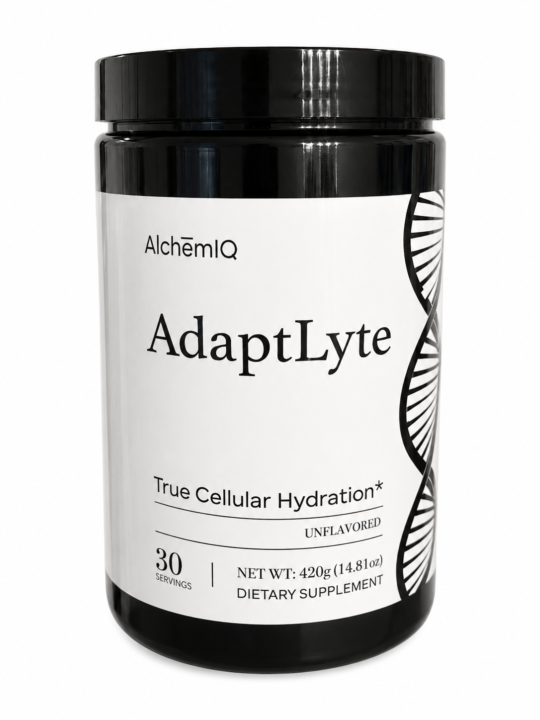
You’re Wasting Your Peptides…And It’s Not the Peptides’ Fault
You probably aren't as hydrated as you think. “Drinking water” and “becoming hydrated” are two very different conversations Most people think hydration is solved at the kitchen sink. Fill the bottle. Drink the bottle. Repeat. Maybe toss in some electrolytes if training was hard or the sauna ran long. The internal scorecard says hydrated, the body says something else, and we keep moving. Here is the uncomfortable part. You can drink water all day and still have cells that are under-volumed, undercharged, and under-resourced. The water moves through you. It does not always move into you not where it counts. This article is about where it counts. The Two Compartments Almost Nobody Talks About When you drink water, that water enters the extracellular space first, the bloodstream and the fluid bathing your tissues. That is the easy compartment. It moves fast, it dilutes quickly, and you can pee most of it out within an hour if the terrain is not set up to hold it. The compartment that actually drives performance, recovery, and adaptation is the intracellular space. That is the water inside the cell. Roughly two-thirds of your body water lives there. It is the environment where mitochondria make ATP, where ribosomes build protein, where signaling cascades fire, where peptide messages get translated into actual biological responses. A useful analogy: extracellular water is the rain on the roof. Intracellular water is the rain that actually reaches the roots. You can have a lot of one and very little of the other, and the plant will tell you which one matters. The goal of real hydration is not to soak the roof. The goal is to get water to the roots. Cell Volume Is a Signal, Not a Side Effect This is the piece that reframes everything once you see it. A well-hydrated cell is not just a wetter cell. It is a cell with a different internal pressure and that pressure is interpreted by the body as a signal. The biochemist Dieter Häussinger’s work established that cell swelling, within normal limits, tends to bias the cell toward an anabolic, building, repairing state, while cell shrinkage tends to bias it toward a catabolic, stressed, breakdown state.
1 like • May 20
@Anthony Castore hey ! can you share the composition?
1-10 of 26