Activity
Mon
Wed
Fri
Sun
Aug
Sep
Oct
Nov
Dec
Jan
Feb
Mar
Apr
May
Jun
What is this?
Less
More
Memberships
Email Marketing Skool
1.2k members • Free
Abbew Crew
42.9k members • $130
Joyful Mind Community
49 members • Free
2 contributions to Joyful Mind Community

Feb 7 •
The Healer’s Shadow: Guidance, Governance, and the Ethics of Help
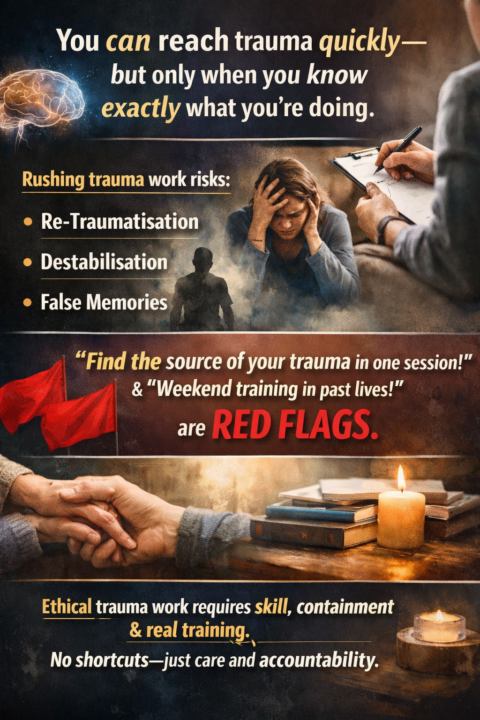
In our pursuit of mental wellbeing, it’s natural to seek out helpers, therapists, coaches, healers, who promise insight, relief, and meaning. Many practitioners do this work with integrity and care. But there is a dangerous line where guidance quietly turns into governance, and the helping relationship becomes something else entirely. Nicola Barragry a fantastic Hypnotherapist and friend recommended I listen to a podcast that told the story of a healer Ann Craig. Listening highlighted how important it is to understand what a helpful relationship is, appears and what is good and healthy in the therapy space. With the increased search for rapid healing and spiritual experiences more people are entering into unhealthy relationships and engaging in unhealthy practices on the therapy space. To understand how this can happen, it’s important to look at the cautionary case of Anne Craig, whose work in London’s elite social circles became the focus of the investigative podcast Dangerous Memories. Her story offers a powerful blueprint for what can go wrong when boundaries dissolve and influence goes unchecked. 1. The Lure of the “Pink Room” For Anne Craig’s clients, the experience didn’t begin with fear. It began with allure. She was often recommended by word of mouth among wealthy families as “that amazing healer lady.” The setting: Sessions took place in her home in Kensington/Chelsea, in a space famously described as “the pink room.” The hook: For young, intelligent women at a crossroads, the intimacy of a private home felt more enlightened and personal than a clinical consulting room. The experience: Early sessions were described as deeply validating. Clients felt profoundly seen. Craig was charismatic and warm, creating the sense that the “truth” behind their unhappiness was finally being uncovered. This is where ethical practice matters. In professional therapy, clear physical and relational boundaries are not cold, they are protective. They exist to ensure the work is about your growth, not the practitioner’s influence. When those boundaries blur, empowerment can quietly slide into enmeshment.

0 likes • Feb 22
I have this in my 'to listen' list! I've left myself a post it to remind myself during the week to get to this one
Feb 3 •
The Success Myth: Why You Aren’t Failing (Even If It Feels Like You Are)
We’ve been sold a very specific, very narrow blueprint for what a “good life” looks like. You know the one: keys to a house by 30, a shiny car in the driveway, and a job title that sounds impressive at dinner parties. And if you don’t have those things right now (or ever), it’s easy to feel like you’re falling behind. It’s easy to look in the mirror and think: Maybe I’m failing. But here’s the reality check you might need today: You’re judging a high-definition soul through a low-resolution lens. Take a breath. You are not behind. You are not broken. You are not failing. You are human—living in a world that rewards appearances more than truth. The Invisible Résumé Society is obsessed with résumé virtues, the stuff that looks good on paper: achievements, milestones, status, shiny proof. But the most “successful” people I know are rich in something quieter and far more lasting: eulogy virtues—the things people will say about you when you’re gone. So if you are kind… if you are loyal… if you are compassionate… if you are someone people feel safe with… You are not failing. You are doing something deeply right. Your worth is not up for debate. You don’t need to earn your right to belong. Here are some truths your mind might need to hear: You haven’t bought a home? You are still worthy. And maybe you’ve built a home inside yourself, a steadiness your friends or children can feel. You are enough. You don’t drive a “smart” car? You are still valuable. Maybe you carry your friends through hard seasons with your loyalty and love. Your presence matters. Your career hasn’t “peaked”? You are not behind. Maybe your character has grown in ways no job title can measure. You are becoming. Read this slowly: You are allowed to have a good life without a perfect timeline. The Parenting “Gold Standard” No One Talks About So many good people carry a quiet shame that sounds like: “I have nothing to show for these years.” Let’s correct that, right now. You are making a meaningful contribution.

1 like • Feb 3
LOVE this!! We all need these reminders sometimes. Thank you for sharing x
1-2 of 2

@janet-hart-9714
Clinical and spiritual hypnotherapist, crystal therapist, reiki practitioner, persuer of natural living, 54 and lymphoedema warrior.
Active 15d ago
Joined Jan 26, 2026
Derbyshire, UK