Activity
Mon
Wed
Fri
Sun
Nov
Dec
Jan
Feb
Mar
Apr
May
Jun
Jul
Aug
Sep
Oct
What is this?
Less
More
Owned by James
Discover a whole new way of thinking... Web4 doctrine & strategies empowers brands to align customers with products through frequency & connection.
A creative space to craft persona-based spice blends, tell flavor stories, and earn commissions by sharing your signature taste with the world.
Selling Online / Prime Mover
36.8k
Free
COOKING BASICS
73
Free
GOOSIFY 🍎🐛🦋🌈⭐️🩷
13k
5.0
Free
Synthesizer
47.1k
Free
Skoolers
151.5k
Free
Story Hacker STARTER
7.6k
$7
CULINARY APPROPRIATION
80
Free
AI Automation Society
472.8k
Free
4 contributions to Basquenese Academy

Oct '25 •
This happened at dinner last night...
Went to a great restaurant last night. I paid in cash and with a card. The birthday cash had been contributed by a couple different people so I wanted to make sure I visibly used it. The waitress seemed baffled by how to process the check with cash and card. Having been a waiter and bartender for many years in the past, I knew it wasn't such a hard thing. Then when she came back with the little hand held machine for me to sign for my charge, and I suddenly knew why she was stumbling. The way tips are processed these days are through the buttons on that little card machine. And since she only run the card for only like $40 of a $300 tab, the suggested tip, even at 25% was only a few bucks. Luckily, I noticed this and used the "Custom Amount" option to write in a proper tip for the whole bill. You should have heard the sigh of relief from her when she saw I took care of the tip. I felt bad, but also relieved that I didn't miss it and put her on the spot to make her ask for it and be forced to explain the situation to me. Or worse yet, leave the restaurant unaware I stiffed her and then come back sometime in the future. lol Can't tell you how many times the patrons who got the worst service from me, were the ones who gave me the biggest tips.

Oct '25 •
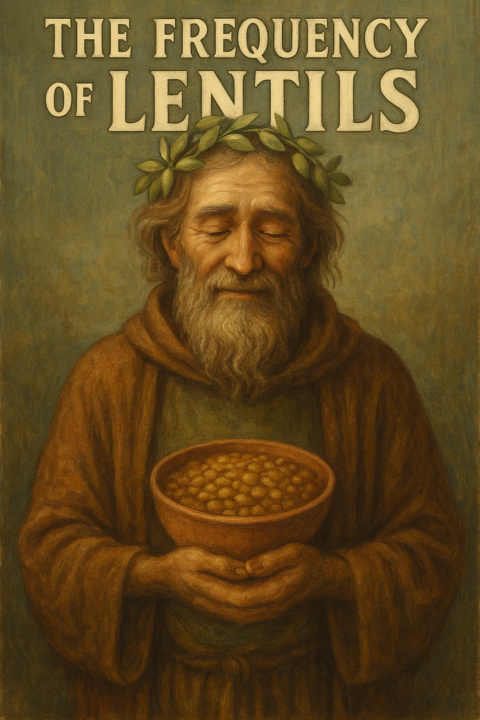
🌱 The Frequency of Lentils
I made lentils this evening.... my wife looked up form her bowl in amazement, trying to put words to what was in her bowl. She said it filled her soul, it was the kind of meal that could inspire armies, a meal upon which nations could be built. Ok, she was being a bit dramatic but she wasn't wrong. It was one of those meals that stirred you deeply. Eating it wasn't just for satiation, it was for inspiration. It led me to relating to what had happened in this meal to the frequency of energy it represented. This is what came of that reflection... By the way... the recipe: No real recipe, but here is what i did to make the lentils. Lentils, two kinds. Some red potatoes, 1/4'd Two cans of roasted diced tomatoes A bunch of garlic Bacon salt Black Pepper Chicago Fire Spice Blend (Not mine) Matsura Blend (Chef Heart) Chicken Broth Red Onions 4 hours in an Instant Pot A Whisper from the Earth Not all foods shout.Some… hum. Lentils don’t arrive dressed for applause —they come cloaked in quiet, carrying warmth in every fiber. In the Chef Heart system, we call this a Fundamental Frequency —the subtle resonance of a food,the emotional tone it sings through your body. Lentils resonate at the frequency of: Rooted Compassion Sustained Calm Humble Nourishment They express emotions like: 💗 Security 🌿 Uncomplicated love 🌾 Grounded steadiness Where glamour fades and flash wavers, lentils remain —a soft presence through centuries, stewing gently in kitchens that whisper care. If lentils were a persona,they’d be The Quiet Healer —not showy, but soul-saving.The one who never leaves.The one who always feeds. Their color, their tone, their texture —all echo a truth:You are held. You are enough. Hex-coded in the earthy hum of #7B5E57,they connect to the emotional color wheel as anchors of peace. Let’s honor the blends and stories that echo this vibration. Who else is channeling lentil energy into their blends? Post below. 🌾💬

Oct '25 •
Why Slow Seasons Are Crucial As an Entrepreneur
I know we ALLLL hate it when the bank account isn't cha-chinging the way we want or envisioned for our business. When seasons are fruitful, it's great! Not having to worry about whether we'd be able pay the bills, inventory, and/or labor. We go about our days continuing to hustle, create our products, provide our services, and life seems stable even through the chaos of being not taking breaks or remembering what day of the week it is. Ah, feeling aliveeeeee. ... then it all stops. We find ourselves with past due notices on utilities, the inventory is sitting on the shelf staring back at us, and doubt sets in. "Am I doing something wrong?" "Am I losing momentum?" "Do people not like my products or services anymore?" "WHERE IS EVERYBODY???!!" I have been there and I know I will be there again. Our character as entrepreneurs isn’t defined in the rush of success—it’s forged in the quiet of the slow seasons.When business slows down, when the phone stops ringing, and when progress feels invisible, that’s when our resilience is tested and refined. These seasons aren’t setbacks; they’re sacred pauses—opportunities to rebuild stronger systems, sharpen our vision, and remind ourselves why we started. True entrepreneurs don’t just endure the slow times—they use them to grow, adapt, and rise prepared for what’s next. Because character isn’t built when everything’s going right—it’s revealed when we choose to keep going anyway. My encouragement to you is... KEEP GOING. Do not give up when life hands you a list of hurdles and tribulations. This is where you amplify your skills, step outside your comfort zone, and realign yourself for an even greater comeback.

1 like • Oct '25
Winter is Coming... (Game of Thrones) ;0)
Oct '25 •
Vendor Relationships
Let's talk about who we choose to do business with on one of the most important categories: OUR FOOD SUPPLY I have worked with Sysco, US foods, Charlie's produce, and Shamrock. I am listing the nationally known distributors because we are all in different locations in the US but I know you'll recognize these big dawgs. Big? Absolutely. The Goliaths of the restaurant supply industry. Impressive? Not at all. What I've noticed is that these guys supply sooooo many eateries that they end up tasting the same. I could go to a random pub, order onion rings and jalapeño poppers and can immediately tell it's from Sysco. One of the most important things to consider if you ever do business with these companies is to make sure you price compare. Their prices vary and oftentimes, I spend alot of time price comparing different local stores. to get a better deal without sacrificing quality. If the quality was superb, then this wouldn't even be a topic of discussion. But this is the sole reason why I ended my relationship with most of them. I've had countless emails, text messages, and phone calls to sales reps about the chicken smelling like death, the veggies being rotten, and boxes being poorly handled and delivered (stacked on each other in violation of health code) - example: veggies on top of a case of raw chicken. So, I've been teaming up with local bakeries and mill, farmers, and butchers because I know what their quality is like. Of course, that is not to say that I never shop at Costco, Walmart, etc in a pinch. Life happens and when you run out of essentials like cilantro, you gotta do what you have to. But I still try to get organic. Why does this matter? The customer doesn't know .... BUT I KNOW. For me, it is always going to be people over profit. Of course I have a business and staff to pay, but at the end of the day, I want to go to bed knowing I uphold integrity and honesty. So in summary, a few key factors when choosing a food supplier: 1. Check the quality of their food. Ask for samples. 2. Price compare across at least three other vendors 3. Check if there's a contract term or minimum purchase obligation. Sometimes we can't drop a minimum of $800 per order or don't need to. 4. Build a work relationship with your sales rep. See how they interact with you. If all they want to do is sell, sell, sell and not come in to visit or try to understand what I actually sell, I walk away. 5. Check your farmers markets and establish a relationship with them. They oftentimes give you wholesale pricing.

1 like • Oct '25
Oh man, you nailed it! I have a buddy that quit delivering for Walmart because they were making him deliver rotten veggies. Maybe it's a myth... but that was his story. I got tired of spices all tasting like sawdust and chemicals and started my own spice blend business. Since then we have added a local grab-n-go meal subscription plan that serves healthy meals made locally with no freezing, freshly delivered or picked up daily. One thing I've noticed doing this, is that once you learn to shop and cook in a whole foods way, your body immediately thanks you and your budget aligns as well. It's actually not that much more expensive and making the meals taste great is just a matter of finesse and good recipes. I like your comment about how because most food, grocers or eateries, come from the same distributor, so they all taste the same. That's amazing you can identify the distributor by taste! It lends credence to my spice message and belief to my efforts to cook whole foods well. ~Thanks for your post!
1 like • Oct '25
We are doing our part to support the food supply with a unique blueprint embodied in our spice blend shop. We have built our systems to be transplantable in any market, which would allow for fresh spices and meal plans to be delivered on a local level. So, we are looking for licensees in several new markets to establish spice blend production facilities and retail stores. Our craft licensing program is profitable and exciting to execute on a daily basis. Our spice blends are beloved by our community, and as we continue to grow, they benefit from our contributions back to them, as will any community that we establish our stores in. Our spice blend website is ChefHe.art (we create custom spice blends with no additives, GMO's or preservatives/ shelf stabilizers. Its a pretty cool approach.) If anyone is interested in our licensing program, they can view our information page at chefhe.art/craft-licenses Thanks for allowing us to discuss our vision. Looking forward to seeing more people develop systems that facilitate farm to table solutions like the ones you are highlighting!
1-4 of 4

@james-craddock-8363
Curiosity killed the cat... and now I know why they have 9 lives!
Active 54d ago
Joined Oct 13, 2025
ENTJ
Okanogan, Washington